Once Upon A Christmas Day

Once upon a Christmas Day,
On the floor asleep I lay.
Cuddled beneath the Christmas tree,
With a fire blazing in the stove next to me.

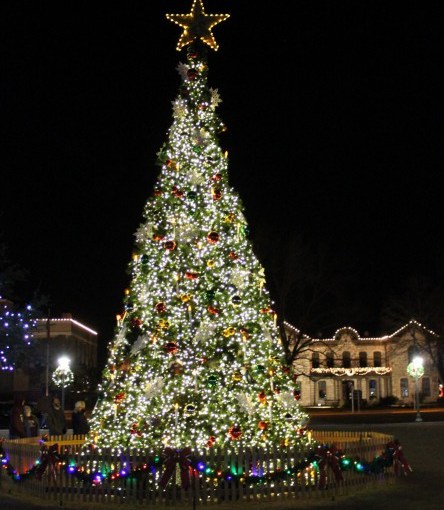
The lights were shining with colors bright,
Casting warm reflections in dawning light.
My eyes though mostly still asleep,
Still saw their beauty in the dreams of sleep.

Around the tree and my resting head,
Dozens of presents had been shed.
Bright colored wrapping covering each one,
Each tied with a bow when it was done.

Stockings were hung from cabinet knobs,
Filled with goodies by the gobs.
Pretty decorations sat here and there,
Santas, Snowmen, and Angels placed with care.

A miniature village covered the shelves,
Seemingly put there by Santa’s elves.
All of these show beauty and splendor,
And inspired joy on a morning yet tender.

Two things stood out most important of all,
Displayed on a table, not decking the hall.
The first was a Bible opened to Mark,
Telling the story the angels did hark!

The second was a crèche depicting the scene,
Of the Christ child’s birth in a manger mean.
Despite all the trappings, He is still the reason,
There would be no true Christmas, He is the season.

We enjoy all the lights and the glitter and bows,
But may each person who celebrates, truly know;
That it is only this way because God made it so,
It’s according to his plan that this Jesus we know.

There is no meaning in all at Christmas we share,
If Jesus Christ our Lord is not kept there.
There is no reason to have great joy,
If the Savior does not this Holiday employ.

Once upon a Christmas day,
Christ was born in just God’s way.
He came to save us from all sin,
So that the Devil should not win.

It’s all according to God’s plan,
That His true story the world should span.
So as I awake to Christmas bright,
I first celebrate the Christ, born Christmas night.

The Season is So Bright (Villanelle)

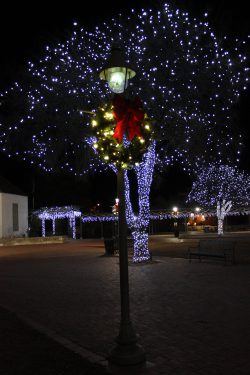
Oh the Season is so bright,
Filled with decorative, fancy fare;
Beautiful, colorful, twinkling lights.

To the eye what a delight,
With cards and food and gifts to bare;
Oh the Season is so bright.

Buildings adorned to the heights
With bows, and trees, and holiday ware;
Beautiful, colorful, twinkling lights.

What joy that fills our busy plight,
As love and stories and songs we share;
Oh the Season is so bright.

What a wondrous shining sight,
That as we pass, we stop and stare;
Beautiful, colorful, twinkling lights.

The excitement of Christmas night,
Reminding us to stop and care;
Oh the Season is so bright;
Beautiful, colorful, twinkling lights.

First Term Wrap Up (Nov. 18-Dec. 21)- Fredericksburg’s STEM/Rocket Program

December is nearly over and Winter break starts today, but before we send the Fredericksburg High School STEM Academy home for Christmas,  we need to review what they have been working on these last four weeks, and try to wrap up the fall program.  January starts the spring program loaded with really big goals and events that this past fall has been building toward.  Each group’s learning will be evident in the success of this coming semester’s projects.

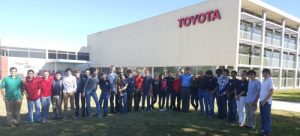
During the month of November the Freshman visited Toyota Manufacturing and Southwest Research Institute (SwRi).

20161121_140216The students were impressed with Toyota and how huge the plant itself is, as well as the difference in the type of automation used as compared to last month’s visit to Caterpillar. Toyota’s assembly line resemble Ford assembly lines. The components actually moved along on a line and each team had an assigned task as it moved by them. Caterpillar operated in stages where one team did several components before it moved to the next staging area.

Mr. Matthes remarked that ” The delivery logistics of parts to the assembly line was phenomenal!”

On December 13, the Freshman group visited Fischer and Wieser, Heartland Enterprises, and UT Aeromechanical Lab.

Fischer and Wieser and Heartland are Fredericksburg companies. They both demonstrated automation on a small-scale as compared to companies like Toyota and Caterpillar. Fischer and Wieser explained the importance of loyal employees and a family like environment.

Heartland is similar in framework and belief on how they treat their employees. Where as many companies prefer to hire very experienced candidates from other companies, Heartland prefers to hire inexperienced people and train them in their ways of operation. They find that by doing this they keep a certain working quality and alleviate the bad habits that experience can sometimes bring with it which can be adverse to the companies current operating practices and quality control initiatives.

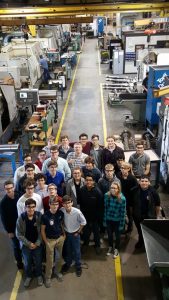
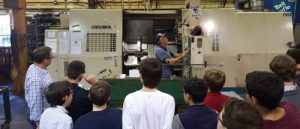
Below are pictures from Heartland Enterprises:

20161213_0959350 20161213_095101 Here, Alvin Culak, shows machine operations to students.

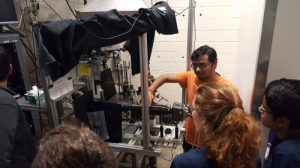
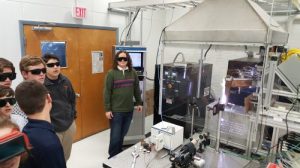
Students at UT Aeromechanical Lab and Flow Field Imaging Lab in Austin, were working on ablative testing for high velocity projectiles or vehicles,  and a research lab studying  hydrogen combustion and anomalies that may exist with it. These anomalies must be understood before hydrogen combustion can be considered for fuel. They are also studying wind tunnel testing designed to help discern the tendencies of shock  for use in ramjet and hyper velocity propulsion systems.

Below, candidates took time with the students to explain and exhibit their work.

20161213_125959 UT graduate student, Rakesh Ranjan, operates a swirl combustor at atmospheric pressure. For more information on this: http://research.ae.utexas.edu/FloImLab/highpressureflashback.php

20161213_125140  UT graduate student, Benton Greene, demonstrated the Inductively Coupled Plasma torch. For more information on this: http://research.ae.utexas.edu/FloImLab/ControlofShockBoundaryLayerInteractionDistortionusingPulsedPlasmaJets.php

Another UT post-doctoral student, Leon Vanstone, not pictured, explained the experimental investigation of 3D shock wave/boundary interaction unsteadiness at the University of Texas at Austin High Speed Wind Tunnel Lab . For more information on this: https://utexas.box.com/s/n1kk9ozocyp8ozloo9dm9ujx23q6vuwj

Dr. Noel Clemens is the Principle Investigator for all experiments in the lab, and the primary decision maker. Jeremy Jagodzinski is the lab facilitator. He helps to support the research in the lab and also set up the visit for the students. Phillip Varghese oversees the Center for Aeromechanics Research which often collaberates with this lab.  Thank you to all of them for facilitating the tour.

Mr. Matthes stated that, “the students really loved the research facility.”

Aside from field trips to see first hand about automation and manufacturing, the freshman have been learning  about production/automation engineering. They are currently in the process of designing an orange juice production plant. Their product goal for the plant is to take raw material and produce packaged juice in palletized product bundles ready for sale. Jenny Weiser will be coming in January to see their presentations and evaluate and provide constructive criticism.

Sophomores will be entering the program for the second term, starting Jan. 23. ACC’s Auto CAD course will be their main focus learning to utilized specific skills and design elements.

The juniors flew their Generation 3 rockets recently. This provided several learning points that will be useful on their projects next semester. Students realized that even cutting edge design doesn’t always transfer well into the manufacturing ability of the vehicle. Failures in these construction and design frailties, resulted in irregular flight patterns. These mishaps translated into two days of Post Mission Analysis insuring that lessons from this would not carry over to next semester’s larger rocket project.

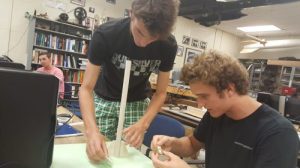
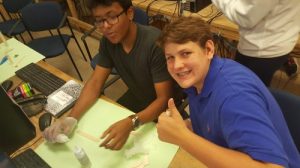
Here the juniors are building their G3 rockets.

20160921_1247120 20160921_124721 20160921_124732

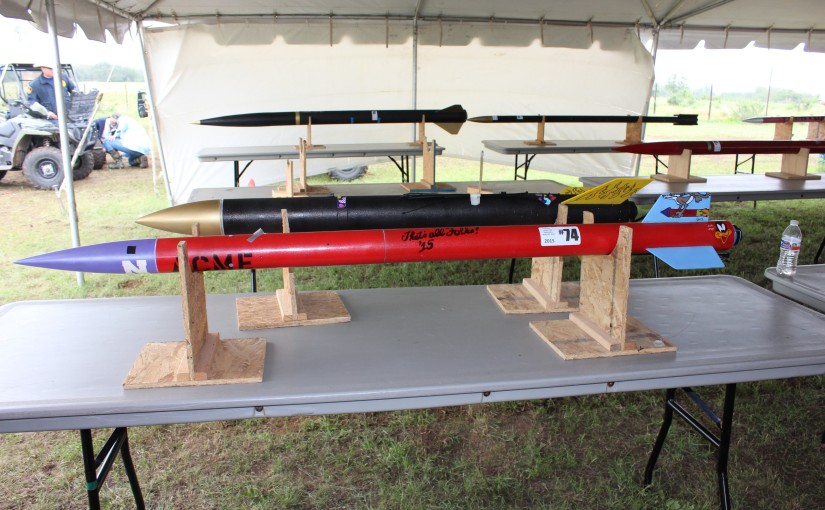
In January, the juniors will begin work on their one pound/one mile vehicles to be tested out at Willow City in May. This is considered a sounding rocket designed to break the speed of sound without breaking a ceiling of 13,000 feet while carrying a one pound payload.

Seniors have been very busy, and experienced both successes and set backs on their projects recently.  Testing on fuels is expected to begin in January as they are nearly complete with updates on test stand.

After manufacturing pieces for their small motor test stand out of 2024 aluminum, they discovered that this metal type cannot be welded. This resulted in having to procure another high strength aerospace aluminum which is conducive to welding. Once they find this they will have to begin again the manufacturing of the fuel grain containment system.

“These were very important lessons learned for all, them and me,” stated Mr. Matthes.

Preliminary Design Reviews were conducted on their Goddard level rocket, last week. Due to the set backs on test stand, previously  discussed, the group lost time they should have had to work on their rocket design and therefore have a bit of ground to make up there in order to have those completed by January’s end.

This article is the fourth in a new series for this school year ’16/’17 of monthly updates that will follow the Fredericksburg STEM Academy/Rocket program. This school is a participant of the SystemsGo STEM program. This series of articles is intended to support, encourage, and challenge students in the program as they share their working status and accomplishments throughout the year in the program. These publications will be available for tags and re-posting.

www.systemsgo.org as always is the place for more information on this program. You may also email them at info@systemsgo.org . Take the time to get your school involved, the future of your students will be greatly benefited.

Fredericksburg’s Annual Church to Church Walk

Last evening, December 13, my husband, Steve and I attended the annual Church to Church  walk put on by the Gillespie County Ministerial Association, here in Fredericksburg. It was Steve’s first time, I have been several times before and always enjoy it. Last night was an amazing experience though. For the first time ever all churches were full to overflowing with walkers participating. As would be expected, many for the first time.  In fact, the count was 393 people. I don’t think I have ever seen more than 150-200 in the years I have attended. It was nice to see more folks coming out to join in the Christmas festivities centered around the Lord.

The program did not disappoint.The theme was “The Coming Of the Lord.” Each church had a sub theme discussed at their stop.

We began at Zion Lutheran Church with a short intro by Reverend Bobby Vitek, GCMA President and also of Holy Ghost Lutheran Church, after which the group joined in the singing of “O come, O Come Emanuel.” Reverend Jeff Hammond of St Barnabas Episcopal Church offered a short reflection on “Wake Us Up to Your Coming.” He talked about how even when our eyes are open we are sometimes not really awake, especially spiritually, and he called for the Lord to really awaken us this Christmas season.  The first stop ended with a choir presentation of “Prepare the Way of the Lord” by the Bethany Chancel Choir.

In spite of some confusion as to which way is East and which is West, Pastor Bobby, gave directions on how to get from Zion to our second stop of Bethany Lutheran Church, and the group was out the door.

Reverend Casey Zesch, Bethany Lutheran, began  the second leg of our journey with responsive readings followed by the singing by the group of the hymn, “Prepare the Royal Highway”. Pastor Travis Meyer, also of Bethany presented thoughts on “Prepare Us for Your Coming”. He spoke about how now that we are awake to Christ’s coming we also have to be  prepared for it. He told the story of St. Nicholas and how he prepared the way by helping those less fortunate. St. Nicholas anonymously threw coins through the window  into the   drying stockings of the daughters of a man who was in danger of having to sell his daughters into slavery just so they would be fed and he could continue to survive. Nicholas’s contributions helped the family to stay together and to survive the hard times they were facing.  We not only prepare ourselves but also the world since Christ is the Way to salvation, the royal highway himself.

“A Christmas  Alleluia” was performed by the Oak Hills Worship Team and then the large throng of walkers headed out the door to Holy Ghost.

Fredericksburg Police provided safe passage across Main Street for the group as they walked and visited in the fast chilling December air.

Reverend David Priem provided the responsive reading at Holy Ghost, with “It Came Upon A Midnight Clear” as the hymn afterwards. Reverend Michael Burdick, Victory Fellowship supplied the reflections on “Open Us to Your Coming.”  He asked us that as we now may be awake, and are preparing for Christ’s coming, are we really open to it? Have we really opened ourselves, our hearts, and our lives for Christ to enter in?

The Victory Fellowship Praise Team invited us to sing along with them on “Joy to the World” after the message. Then once again we were all headed out and  down San Antonio Street to the last stop, St. Mary’s Catholic Church.

“Comfort My People” was sung by the St. Mary’s Choir as walkers filed in. Father Enda McKenna, then began with the responsive readings followed by “Soon and Very Soon” sung by the group. The Reverend George Lumpkin of Fredericksburg United Methodist Church(FUMC) took us through a humorous and surprising message on “Surprise Us By Your Coming.” The basis of this message being that we as Christians wait and pray for God to show up in our lives and then we are surprised when he does. The best excerpt from this being when a friend of his that looked like the traditional picture of Jesus, walked up behind his choir director in church and she turned around and hollered, totally surprised that “Jesus” was standing behind her in church!

The FUMC choir sung “Sing Noel, Sing Hallelujah” after which Father Enda gave a closing benediction and instructions on where to go for refreshments and fellowship to end the evening. For those that had taken their cars on this walk, the evening was at a close after refreshments. The rest of us visited a bit  and then made our way back to Zion and our rides home.

It was a wonderful and blessed evening filled with Christmas joy, songs and spiritual preparedness for the season ahead. I personally enjoy going as a way to get myself in the right frame of mind about the season and what it is truly about.

If you missed it this year, it is an annual event so there will be next year. Keep watch on your local church calendar or the chamber calendar next December. If you are looking for a new tradition to start with your family this is a nice one. God Bless and Merry Christmas!

Happy Thanksgiving All

I had planned to post something  that I had written in the past for Thanksgiving, only to discover I couldn’t find anything I had written in the past for Thanksgiving. How sad, I thought, such a wonderful holiday and I have never taken the time to write a word about it. Well, now I shall remedy that, even if at the moment I have no idea what I plan to say. So you will just have to bear with me a bit!

It is odd that I haven’t taken the time to write about this holiday since I know it is one of my favorites and I know many say the same. I think it stands out as such because it involves all the wonderful aspects of a holiday without so much commercial fuss.  Yes, it does still have some, but not like Christmas, Easter, and Halloween.

It is designed as a holiday of thanks and sharing of all that we have, so we take the time to get together with family and friends and prepare and share food, 1452392_687153997972401_473183348_nfellowship, fun, parades, football, hunting, church, prayer and thanks. We share sheer joy at just being together. Our gifts for this particular holiday are our food, our joy, our love, and our companionship. We wrap them in smiles, hugs, tears and laughter.

We relax, visit, watch football, play games and eat all day long, and in our case late into the night. In fact sometimes it becomes a campfire party later in the evening.

The biggest stress is preparing food and cleaning at the house. Yes I said it that way on purpose because quite often all the cleaning never gets done (mostly dusting, the floors and bathrooms are clean-hey if you can’t handle that, write your name in the dust and then politely leave through the same door in which you came),  and my family never seems to mind. What didn’t get done will get finished as the Christmas decorations go up next week. Besides, I live in a sand field and I can dust today and it will look like I never did by tonight, especially if the windows are open which they have been off and on lately. But I digress, that is not the point. The point is we get together for this holiday to give great thanks and to just plain eat and have fun.

The stressful stuff starts on Friday as we start shopping for that next biggest holiday of Christmas.  But for Thanksgiving Day, wake up, watch the sun rise and go enjoy your family.img_8693 I know that is what I am going to do. Actually most of them are coming to my house. I wish every last one of them was, but unfortunately some due to circumstances just cannot. I pray that where ever they are, they are safe and have a wonderful day anyway.

God bless and give thanks for all you have, and pray for those less fortunate than you that may not being having such a wonderful day. May God bless and keep them and fill their needs as well.

Happy Thanksgiving All may you have a wonderful and blessed day.

September Highlights- Fredericksburg’s STEM/Rocket Program

The school year is now into it’s seventh week. September has come and gone and the Fredericksburg High School STEM Academy has been working steady at all levels. Each group has new skills they are learning, goals they are working to achieve and events they are working towards.

Mr. Matthes says that, ” The Freshman are great! Already I have seen an improvement in their presentation skills. They have also been successful in finishing the structural engineering fix for the SystemsGo launch tower, and have followed up with a PMA (post mission analysis) and current event report.”

2nd-period-freshman-w-structures

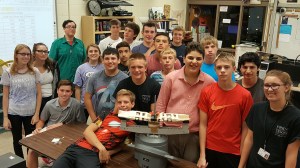
This is the second period Freshman class with their structures. Students including in the picture, in no alphabetical order are as follows: Jowad Aysheh, Gloria Burns, Luke Duderstadt, Manuel Enciso, Jack Fox, Jack Gallagher, Jacob Hinterlach, Thomas Johnson, Troy Kneese, Aquilino Perez, Zoe Rivera, Darien Robles, Jessen Stableford, Noah Stotz, Deja Turkett, Alek Vasquez, Calissa Vollmar, Dalton Waters, Joshua Wienecke,  and Zachary Willis.

3rd-period-freshman-w-structures

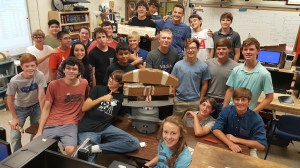
This is the third period Freshman class with  their structures. Students including in the picture, in alphabetical order are as follows: Dylan Ahrens, Jarrett Beard, Jorge Giral, Blake Boubel, Chad Braden, Jacob Brown, Esten Cooke, Samuel Cowsar, Ryan Davis, Gavin Eckert, Tucker Elliot, Frank Fackovec, Cathryn Huff, Brendon Huynh, Abel Jaimes, Ryan Majors, Antonio Martinez, Tristan McDonald, Gabriela Moreno, Robert Sanchez, Landon Sparrow, Carl Wilger, Lane Wallendorf, and Landon West.

The freshman will be traveling to several companies to investigate how engineering plays a part in their industries. This will take place over the next three months in three separate trips. Included in these trips are: Caterpillar Manufacturing, Aqua Power Cutting, Soutwest Research Institute (SwRI), Toyota Manufacturing, and Center for the Intrepid, all out-of-town trips, and Fischer and Wieser, Heartland Enterprises, Ltd. , Swissomation, Kager Industries, and Rode’s Iron and Pipe locally.  During the month of October they will visit Caterpillar Manufacturing and Aqua Power Cutting.

The Juniors are currently working in the R&D (Research and Development) element of the curriculum after having completed building and launching their Generation 1 model rockets. During this phase they are working on modeling the motor burn.

gen-1-rockets

Junior class with the Generation 1 rockets.

Seniors are alternating between rocket history and  work on the test stand and testbed. They are currently in a break from the history but will rejoin it in a couple of weeks. Mean while they have  conducted successful CDR’s (critical design review) for test stand that generated positive and developmental feedback.  They have also had success updating the testbed. Wiring and programming issues have been corrected,  they were able to create a new tank system which will increase safety in the fill and weigh of nitrous operating systems, as well as succeeding in making the testbed more frictionless.  Their senior rocket is still in the works as they continue in the design  development of the vehicle.

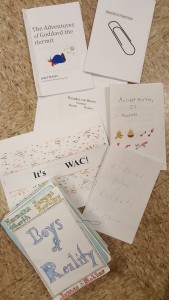
New this year, the seniors created rocket history children’s books.  Students will be doing recordings of themselves reading the books, and both the books and the audios will be sent to the Fredericksburg Elementary School where students there will be able to read the books and hear the high school authors read the books to them.

20161011_074947

According to Mr. Matthes, “Their rocket history children’s books were awesome!”

On November 7 & 8, the senior group has a chance to go to the NASA Johnson Space Center,  for flight profile reviews, grant updates, and a possible preliminary design review. Three students will go for sure, and those will be named at a later date.

Seniors, here is your challenge for the month, according to Mr Matthes, “If you complete the analysis of historic test data from the teststand then you will all be eligible to attend this trip. He would like to see that happen and take you all. Can you meet the challenge? Next month’s edition of this article series will publish the answer to this challenge. Now is your chance to show my readers and Mr. Matthes that you can meet the challenge.

This article is the second in a new series of monthly updates that will follow the Fredericksburg STEM Academy/Rocket program. This school is a participant of the SystemsGo STEM program. This series of articles is intended to support, encourage, and challenge students in the program as they share their working status and accomplishments throughout the year in the program. These publications will be available for tags and re-posting.

www.systemsgo.org as always is the place for more information on this program. You may also email them at info@systemsgo.org . Take the time to get your school involved, the future of your students will be greatly benefited.

What’s All This About Rockets: Success Stories-Anissa Kneese

Welcome back to Rocket Success stories. This is the second installment of this series of Interview style articles, in which we meet individuals that studied under the SystemsGo STEM program and have gone on to build their futures on the skills it teaches. Last month we met, Robert Deaver, a 1996 graduate of the program.  This month we are looking at a young lady that is a more recent graduate also from Fredericksburg High School in 2014, miss Anissa Kneese.

Anissa is currently a college student at Texas A&M, which allows us to talk with her now and to check back with her and see exactly where her education and career choices have taken her in the future. This is in a way, the middle of her path, but the drive she has to complete her engineering goals are a direct correlation of her experience in the program.

“Before taking the rocket program classes in high school, I had no idea I was interested in engineering, I learned about the many different engineering paths. and I fell in love with problem solving. I am now working toward my degree in Mechanical Engineering thanks to SystemsGo.”

Anissa joined the STEM program out of curiosity her freshman year, because of all she had heard about it from friends and family. She quickly realized that this class would shape her future.

“After completing the first class freshman year, I was considering majoring in engineering in college. Sophomore year pushed me even more in that direction, and after junior year there was no doubt what so ever this was my future career path. Senior year was the icing on the cake!”

As she studied in the program, her reasons changed from curiosity to excitement and the class became a priority for her.

“By junior year I was so eager to go to class every day. I knew I would learn something new or something really eventful and exciting would happen. Like running a successful student designed test that caused a nearby resident to call the fire department!” Engine and fuel burn  tests can be loud and though most  folks have become accustomed to these tests, this one was particularly loud, and caused a stir, something she recalls with guarded humor.

Anissa participated on two teams. The first was the Mechanical team for static hybrid propulsion testing, and then the injector team for the Redbird #15 Rocket, as long as helping with electronics, payload and engine installation.  Her specific jobs on these projects included, “For propulsion and testing I prepped fuel grains by ensuring their size was exact, installing them in the test cell, and preparing the test cell by sealing the cell to prevent oxidizer leakage. After each test I would clean the test cell and prep the next fuel grain. I also set up oxidizer tanks and plumbing from the tanks to the test cell. During tests, I would make sure all solid and liquid weights were recorded to be used in calculations in the days to follow.”

The Redbird #15 is the rocket that her group designed to launch at White Sands Missile Range. This is where she really had to put her education to work and it presented her with her hardest problem to solve.

“The toughest problem I came across was “trouble shooting” an injector design that had mysteriously failed  in a Redbird rocket from the year before. My teammates and I designed several tests to attempt to understand the previous failure, and this proved to be quite difficult. After a redesign with new materials, the injector worked flawlessly in our Redbird rocket.”

Even with this struggle accomplished with perfect results, she considers another success the greatest her and her team accomplished during their time in the program.

“I would consider my (and my team’s) best success being the first high school team to complete a full round of three 40 second hybrid test burns. This had been attempted by several classes before us (and even ourselves the year before), so coming back the next year and being successful was a great feeling.”

The SystemsGo program teaches individual accountability as well as team coherence. Anissa found this to be one of the most important things she learned in the program.

“This program taught me countless lessons and technical approaches to problems, but the most important thing I learned was the importance of communication. It is impossible to accomplish any great task without full communication and understanding from every team member involved.”

Many of the students who have participated in this program, not only go on to higher education and careers in STEM fields, they enjoy giving back to the program where ever possible. Anissa is no exception to this, she returns each year to help as launch pad lead at the Willow City launches.  If possible she plans to continue helping and being involved with the program however possible.

“I would enjoy mentoring and helping students in the future with the design process or understanding the set up and procedures of building the static propulsion testing. I would also enjoy having a job with SystemsGo in the future. I think having experience in industry would be valuable to gain first, but I would enjoy coming back and teaching at some point.

Her current advice for students considering or currently in the program is, “work as hard as you can every day. Don’t be afraid to get sweaty and leave class with your hands dirty. It doesn’t matter how smart you are, you will learn so much if you are eager to get involved!”

Along with the fantastic education the SystemsGo STEM program provides in the Science, Technology, Engineering, and Mathematics fields, it also helps build confidence and character. It teaches each student to reach into themselves and take pride in what they are accomplishing and can accomplish. For many students, it is a learning boost they may never have known they needed until they discovered it in themselves during the program. Anissa sums up that experience.

“I learned that I am capable of accomplishing anything I have my heart in and I’m willing to work hard to achieve.”

I would like to thank Anissa Kneese for participating in this article series.  These are written in hopes that all may understand the impact that STEM can have on your students and future employees. Having a program available at the high school level to teach, encourage and support this type of learning is instrumental to getting these students into great career futures.  Encourage your students to get involved in STEM and the SystemsGo program if it is available at your child’s school. If it is not available, look into how you can bring it to your area. This program will greatly benefit your school and children.

If you know or have a student that went through the program that would like to share their story here, please contact me in the comment section on this blog or if you follow it on Facebook, Twitter, or LinkedIn contact me there, and I will send you information to participate.

http://www.systemsgo.org as always is the place for more information on this program. You may also email them at info@systemsgo.org .Take the time to get your school involved, the future of your students will be greatly benefited.

August’s New Beginnings- Fredericksburg’s STEM/Rocket Program

The new school year is in its second week and with it, the Fredericksburg High School Engineering program has begun working toward new goals.

The program is off to a “Great start,” according to Engineering instructor, Andrew Matthes.  “We received a NASA grant to continue testing and replace some older components for safety and increased fidelity in test data.”

A date of October 21, 2016 is set for Teststand  operations to start.  A Teststand task list and working groups have been established by the Senior group.

New to the program this year is a Senior out of class work schedule. Students signed a contract requiring them to commit to a set amount of overtime/after class work time in order to meet all deadlines and complete their rocket/project for the year. The group is currently establishing a working schedule in order to implement these hours.  As for the actual rocket, the class is currently studying the rocket history portion of the curriculum.

This year (Fall semester) there are four classes.  Forty-four freshman are enrolled in two separate classes, the junior class has twelve students and the senior class has eighteen. There will be two Sophomore classes starting in the Spring semester.

This article is the first in a new series of monthly updates that will follow the Fredericksburg Engineering/Rocket program. This school is a participant of the SystemsGo STEM program. This series of articles is intended to support and encourage students in the program as they share their working status and accomplishments throughout the year in the program. These publications will be available for tags and re-posting.

www.systemsgo.org as always is the place for more information on this program. You may also email them at info@systemsgo.org . Take the time to get your school involved, the future of your students will be greatly benefited.


What’s All This About Rockets: Success Stories–Robert Deaver

In 1996 in the small town of Fredericksburg, Texas a high school Aerospace program was begun and built literally from the classroom skyward as then, teacher, Brett Williams, developed a plan to build and launch rockets in a classroom setting in order to teach and implement a STEM curriculum. This class originally known as Principles of Technology (the POT Class, as it was fondly referred too), later became the SystemsGo program of Education In Motion, teaching students all over the state and now New Mexico too how to use the principles of STEM to build a career.

In this series of Interview style articles, we will meet individuals that studied under this program and have gone on to build their futures on the skills it teaches. The first gentleman we will meet, is Robert Deaver.

When speaking with indiviuals that have been through this STEM program, especially in the beginning, one thing stands out. Most of them started out in the program because the course name/description sounded interesting, and it provided a science credit.  As years went by and the program became known for building and  launching rockets, that in itself became a big draw for the program, although most participants still did not expect it to have the impact on their career choices that it did.

Robert, when asked why he got involved in the STEM program, was no different. “The class name sounded interesting and it counted as a science credit.”

That simple approach drew in the first classes that set forth to build a rocket, launching  the much more valuable vehicle of their futures  as time and learning evolved.

Robert was in the class during its ground breaking days, working on the construction and flight of the Red Bird #1, #2 and #3 rockets. These were the very formative first two years of the program as students and teacher learned together exactly what it took to create these projects. At first this was just a really fun and new concept of hands on learning and teaching that the students enjoyed.

The original class was only a one year class, but students really took to it and then this “science credit” soon became a class that students took because they wanted to experience it again.

“The course was so much fun I asked if i could take it again and was allowed. I initially took the course because it sounded interesting. I took it a second time because it was fun and challenging,” Robert stated when asked what his reasons were for taking the course.

Robert credits the program with setting him on his career path. He earned a BS in Electrical Engineering a the University of Texas at San Antonio and a MS in Computer Engineering at the University of Tennessee. Robert worked for IBM, Dell, and  after graduation, Real Time Systems, where he spent the last four years designing embedded systems that are used world-wide. After his recent marriage he moved to Boerne, where he started a new career as a hardware engineer at Futurex in Bulverde.

“I did not go directly from high school into an engineering program in college, but being exposed to the ideas and concepts of engineering in the Principles of Technology (precursor to the StystemsGo program) led me there eventually. I learned about Real Time Systems through volunteering with SystemsGo and after I graduated applied for a job with RTS and was hired.” Robert stated.

In his time in the program he worked on 3 of the Red Bird Rocket projects, #1, #2, and #3.  On all three, Avionics and Electronics were his main team focus therefore he was instrumental in Altimeter configuration on all three. On RB#1 he also worked on the Audio/Video Recording and Transmission, and the Fill and Fire system design and construction. On RB#2 he took on the Recovery System design, and on RB#3 the Airframe and Fin design.

Live video transmission from rocket to ground is what he remembers as the worst problem that he tried to solve while working on the RB#1 rocket.

“The electronics were ‘fiddly’ and although it worked well on the  ground, we were not able to get it functional during launch.”

In spite of this, RB#1 is still what he remembers as his best success from the program.

“I watched as a rocket  that my team and I researched, designed, and built from scratch soared off the launch pad. That feeling of accomplishment is truly indescribable!”

During these years he learned that he really liked working with electronics.  He also learned how to work on large projects as a team.

“The Red Bird 1, Redbird 2, and Red Bird 3 were by far the largest projects I had participated in at that time. Each project required interaction with others on my team and with other teams to complete.”

Even with all he learned he still did not realize the impact this program would make on his career choices until he was in college.

“During engineering school, I realized how much more prepared I was due to the project and team interaction skills I learned in what later became the SystemsGo Program.”

When I asked Robert  what advice he would give to current and future students in the program, here is what he had to say, “If you even think you are interested in engineering take these classes and pay attention. The problem solving and team work skills you learn in the SystemsGo program will be invaluable once you get to college.”

Another success of this program is that students from past years come back year after year to volunteer with the program. Many take time out of school and careers to do this. Robert is no exception. He volunteers annually  for the Central Texas, South Texas, and Goddard launches. He has also been named a board member, where he is happy to be able to, “help shape the program.”

I would like to thank Robert Deaver for participating in this article series. He is only the first in what I hope to bring to you as an ongoing series of success stories. These are written in hopes that all may understand the impact that STEM can have on your students and future employees. Having a program available at the high school level to teach, encourage and support this type of learning is instrumental to getting these students into great career futures.  Encourage your students to get involved in STEM and the SystemsGo program if it is available at your child’s school. If it is not available, look into how you can bring it to your area. This program will greatly benefit your school and children.

If you know or have a student that went through the program that would like to share their story here, please contact me in the comment section on this blog or if you follow it on Facebook, Twitter, or LinkedIn contact me there, and I will send you information to participate.

www.systemsgo.org as always is the place for more information on this program. You may also email them at info@systemsgo.org .Take the time to get your school involved, the future of your students will be greatly benefited.


What’s All This About Rockets?????

You may have noticed that this blog has a yearly burst of articles that follow a non-profit business, known as SystemsGo, and the related high school rocket program, where students build and launch rockets at various locations around Texas, and well as White Sands Missile Range in New Mexico. While this looks really fun and interesting, what is it all about and how has it benefited education and our students’ futures?

This is the beginning of a series of articles about just how it has shaped the lives of individuals that have participated in the program. First off it is part of an educational push to get more students into what is known as the STEM program of learning, and then out into the work force in related fields. You may have seen or heard TV and radio commercials backing the STEM initiative. One such example is the US NAVY. They carry radio and TV commercials stating the benefits of the Science, Technology, Engineering and Mathematics curriculums and the necessities of these skills to jobs in the military and the civilian work force.

The SystemsGo program teaches all of these core classes as well as teaching business applications with it. It helps students learn their strengths and weaknesses in these areas and how to work individually and as a team in order to accomplish a large project. They learn how to manage time and project teams, do project and work analysis, order supplies and inventory items for the project, write documentation and proposals for the project, as well as doing the actual STEM based project elements.

This program began in Fredericksburg High School in 1996, making this its 20th year since its implementation. The following spring the first Red Bird Rocket was sent skyward. In 1999, the first Goddard level Red Bird Rocket was launched at White Sands Missile Range in New Mexico. Since its humble beginnings it has grown from one small town school to currently 48 Texas schools, large and small. Starting next year, 7 New Mexico schools will also begin in the program with their own launch site in New Mexico, participating at the smaller launch levels beginning with Tsiolkovsky(1 pound/1 mile high) next year and  then adding Oberth(achieving transonic velocity under 1300′) hopefully the following year. Of all these schools,  9 are trained and 5 are actively participating at the Goddard(35 pound payload attempting to reach 80,000 to 100,000′-WSMR) level.

This equivolates to more than 10,000 students that have gone through the program, and by my personal estimates, that may be closer to 15,000. Because records from before 2007 are not available, and records after that time are not complete that estimate is known to be on the low-end.  At a rate of  17 students per class per grade level in a 4 year program across 48 schools that equals 3264 students a year learning this valuable academic skill set to better their futures. That is a lot of our college age and current work force that have been impacted by the SystemsGo Rocket program.

If even half of these students followed a STEM career path, that is a bigger success story than any other school sponsored program, and this program is academic based. This is not to throw punches at other extra curricular programs, they all have benefits to the individuals involved in them, but on average, the number of success stories from this program versus the number from two of the bigger programs, ei. athletics and band are quite impressive.

The following are purely observational statistics not exact documented statistics but they do give you an idea.  Out of my three children, 2 have been in the rocket program, 2 have been in athletics, and all three were in band in high school and this is what I observed from their years as well as this year.

For example, the high school band here has approximately 135 students in it. That averages out to about 33 per grade group. Of those 33 students 1-5 may pursue music into college and a career. Out of the whole four-year group, 20 might be music majors. While that is still good it still not a quarter of the group.

Athletics has an even larger student base. I don’t know exact numbers but a close estimate across the board girls and boys, there are close to 300 students involved plus or minus a few that may be in more than one sport. That translates to about 75 students per grade class. Out of that 75 students spread across 19 sports if at least one from each sport goes on to a career in the athletic field.  That is still less than 1/3 of the student base involved.

An average class in the STEM program is usually around 17.  This year’s class had 14. That is about 68 students in any given school year that are in the program. These are much smaller numbers than athletics or band, but by comparison, this academic based program has a much higher rate of students, that not only pursue higher learning in one of these fields, but also achieve a career in their chosen field. Out of the 14 from this year’s class, I was able to get information on 8 of them, and 6 of those are pursuing a STEM related field. On average, 1/2 to 3/4 of the students from any one graduating rocket class go on to  pursue a STEM related career. Those that do not, still state that what they learned from this program helped them to choose their career path and taught them many skills that will carry on into their future work place needs.

There is record of  SystemsGo alumni working at NASA  Stennis and Johnson Space Centers, SpaceX, Ball Engineering, Elon Musk’s Solar City, FMC Technologies, United Space Alliance, Real Time Systems, Ameristar, Lockheed Martin Missile and Fire Systems, Orbital Sciences Corporation, Bradley Arant Boult Cummings LLP, Halliburton, Rutgers Demmings, Petro Engineering, Department of Defense, US Airforce, and the US Navy.  These are just the handful that they have been able to follow, and a few of these employers have several SystemsGo alumni working for them. Not only that several alumni come back each year to help SystemsGo with their launches and some are regular team members.

These students are successful members of the workforce and it all started with this rocket program.  Each student starts out the program curious and hoping to do something really challenging and fun, and they definitely get all that and more. By the time they reach their junior and senior years in the program and begin building rockets, they are also building their futures, discovering who they are, what their strengths are,  and what they are truly interested in doing in those futures. This program is a proven method of helping them achieve the knowledge base, skills, and the interest in careers that will help them accomplish success.  Students from this program go into college ahead of the curve with experience that is learned and achieved, not just taught. Science, Technology, Mathematics and Engineering are the big jobs of not only today, but the future. These students are ready to go out and meet the challenges of these careers.

So the next time you see these rockets in the news and someone asks, “What’s all this about rockets?” Tell them that it is about the future of our world. Tell them that with each rocket built, these students make their small mark in history and it drives them to move forward to make their bigger mark in the future. These are the technological innovators to watch, because they go on to good jobs and strive to accomplish great things. These are student success stories. And if they are asked,

“How did the SystemsGo/Rocket program influence your career path?”

See for yourself, here are just three past students’ answers:

“I did not go directly from high school into an engineering program in college, but being exposed to the ideas and concepts of engineering in the Principles of Technology (precursor to the SystemsGo program) led me there eventually. I learned about my current employer through volunteering with SystemsGo and after I graduated applied for a job with Real Time Systems; I was hired.”–Robert Deaver, FHS graduate 1998.

“Through the two years I was in the Rocket Program, I was able to work with several groups of people on projects. And not only one piece of the rocket, but coordinating, scheduling, and planning with other members to make sure everything was working together. During my second year, I realized that I did not love to do all of the calculations and theory to construct the rocket, but instead more enjoyed dealing with the people and management side of the project. This led me to choose business management and business finance as my dual major so I could help support these people who did work on projects but not actually do the engineering to create the product.”–Derrick Loth, FHS graduate 2012

“Before taking the rocket program classes in high school, I had no idea I was interested in engineering. I learned about the many different engineering paths, and I fell in love with problem solving. I am now working toward my degree in Mechanical Engineering thanks to SystemsGo.”–Anissa Kneese, FHS graduate 2014.

SystemsGo is currently working toward having a better data base of its Alumni which will help keep more accurate numbers  of students and alumni and follow them into their careers so that even more parents, students, and teachers can see the benefits of this program and the results it can achieve. STEM is our future so get involved and encourage your school and students to get involved in this hands on, “education in motion” system of learning.

In future articles, I will be sharing interviews with past SystemsGo students on how the program affected them and influenced their career choices. If you are or if you know a student that would like to participate in sharing their information and stories here please message me either on this blog or in a PM on Facebook with contact information and I will get back to you.

www.systemsgo.org as always is the place for more information on this program. You may also email them at info@systemsgo.org .Take the time to get your school involved, the future of your students will be greatly benefited.