Rockets 2017-Saturday Report-Williams Retirement- Sunday Schedule

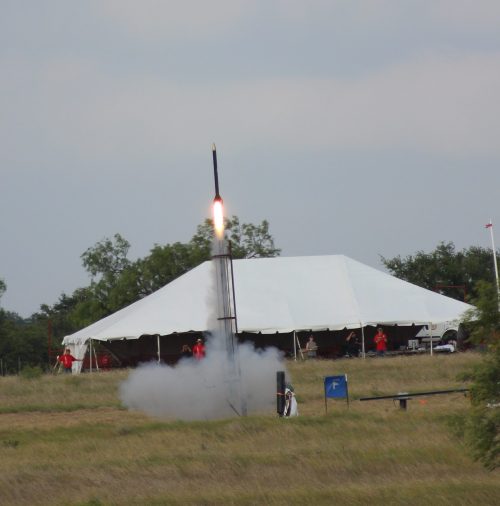
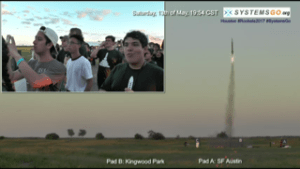
Saturday was another great day of launches. Let’s see who is paying attention, we had 21 rockets on the schedule and we launched 23. The answer is later in the story. After storms came through the area over night and early this morning, causing a two-hour rain delay, rockets finally started flying around lunch time. The sky finally opened a window of opportunity.

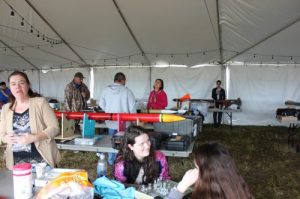
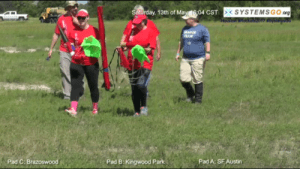
Even though launches started late, Stages 1 and 2 continued on schedule. This meant that when weather finally permitted launching, the spectator tent where rockets wait to go down to Stage 3, was full with more waiting than I have ever seen there.

. 
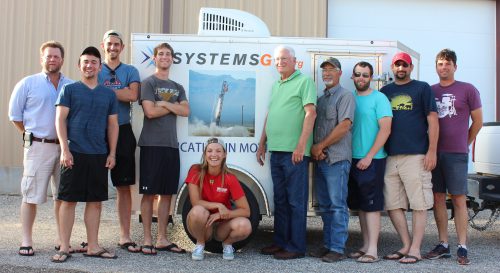
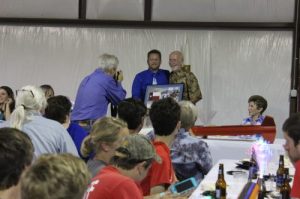
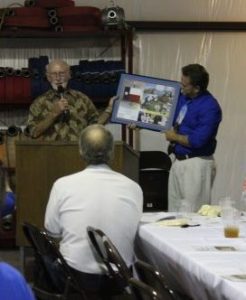
This evening after launches were completed for the schools, two more rockets were sent up as a tribute to retired FHS STEM teacher and SystemsGo founder Brett Williams.  They were both recovered in short order and taken to the Willow City Fire House where a dinner was hosted in his honor. He developed the program that all these schools use to teach the STEM curriculum across Texas and now New Mexico as well.

Several people gave a tribute address honoring and telling stories about Mr. Williams, including Scott Netherland, Andrew Matthes, Rebekah Hyatt, Dave Cambell, and Tom Moser.

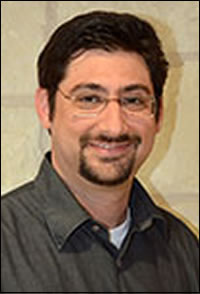
Tom is a retired NASA rocket program member who became involved with the program. He served NASA as Deputy Associate Administrator for space station and space flight. These were just one of his many duties at NASA. Tom is one on a list of many influential people who Brett recruited to support the program over the years. After his address, he presented Brett with a NASA Citation for his work and contribution to the STEM program and student education.
 

Below is the launch schedule for today, Sunday. There are 5 schools launching a total of 16 rockets.

Sunday, May 21, 2017
School
Name
# 1st Level
Tsiolkovsky
# 2nd Level
Oberth
Alamo Heights High School
Colin Lang
3
Hardin-Jefferson High School
Mike Fogo
3 1
Manor High School
Will Davis
3
New Tech Odessa                 Richard Linder 1 1
Roosevelt High School            Jared Warsing 3 1
5
Schools Launching
Totals 11 7
May 15th Total Rockets 18

The following is a link to the album of pictures from today’s launch. Have a look, you and your school rocket just might be in there.

https://www.facebook.com/ginger.burow/media_set?set=a.1479031692117957.1073741890.100000334203350&type=3&pnref=story

Here is the second album link to the pictures from Brett William’s party.

https://www.facebook.com/ginger.burow/media_set?set=a.1479469515407508.1073741891.100000334203350&type=3&uploaded=36

Good luck to all the schools launching on Sunday. I will update the blog after we complete our day again tomorrow. Here is the link to the live stream again.

http://livestream.com/systemsgo

Please remember that although there is no charge for the event, and these launches are open to public viewing, parking and seating is limited due to safety requirements. For this reason, SystemsGo has a provided a link for you to pre-order tickets for those in your party. That link can be found at SystemsGo Events page. This also provides SystemsGo with a way to monitor the number of people in attendance each year. This is in no way meant to discourage your attendance, but is instead to help them provide a great experience for students and spectators, while doing all possible to monitor safety issues and attendance numbers at any one time during the launches.

Event details will be available here each day of the event. Daily reports featuring schedules, school names, results, pictures and some editorial content will also be posted.

www.systemsgo.org as always is the place for more information on this program. You may also email them at info@systemsgo.org .Take the time to get your school involved, the future of your students will be greatly benefited.

#SystemsGo #Rockets2017 #FredericksburgSTEMAcademy #Launcher01 #SystemsGoNewMexico

Rockets 2017-Friday Day 2 Report and Saturday Schedule

Friday had another slow start for rockets. The ceiling was a low again. SystemsGo was able to load 24 out of 25 rockets listed on the schedule onto the rails and launched all 24.The 25th was an abort by one of the schools.

Here are a few of those smiling faces taking their rockets down to the pad.

The north end of the range seemed to be the prime spot for landings today, which kept recovery in that area fairly busy. Unfortunately that left those of us on the south end a little bored so we went to help our northern friends quite often. So then how many recovery teams does it take to find one rocket?

As is normal, Transonics amassed most of those still missing in the field. They also made up the bulk of the final ones shot due to waiting on that cloud ceiling to clear. Coordinates for those have been generated, and the search is ongoing.

David Willden and the group from New Mexico helped out until around noon when they had to launch themselves back towards home. There help was greatly appreciated, and for them it was also further training for next year’s second launch series in Jal.

Phil Houseal was busy interviewing spectators, students and volunteers today. He even managed to catch me and coerce me into another interview this year. We seem to have a continued game between us. We both prefer to be behind the camera instead of in the pictures, so I make sure to catch him and get him in the pictures I post, and he catches me and makes me talk on camera.

Tomorrow is another big day on the range, with a full docket of rockets and extra curricular activities after launches are done as well. It will be a busy and long day. It should be fun though. Hopefully the cloud ceiling will open up earlier so we can start those rockets in a more continuous pattern. And the rain can hold off until after dark and all will be good.

Below is the launch schedule for tomorrow, Saturday. There are 7 schools launching a total of 22 rockets tomorrow.

Saturday, May 20, 2017
School
Name
# 1st Level
Tsiolkovsky
# 2nd Level
Oberth
Akins High School
Joyce Sayce
5
Fabens High School
Manny Moreno
3 2
Henrietta High School
Doug Underwood
2 1
Maypearl High School
James Herrod
1
McGregor High School
Chris Kuhl
1 1
North Lamar High School
Kathy Stewart
1
Northwest High School
Elizabeth Mitias
4 1
7
Schools Launching
Totals 17 5
May 14th Total Rockets 22


The following is a link to the album of pictures from today’s launch. Have a look you and your school rocket just might be in there.

https://www.facebook.com/ginger.burow/media_set?set=a.1477962108891582.1073741889.100000334203350&type=3&uploaded=221

Good luck to all the schools launching on Saturday. I will update the blog after we complete our day again tomorrow. Here is the link to the live stream again.

http://livestream.com/systemsgo

Please remember that although there is no charge for the event, and these launches are open to public viewing, parking and seating is limited due to safety requirements. For this reason, SystemsGo has a provided a link for you to pre-order tickets for those in your party. This also provides SystemsGo with a way to monitor the number of people in attendance each year. This is in no way meant to discourage your attendance, but is instead to help them provide a great experience for students and spectators, while doing all possible to monitor safety issues and attendance numbers at any one time during the launches.

http://www.systemsgo.org/events/

Event details will be available here each day of the event. Daily reports featuring schedules, school names, results, pictures and some editorial content will also be posted.

www.systemsgo.org as always is the place for more information on this program. You may also email them at info@systemsgo.org .Take the time to get your school involved, the future of your students will be greatly benefited.

#SystemsGo #Rockets2017 #FredericksburgSTEMAcademy #Launcher01 #SystemsGoNewMexico
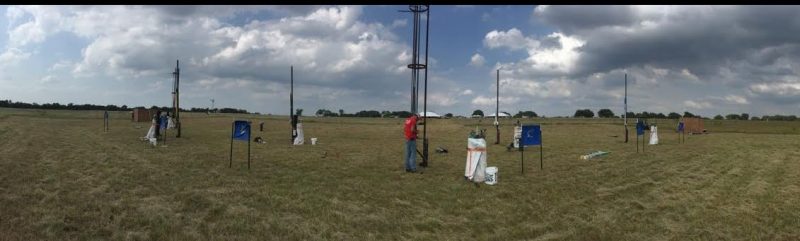
Fredericksburg Rockets 2017-Thursday Day 1 Report – Friday Schedule

Thursday went well. It started off a little slow due to clouds and a low ceiling. Fortunately, it burned off in the afternoon and launches started lining up with only intermittent delays. it was basically a warm, humid, and windy day, but turned out well in the end for rockets. Recovery went fairly well with only a few Transonics still in the field at the end of the day.  Hopefully they will still be recovered before the end of the weekend.

Original Fredericksburg High School STEM teacher and SystemsGo originator and program developer was on site today. He visited with folks, observed how things were working and even worked the Pad until around lunch. It was a nice treat having him on site a while again. He even said he might drop by again before the weekend is over.

We also had working guests from the new SystemsGo New Mexico. Director David Willden was helping a mission control as well as one recovery team that was from his group too.  #SystemsGoNewMexico

The original schedule listed 22 rockets, but the final total launched was 19.

Below is the launch schedule for tomorrow, Friday. There are 7 schools launching a total of 25 rockets tomorrow.

Friday, May 19, 2017
School
Name
# 1st Level
Tsiolkovsky
# 2nd Level
Oberth
Buinger CTE Academy
Michael Skrzynski
2 3
Hamilton High School
Seaborn Achby
1 1
Marble Falls High School
Leslie Alexander
2 1
RL Turner High School
Bill Richardson
2
Tom Moore (Ingram) High School
David Bunch
4
Union Grove High School
Greg Park
2 1
University High School
Dennis Oubre
4 2
7
Schools Launching
Totals 17 8
May 13th Total Rockets 25

The following is a link to the album of pictures from today’s launch. Have a look you and your school rocket just might be in there.

https://www.facebook.com/ginger.burow/media_set?set=a.1476991132322013.1073741888.100000334203350&type=3&uploaded=143

Good luck to all the schools launching on Friday. If I get a chance to do some updates during the day tomorrow , then I will but don’t count on it. It will probably just be one at the end of day. Here is the link to the live stream again.

http://livestream.com/systemsgo

Please remember that although there is no charge for the event, and these launches are open to public viewing, parking and seating is limited due to safety requirements. For this reason, SystemsGo has a provided a link for you to pre-order registration tickets for those in your party. This also provides SystemsGo with a way to monitor the number of people in attendance each year. This is in no way meant to discourage your attendance, but is instead to help them provide a great experience for students and spectators, while doing all possible to monitor safety issues and attendance numbers at any one time during the launches. These  tickets are FREE. They can be found on the SystemsGo Events page. Look for the little ticket icon that says, “Admit One”.

Event details will be available here each day of the event. Daily reports featuring schedules, school names, results, pictures and some editorial content will also be posted.

www.systemsgo.org as always is the place for more information on this program. You may also email them at info@systemsgo.org .Take the time to get your school involved, the future of your students will be greatly benefited.

#SystemsGo #Rockets2017 #FredericksburgSTEMAcademy #Launcher01 #SystemsGoNewMexico

Saturday, Day 2 For Houston Rockets 2017-Recap and Sunday’s Schedule

Today, Saturday, the SystemsGo team had seven schools and twenty rockets to launch on this, their normal full day of launching at the Houston location. It was a productive day, albeit a long and tiring day for the team at the range. The action finally ended and the Livestream shut down about 9:15 this evening.

Weather at the site was sunny with only slight clouds and some wind. Reports from recovery members say it was a beautiful day for launching rockets.

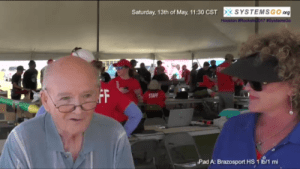
Phil and Rebekah had a very special guest at Mission Control today. Norman Chaffee, retired Deputy Director of NASA Johnson Space Center, was there.He consults with some of the schools in the area on their rockets and STEM programs. In the interview today, he remembered coming to Fredericksburg in the early days of these launches to consult with Brett Williams, program founder, on safety and logistics. It was a genuinely interesting interview as he recounted all his work history through the years with the space program, all the way to where he is now retired and helping young high school students learn.
Later in the day, Phil took time to talk to Christy Bible Glass about her history and how she came to work for SystemsGo. Unfortunately I didn’t get to hear much of hers because my system crashed on my phone and computer about that time, which is why the quality of her picture is so bad, and she appears to have a monocle over one of her glasses. Sorry about that Christy, maybe you can say you were practicing for the upcoming Pirates movie. “Arrgh!”

What I was able to hear and see was a really nice and interesting interview.

In spite of issues on my part, the team still had a great day on the range. Here are a few of the better screen grabs I managed to get today.

The rest of today’s screen shots will be posted on Facebook at the following address for public sharing:

https://www.facebook.com/ginger.burow/media_set?set=a.1471968966157563&type=3

The link below is screen shots from yesterday’s action at the range. Chelsea Burow, pad operator, may add more to either of these albums later. I know she took some really nice pictures from the pad.

https://www.facebook.com/ginger.burow/media_set?set=a.1471692176185242.100000334203350&type=3&uploaded=36

Apparently students, teachers, parents and other humans were not the only spectators watching the rockets. This fellow was sent in by recovery team member, Steve Burrow.

The current launch schedule for Sunday is shown below and may also be downloaded from SystemsGo website at the following address:  http://www.systemsgo.org/wp-content/uploads/2017/04/Flight-Schedule-Rockets-2017-Houston-4-4-17-.2.pdf

Sunday, May 22, 2016
School
Name
# 1st Level
Tsiolkovsky
# 2nd Level
Oberth
Booker T. Washington HS
Dr. Nghia Le
1 1
Northstar High School
Alan Stone
2 1
Schools Launching    2
Totals 3 2
May 22nd Total Rockets 5

Public access is available at this new site this year. A map to the location as well as directions are available at the SystemsGo Events page found here:

 http://www.systemsgo.org/events/

There will also be Livestream from there again this year so friends and family can watch the action online, provided by Phil Houseal  and Zach Pooser .

http://livestream.com/systemsgo

Zach and Phil provide a great experience for both viewers at home and the students and team on site while helping to bolster the STEM program. Allowing the public to share in the actions and see what these students are accomplishing as they apply all they have learned and continue to learn from their launch results helps SystemsGo to grow interest in the future of the STEM program and the hands on approach to learning.

Please remember that since there is pubic access to this event this year,  there are tickets for order and those may be found on the SystemsGo website as well at this link: https://www.greateventseats.com/events.php?lID=92

Event details will be available here each day of the event. Daily reports featuring schedules, school names, results, pictures if available, and some editorial content will also be posted.

www.systemsgo.org as always is the place for more information on this program. You may also email them at info@systemsgo.org .Take the time to get your school involved, the future of your students will be greatly benefited.

What’s All This About Rockets: Success Stories–Robert Deaver

In 1996 in the small town of Fredericksburg, Texas a high school Aerospace program was begun and built literally from the classroom skyward as then, teacher, Brett Williams, developed a plan to build and launch rockets in a classroom setting in order to teach and implement a STEM curriculum. This class originally known as Principles of Technology (the POT Class, as it was fondly referred too), later became the SystemsGo program of Education In Motion, teaching students all over the state and now New Mexico too how to use the principles of STEM to build a career.

In this series of Interview style articles, we will meet individuals that studied under this program and have gone on to build their futures on the skills it teaches. The first gentleman we will meet, is Robert Deaver.

When speaking with indiviuals that have been through this STEM program, especially in the beginning, one thing stands out. Most of them started out in the program because the course name/description sounded interesting, and it provided a science credit.  As years went by and the program became known for building and  launching rockets, that in itself became a big draw for the program, although most participants still did not expect it to have the impact on their career choices that it did.

Robert, when asked why he got involved in the STEM program, was no different. “The class name sounded interesting and it counted as a science credit.”

That simple approach drew in the first classes that set forth to build a rocket, launching  the much more valuable vehicle of their futures  as time and learning evolved.

Robert was in the class during its ground breaking days, working on the construction and flight of the Red Bird #1, #2 and #3 rockets. These were the very formative first two years of the program as students and teacher learned together exactly what it took to create these projects. At first this was just a really fun and new concept of hands on learning and teaching that the students enjoyed.

The original class was only a one year class, but students really took to it and then this “science credit” soon became a class that students took because they wanted to experience it again.

“The course was so much fun I asked if i could take it again and was allowed. I initially took the course because it sounded interesting. I took it a second time because it was fun and challenging,” Robert stated when asked what his reasons were for taking the course.

Robert credits the program with setting him on his career path. He earned a BS in Electrical Engineering a the University of Texas at San Antonio and a MS in Computer Engineering at the University of Tennessee. Robert worked for IBM, Dell, and  after graduation, Real Time Systems, where he spent the last four years designing embedded systems that are used world-wide. After his recent marriage he moved to Boerne, where he started a new career as a hardware engineer at Futurex in Bulverde.

“I did not go directly from high school into an engineering program in college, but being exposed to the ideas and concepts of engineering in the Principles of Technology (precursor to the StystemsGo program) led me there eventually. I learned about Real Time Systems through volunteering with SystemsGo and after I graduated applied for a job with RTS and was hired.” Robert stated.

In his time in the program he worked on 3 of the Red Bird Rocket projects, #1, #2, and #3.  On all three, Avionics and Electronics were his main team focus therefore he was instrumental in Altimeter configuration on all three. On RB#1 he also worked on the Audio/Video Recording and Transmission, and the Fill and Fire system design and construction. On RB#2 he took on the Recovery System design, and on RB#3 the Airframe and Fin design.

Live video transmission from rocket to ground is what he remembers as the worst problem that he tried to solve while working on the RB#1 rocket.

“The electronics were ‘fiddly’ and although it worked well on the  ground, we were not able to get it functional during launch.”

In spite of this, RB#1 is still what he remembers as his best success from the program.

“I watched as a rocket  that my team and I researched, designed, and built from scratch soared off the launch pad. That feeling of accomplishment is truly indescribable!”

During these years he learned that he really liked working with electronics.  He also learned how to work on large projects as a team.

“The Red Bird 1, Redbird 2, and Red Bird 3 were by far the largest projects I had participated in at that time. Each project required interaction with others on my team and with other teams to complete.”

Even with all he learned he still did not realize the impact this program would make on his career choices until he was in college.

“During engineering school, I realized how much more prepared I was due to the project and team interaction skills I learned in what later became the SystemsGo Program.”

When I asked Robert  what advice he would give to current and future students in the program, here is what he had to say, “If you even think you are interested in engineering take these classes and pay attention. The problem solving and team work skills you learn in the SystemsGo program will be invaluable once you get to college.”

Another success of this program is that students from past years come back year after year to volunteer with the program. Many take time out of school and careers to do this. Robert is no exception. He volunteers annually  for the Central Texas, South Texas, and Goddard launches. He has also been named a board member, where he is happy to be able to, “help shape the program.”

I would like to thank Robert Deaver for participating in this article series. He is only the first in what I hope to bring to you as an ongoing series of success stories. These are written in hopes that all may understand the impact that STEM can have on your students and future employees. Having a program available at the high school level to teach, encourage and support this type of learning is instrumental to getting these students into great career futures.  Encourage your students to get involved in STEM and the SystemsGo program if it is available at your child’s school. If it is not available, look into how you can bring it to your area. This program will greatly benefit your school and children.

If you know or have a student that went through the program that would like to share their story here, please contact me in the comment section on this blog or if you follow it on Facebook, Twitter, or LinkedIn contact me there, and I will send you information to participate.

www.systemsgo.org as always is the place for more information on this program. You may also email them at info@systemsgo.org .Take the time to get your school involved, the future of your students will be greatly benefited.


Day 62- SystemsGo Team Ends Another Successful Year

The SystemsGo team traveled home from White Sands Missile Range in New Mexico today. They left Alamogordo around 0800 and arrived safely in Fredericksburg around 1845.

They have now completed another successful year with launches in Houston, Willow City, and WSMR. The group helped students attempt the launches of over 90 Tchaikovsky and Oberth rockets and 6 Goddard level rockets.

Now they take a short needed break before getting fired up for a new year with more schools, students and rockets. It won’t be long and the “launch season” will be back again.

SystemsGo transitions back to helping schools and teachers implement this STEM based program so that more students can participate in this system of learning.

That concludes Thursday’s WSMR Rocket update.

www.systemsgo.org as always is the place for more information on this program. Take the time to get your school involved, the future of your students will be greatly benefited. SystemsGo is a Texas-based STEM curriculum program.

Team photo includes from left to right, Brett Williams (SystemsGo founder), Cade Ottmers, Brian Heffner, Josh Hampton, Chelsea Burow, Gene Garrett, Steve Burow, Randy Kuhlmann, Robert Dever, and Andrew Matthes (FHS STEM program instructor).

Day 61-Rockets at WSMR-Final Launch Day-Update

Today was the final launch day at WSMR for this year’s participating schools. Alamo Heights High School was scheduled for launches of two separate rockets today, one that they were unable to launch while at WSMR last year, and a new one from this year’s class. Union Grove was on standby for a second attempt if time permitted.

The SystemsGo team and the high schools had another early start to the day arriving at WSMR at 0400, with an eight hour window for launches. Transition times between launches were running at two hours each, which allowed all three launch attempts to be completed quickly, everything to be packed up, and the group off the range by 1800.

Alamo Heights started off with their new rocket at the pad. They had a successful fill, fire, and launch. The vehicle climaxed at 17,000 feet, and then nosed over and came down ballistic. What was recovered from it was in pieces.

Alamo Height second rocket, the return from last year took the pad next. It too had a successful fill, fire, and launch, leaving the pad behind and reaching an altitude of 34,000 feet. This rocket also came down ballistic, and they were only able to recover the motor section.

Union Grove was able to attempt a second launch. They had a successful fill, which ended in a vehicle malfunction that caused the injector system to open but no ignition. Speculation is that the Estes motor inside with the electric match did not light because of a possible wire short in the rocket.

That concluded the launch series at WSMR for this year. To recap out of six vehicles, there were two successful launches each with failed recovery systems. One more low altitude launch with in flight mechanical failure causing premature landing and continued burn out. One complete hang fire on the rail. And two scratched due to vehicle malfunctions at fill.

Congratulations to all five schools for getting this far. There are schools every year that aspire to be here, and do not make it. You have accomplished a great deal. You have all met the objective of the program which is to create a scratch built rocket, have it completed and ready for flight, and on the rail attempting launch at White Sands Missile Range. The goal of flight, may have been elusive, or perhaps achieved but still problematic, but you made it here, and each of you has something to learn from the event and some will have the chance to study, fix and try again. All of you are in an elite group of past and present students that attempted to launch a rocket at WSMR.

Tomorrow is another long day of travel as the SystemsGo team and participating schools all head back to Texas. Hopefully it will be a safe, smooth trip home without any issues.

That concludes Wednesday’s WSMR Rocket update.

www.systemsgo.org as always is the place for more information on this program. Take the time to get your school involved, the future of your students will be greatly benefited. SystemsGo is a Texas-based STEM curriculum program.

Tune in again tomorrow for an update from Thursday’s trip home from White Sands Missile Range this week.


Day 60- Rockets at WSMR- Launch Day 2-Update

This morning started around 0900 on WC 50 range at WSMR. Earlier start was not available due to actual military testing scheduled for today. Two schools, Union Grove and Booker T Washington were on the schedule with a 6 hour window for completion.

The SystemsGo team spent the first hour plus, conducting readiness checks on the Nitrous tanks making sure they were switched out for full ones, making sure the Pad was completely operational, and safety testing the Fill and Fire system to be sure it continued at 100%. During this time, students evaluated their rocket and checked to be sure their vehicle was completely prepared for launch.

Between 1030 and 1100 all systems were deemed ready as was Union Grove’s rocket so it was moved to the launch rail. It went vertical around 1145 and commenced fill. As the third Nitrous tank was filling into the rocket, a small piece at the top of the Estes motor in the injection system froze, and collapsed causing Nitrous to vent. At this point the launch had to abort. The problem was easily fixed and the rocket was readied for a second attempt after Union Grove if time allowed.

It took approximately two hours to remove Union Grove’s rocket and put Booker T Washington’s rocket  on the rail, switch out Nitrous tanks, and wait on the survey teams to provide a new azimuth and angel for the rail for the new launch. During this time another thunderstorm was fast approaching. At 1420 they began fill, as the third tank was loading the Army reported lightning ten miles out. Fill was completed and the rocket was ready to fire so the teams all went to the bunk house and began countdown. Twelve seconds from launch the Army called abort due too high winds that would have affected the rocket’s projections.  After another 45 minutes to one hour, they were given the go for launch again and restarted the countdown at one minute and 30 seconds (90 seconds). Rain continued throughout this time.

The initial launch went well. The rocket ignited and left the rail. It traveled 30 to 40 feet up where the bolts at the top of the nozzle cracked, the rocket lost control, and nose-dived into the range between 180 to 200 feet from the launch rail. It continued burning on the ground, and continued storming so it was allowed to stay where it was and burn out. The Army took over monitoring it until they deemed it safe to approach.

This rocket was caring a NASA payload in the form of a container that was filled with lava rocks meant to represent moon rocks. The purpose of the payload was to test the container and evaluate how it would hold up to space flight and impact at  landing. The container was crushed and the rocks strewn all over the crash site. It was determined that the container would not hold up as part of the nose cone.

The decision to abort for the day was made because of continued heavy rain, lightning, and wind in the storm. Two hours elapsed before the storm let up and they were able to get out on the range, retrieve the rocket and rocks, and pack up for the day. This also meant that Union Grove would not get another shot at launch for today, bumping them to after Alamo Heights tomorrow time permitting.

On another outstanding note, the new Fill and Fire system has been tested and found 100% operational in sunshine or rain. Congratulations to Robert Dever, the system designer.

Wednesday’s schedule includes two vehicles for Alamo Heights High School and now a second attempt for Union Grove if the window of opportunity is still available. Range time begins at 0400 with a final eight-hour window. Launch times begin at 0800.

After launches are complete, the team will pack up all equipment and clean up the site, and the schools will load all vehicles, clean up and take down all staging areas including tents and materials and return the bunk house and  pad to pre-SystemsGo arrival WSMR standards.

Thursday all SystemsGo teams and participating schools will return home.

That concludes Tuesday’s WSMR Rocket update.

www.systemsgo.org as always is the place for more information on this program. Take the time to get your school involved, the future of your students will be greatly benefited. SystemsGo is a Texas-based STEM curriculum program.

Tune in again tomorrow for an update from Wednesday’s final day of  launches at White Sands Missile Range this week.


Day 59-Rockets at WSMR -Launch Day 1-Update

Monday was another long day for the SystemsGo team, students from Marble Falls and Anahuac High Schools, and WSMR officials as they commenced the first day of tests.  Start time on the range at 0400 was with no electricity due to lightning strikes the evening before, but this was quickly corrected.

The Fill and Fire System completed set up with the addition of the Comm Readout Displays which allow the bunk house and the pad to see a digital readout of the temperature,  pressure, and weight for the vehicle on the pad during the launch preparation sequences. The full system was tested and minor glitches addressed which brought it to 100% working and readiness. Throughout the day the system was reported to work great and continued at 100%.

Marble Falls was originally scheduled to test a 0830, instead it made it to the pad at around 1200. The vehicle passed its final fill and fire tests and went vertical around 1230. The survey team set the angel at 85 degrees with an azimuth of 355. Six Nitrous bottles were loaded into the tank. At this point it almost over pressured and began to release venting liquid instead of gas. At 175 lbs and 900 PSI  the vehicle was determined ready for launch. Switches were good, and flame was good, but the injector failed to open and the rocket went into a still fire burn on the pad, continuing to burn for four minutes, until the bottom began leaking the nitrous.

Army rules forbid any contact during this time and for 30 minutes after the fire burned out. At that time the Oxidizer crew was allowed to approach and evaluate the vehicle. The rocket was too hot too touch delaying removal of it from the pad for another hour.

Minor damages were reported to the launch rail and trailer, but nothing that would affect or delay any future launches at this time. Instead it was just enough to give Captain Garrett something to do over the summer again.

At approximately 1400 Anahuac’s vehicle was brought to the pad and cleared for launch. At fill, one and a half bottles were loaded into the tank at which time it began leaking out from a vehicle malfunction, and Anahuac had to be scratched.

This concluded the tests for the day, setting today’s successful launch rate at zero. Any school that actually makes it this far is still a success for the simple fact that they attempted a launch of a vehicle of this size. They still have post analysis to do and challenges to over come to prevent these outcomes in the future.

Mother nature was reported to have attended the tests today as well and thrown her own challenges into the range for the crew to overcome, as well as find some humor in once they had passed. First a large dirt devil spawned right on top of the range and attempted to steal one of the large staging tents, causing a commotion as individuals scrambled after and reset it. Later, two birds were fighting on a transformer out by the pad, when a loud pop resounded, right after which one bird fell to the ground while the other made its escape and the power at the pad went down. Luckily they were using generators so this did not affect the pad and they continued as it was being fixed.

The crew spent fourteen hours at the range today, with an 8 hour launch window. Tomorrow they begin their day at 0900 with a shortened 6 hour launch window due to some other military tests scheduled for that morning early. Union Grove High School will be first followed by Booker T Washington High School. Both rockets are reported to be at 100% and waiting.

That concludes Monday’s WSMR Rocket update.

www.systemsgo.org as always is the place for more information on this program. Take the time to get your school involved, the future of your students will be greatly benefited. SystemsGo is a Texas-based STEM curriculum program.

Tune in again tomorrow for an update from Tuesday and a schedule of Wednesday’s launches at White Sands Missile Range this week.


Day 58-Rockets at WSMR Setup Day

SystemsGo had a productive first day today in spite of a long night on the road getting in around 0200 and a short night of sleep. They were at the range bright and early Sunday morning to set up for the launches and finish and evaluate rockets.

The SystemsGo team split into groups.  Captain Garrett and Steve Burow headed up the group at the pad setting up the launch rail. Robert Dever and Randy Kuhlmann set up the Fill and Fire system and proceeded with on-site testing. Brett Williams and Chelsea Burow rolled out all the cabling and connected the electrical systems and after which they helped Andrew Matthes who was overseeing the student groups with final checks and problem solving on rockets.

The first four schools for this Goddard level program were there with their rockets ready for leak and readiness tests. These tests are standard operating procedure used to create safeguards and ensure a successful launch as long as there are no internal parameters that cause the rocket to fail. No rocket will launch without passing these tests. An initial fail does not mean that the rocket is scratched for launch, only that the school has a short window of time in which to correct the issue so that it may be retested, pass and proceed to launch. Time constraints do not allow for continuous testing so the vehicle must pass quickly or be pulled from the launch sequence.

Marble Falls first test showed a minor problem, they were able to fix the issue and passed their second test. They are ready to launch and are scheduled as the first school for tomorrow morning at 0830.

Anahuac is scheduled to launch second tomorrow, but they are currently still working to resolve an issue shown in their test.

Union Grove is scheduled as first launch on Tuesday morning. They passed all their leak and readiness tests and are on standby for launch from 1200 to 1600 Monday in the event that Anahuac is not ready, or extra time allows.

Booker T Washington passed their leak test. They are scheduled as the second launch on Tuesday and are currently still finishing some last minute adjustments.

Set up and systems tests also went well. The new Fill and Fire system tested at 100% minus the Comm Readout Displays because a thunderstorm and lightning in the area prevented them from setting up that part of the system. This display allows mission control and the pad to communicate by sight through a constantly evolving digital readout in order to better coordinate launch sequences without the delay of radio communications, allowing for more safety and efficiency during the Fill and Fire, and count down stages. This last component will be set up early Monday morning and will complete its readiness check before the first launch, putting the full system at 100%.

A few members of the SystemsGo team got drenched in the fast approaching storm while they were down at the pad trying to put Marble Falls’ rocket on the rail so that it would be ready for launch Monday morning. Instead it was covered and left to be raised on the rail early Monday morning.

The Army has allotted an eight-hour window for testing tomorrow. The day begins at 0400 at the range for the SystemsGo team to accomplish these last necessities left from set up today. Then at 0600 the survey team shows up provide angel and azimuth settings for the launches to ensure they perform in a set area of the range for safety and recovery. Then if everything is in perfect order, Marble Falls will test their rocket launching at 0830. Anahuac or Union Grove will follow as quickly in succession as readiness allows.

www.systemsgo.org as always is the place for more information on this program. Take the time to get your school involved, the future of your students will be greatly benefited. SystemsGo is a Texas based STEM curriculum program.

Tune in again tomorrow for an update from Monday and a schedule of Tuesday’s launches at White Sands Missile Range this week.