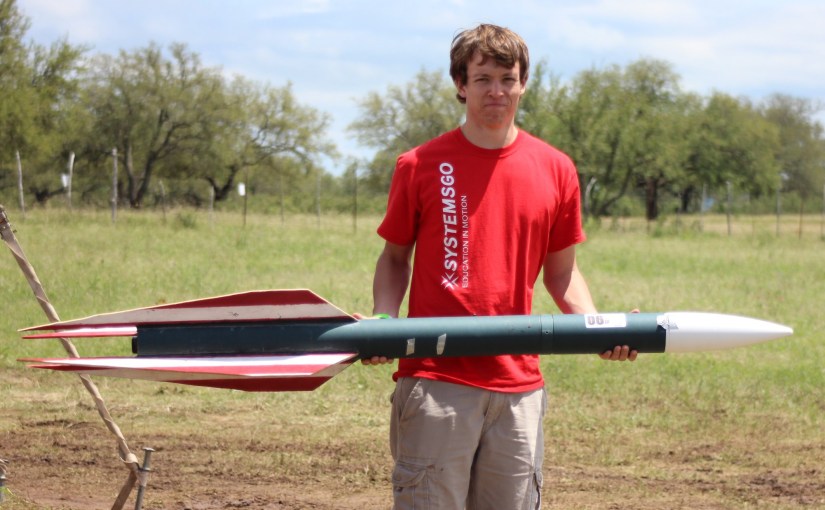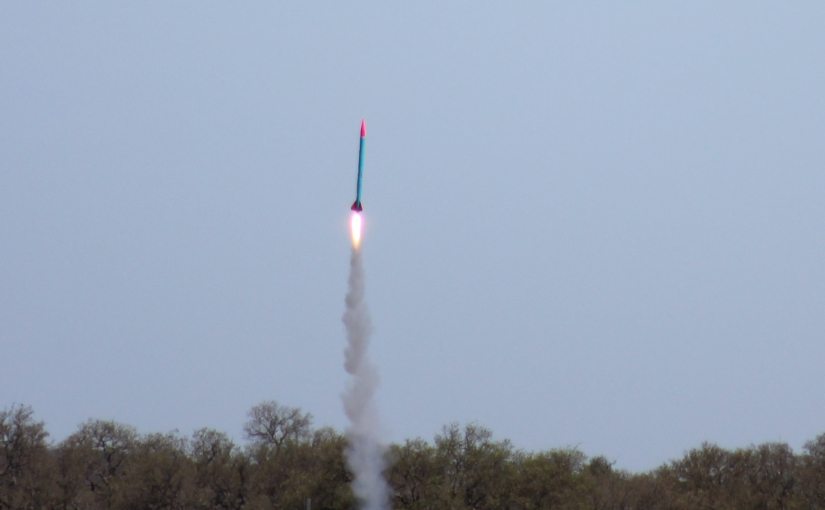
While the more public focus of SystemsGo Rockets 2015, the launches of the Tsiolkovsky (1 pound/1 mile), and Oberth (Transonic) rockets may have come to a close for this year, the program has not finished for the year. The SystemsGo Rocket program now transitions to Goddard level rockets. These rockets and their subsequent launches at WSMR (White Sands Missile Range) are the culmination of all the skills the students have learned throughout their years in the STEM program. This is their final senior project for those schools that participate in this level of the SystemsGo program.
By now these students have spent a minimum of 2 years, some three, and as the program expands with new STEM requirements in education, as many as four years will have been spent following and learning in this system of education. They have spent countless hours both in and out of class.
The year is divided by semester into two project bases. The first semester deals with early design phases including payload, performance, and vehicle configuration. Once the payload and an initial vehicle design concept have been developed the student project team begins developing a flight profile. This is used to predict what will happen during testing, including vehicle stresses and flight dynamics. By semester’s end, a test vehicle configuration should be fairly realized.
Semester two is the culmination of everything the students have learned in the first semester, and the continuation of using life and work skills to manufacture their test vehicle, perform a test and analyze their test vehicle findings. Success for this project is determined by two things.
1. Was the rocket finished by the scheduled date and delivered to the pad for testing?
2. How was the rocket’s flight performance in relation to its design parameters?
This translates to the students manufacturing a rocket from scratch; usually weighing in at between 250 to 450 lbs; to reach high altitudes and Mach 3 to Mach 4 velocities. This project is what all the previous years’ effort have been building up.
At this point, in order to achieve their goal, one large working team, divides into several smaller teams with designated goals for each part of design and development for the vehicles’ creation, propulsion, and testing. These component teams include:
Nose cone
Avionics/payload
Oxidizer tank
Injection
Fuel Grain
Nozzle
Engine case/forward skirt/fins
Each team first creates a workable timeline and then begins researching all necessities and questions concerning their team’s component. Questions they encounter may include function, simplicity, mass, etc. Students present their findings in the form of mathematical calculations for their design and these are reviewed and critiqued by aerospace professionals. Students must find their own solutions to any problems presented to them by these professionals. Once a mathematical argument and a design drawing have been created, the team starts another research phase into the materials to build their component. In this phase students must be able to show critical thinking skills while studying different materials and their costs, safety, ease with which to work and whether they can be ordered in within time constraints. After the design is developed and reviewed and the correct materials determined, a Critical Design Review (CDR) is presented to the other teams for acceptance. If approved the team then begins development of the component, acquiring materials and enlisting any help they may need from local industry. If it is declined then the team redesigns it until the component is accepted by the entire group. If the original time line is kept each team’s component will be finished by the deadline. To ensure this each team must undergo a Flight Readiness Review (FRR) showing that their project is 100% ready. Once all components have demonstrated a 100% readiness, then the complete vehicle can be constructed into a full standing rocket. SystemsGo calls this their “‘all-up’ configuration.” At this point, Standard Operating Procedures (SOP) must be developed and adhered to in order to test their rocket. To do this, students must be in communication with the launch facility, create support teams, and prepare necessary paperwork. Final preparations for the launch also include students working together to make sure the components are all prepped and ready, or working in mission control, meteorology, safety and other areas needed at the launch.
Next the rocket is tested and hopefully undergoes a successful launch. After this a Post Mission Analysis is done to evaluate the complete performance of the vehicle. This marks the end of the of the program.
The knowledge base the students acquire through this program include: as quoted from the SystemsGo website: design and development, critical thinking, fabrication/machining, problem solving, teamwork, communication, analysis/application, documentation, presentation, research, time/project management, budgets/purchasing, public relations, and computer skills in RockSim, Excel, Microsoft Word and PowerPoint.
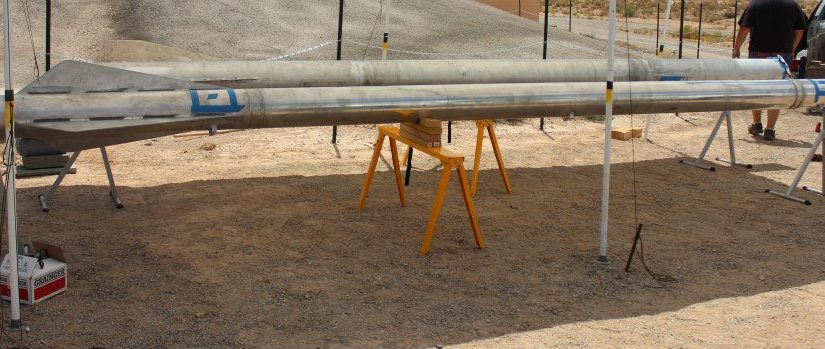
These rockets which usually stand between 20 to 25 feet and range from 8 to 10 inches in diameter are an amazing sight to behold if for no other reason than that they are built by high school students, not professional aerospace engineers. They are built by the future of these industries. Many of these students go on to become engineers, machinists, scientists, physicists, mathematicians, and countless other business professionals. This STEM based program teaches them skills they can apply to life and use to continue into their future learning and job markets. If you have a student in the STEM program at your school who is excited about what they are doing, take interest, get involved and don’t miss the chance to see what they is happening first hand whenever possible. You are watching the future in something we can all be proud. These students are doing truly amazing things.
This article was intended to be a synopsis of the program in hopes that others may take interest and pay attention to what these students are achieving, so that more schools might implement the program for their students. It is well worth the time an effort involved. What better way to learn than to have the students apply what they are learning first hand and achieve a workable goal. The teacher is the instructor, guide, mentor, and timeline manager, but the project’s success or failure is in the students’ hands. They are the project managers that do all that is needed to see that this vehicle makes it to the pad and then into the sky. If your student makes it to this level, don’t miss out, you want to see this monster fly. It is a proud moment you won’t forget, and even more importantly, neither will your student. Their future begins here, don’t miss out on the chance to support their dreams.
I hope I have done the program justice, as I tried to describe it in a way that might be understood by all and draw some interest. My husband Steve, said I should just say, “Kids make really bad a$$ rockets and launch them at White Sands Missile Range.”
Well he has a point and that is the just of it, but it is really a whole lot more than that!
www.systemsgo.org as always is the place for more information on this program. Take the time to get your school involved, the future of your students will be greatly benefited.
Tune again tomorrow for a schedule of the upcoming launches at White Sands Missile Range this week, and hopefully some daily high lights from the group.