Fredericksburg’s STEM Academy/Rocket Program-Spring Term Update #3 (April 1-April 30)

May is here and time is running out for the Fredericksburg STEM Academy as launch dates approach for the junior and senior groups. Juniors have a  May 18th test date at Rockets 2017 in Willow City. While the seniors are down to less than 3 weeks as Redbird 18 is scheduled for completion two weeks before school ends to allow for preliminary systems tests.Due to delays in manufacturing, testing will have to occur in the process of construction as components come in. Final testing will be the week of June 19th prior to their test at WSMR the following week. It is slated to launch at White Sands Missile Range on June 27th.

During April the seniors tested Low Density polyethylene (LDPE) three times on teststand. Data on all tests was consistent and exemplary. Currently the injector plate is being drilled again to increase the oxidizer flow rate to the correct  value to provide for complete combustion.  Due to this testing is on hold. Lately they have been experimenting with different ablative arrangements. The ablative has  burned through slightly but not enough to damage the test cell.

Below is an actual video of an engine burn test.  This one of the first video’s with HD video quality and audio.  The regularly captured video does not have audio embedded.  This is good for them too as they do these tests for NASA and this gives them something  more to show of their work.

https://goo.gl/photos/78HwtXxx8rytjxSV7

Mr. Matthes had this to say about this particular burn,  “It looks pretty good but we’re only getting about 1/3 of the oxidizer we should be getting so it is fuel rich.  It will not be as orange when we get the oxidizer flow rate correct.  The hope is that it is a really clean plume with mach diamonds in the plume.”

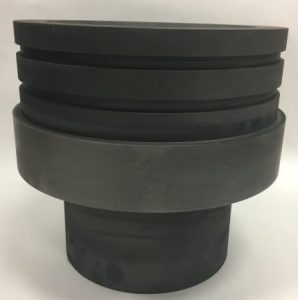
The senior’s “junior teststand” nick named “Baby Bird” is almost complete. They hope to conduct their first ever test on this new teststand possibly late this week. This teststand was created by the seniors starting last year during junior studies to test a fuel grain system designed and developed by them to interface with the hyportek injector and tank. They hope to have 3 successful tests on this teststand. If they achieve this, then they get to fly this new system at Willow City in last year’s rocket.  At this point,  they are getting fuel grains prepped.  Pictured below, are nozzles created for Baby Bird.

Redbird 18 still currently does not resemble a rocket, but they are making steady progress. The nozzle has been manufactured, seen here 

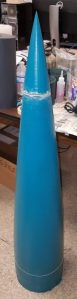
and  the nose cone mold is also back, seen here. 

Machining could only be created to within 8 inches of the tip, therefore they created the tip with 3D printing and epoxied it to the nose cone and are preparing it for fiberglass.

Other needed materials are in and have been sent out to Heartland Enterprises for machining.  Currently, Mr. Matthes says that the biggest test coming up will be next week when they pressure test the oxidizer tank.

Juniors are under pressure as the deadline for 100% completion of their rocket is May 11. Meeting this deadline will allow them time to complete their Flight Readiness Reviews (FRR) and be able to high light problems or errors that still exist. Components are coming in and weights on some are different than originally reflected in RockSim. Due to this they are updating their design to accommodate. Currently they are still on the wire between breaking the speed of sound and exceeding the 13,000 feet maximum allowable altitude. Breaking Mach means they also exceed altitude. Staying under 13,000 feet  means then they lose their shot at breaking Mach.

 Here Chris Calzada is working on RockSim trying to resolve the altitude velocity conundrum.

Meanwhile the Sophomores have been entrusted to work at their own pace to finish their last chapters and projects. Time remaining after completion of these is for 3D printing and modeling. Their learned skills in  isometric, creating section views, details and working drawing sets would now allow them to communicate effectively to a machine shop without the need for clarification.

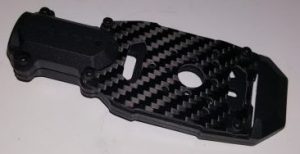
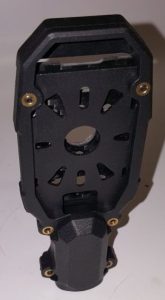
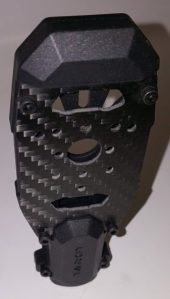
Paul Kucherka, a FISD maintenance man and school function videographer developed an issue with the quadcopter that he uses to video. A few of the sophomores are going to attempt to design and develop a new wiring harness that may provide the solution to Paul’s needs, hopefully by the end of the school year,  this would allow him to continue using this equipment for video. In order to do this, a few other sophomores have been creating the multiview of one of the quadcopter’s parts on the 3D printer. Pictured below is the original part they are attempting to recreate.

This article is the seventh in a series, new for this school year ’16/’17 of monthly updates that will follow the Fredericksburg STEM Academy/Rocket program. This school is a participant of the SystemsGo STEM program. This series of articles is intended to support, encourage, and challenge students in the program as they share their working status and accomplishments throughout the year in the program. These publications will be available for tags and re-posting.

www.systemsgo.org as always is the place for more information on this program. You may also email them at info@systemsgo.org . Take the time to get your school involved, the future of your students will be greatly benefited.
Rockets 2017 Begins Next Week With a New Venue in New Mexico

The launch of Rockets 2017 blasts skyward on April 27th from a brand new venue this year as six schools from New Mexico join the SystemsGo program. Last year instructors from these schools came to Willow City to observe, learn and participate in launches in order to implement the program at a new site in New Mexico.

SystemsGo New Mexico is headed up by David Willden and currently includes the schools of Carlsbad High School, Hobbs High School, Jal High School, Lake Arthur High School, Loving High School and Lovington High School. This is their first year in the program and they will attempt launching a total of 10 one pound/one mile rockets at a location near Jal, New Mexico.  This new site, called the Discovery Education Launch Pad,  will be open to public viewing of launches, as are all sites except White Sands Missile Range this year. A link to location information and a map link are available at http://www.systemsgo.org/events/ .

The site will be open for admittance at 8:00 a.m. and launches will commence at 8:30 a.m.

If you plan to attend Jal or any of this year’s launches please register for your attendance ticket at http://www.systemsgo.org/save-the-date-for-rockets-2017/  or they may be gotten at the gate. These are free but required for admittance to each site.  Reserving them ahead at the website is preferred to obtaining them at the gate because the latter slows entrance to the site and may result in you missing the viewing of your intended launch.

You may also view any of the launches except WSMR on Livestream. That link will be available on the SystemsGo website closer to the launch. The New SystemsGo New Mexico also has a twitter feed you can join to keep up to date on what they are doing. That link is https://twitter.com/SystemsGoNM

The schedule of launches for Jal is also available at http://www.systemsgo.org/save-the-date-for-rockets-2017/ . I will post it here for launch day next week as well. I want it to be as accurate as possible so I will refrain from posting it now in case there are any late changes.

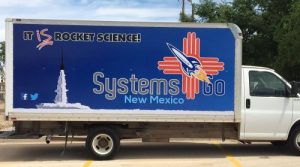
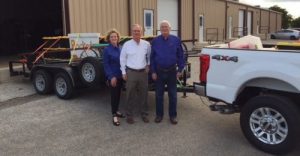
If you are in the Jal, New Mexico area, keep an eye out for this new vehicle. It just rolled out recently to support the new launch group. 

If you follow this program and like to view the launches, Rockets 2017  will continue with two  more launches in May. The first will be held in Smith Point just south of Anahuac, Texas for schools in the Houston area, on the weekend of  May 12-14, 2017. If you have been to the Houston area launches in the past you may want to check out the SystemsGo website for information because this is a new location for that area this year. Information and a map link are available.

Next the Stewart Ranch in Willow City, Texas will host the largest of the now three launch events on the weekend of May 18-21, 2017.  This testing site covers the Fredericksburg and  Hill Country area schools and all Texas schools not participating in the Houston launches.

Please watch the SystemsGo website, SystemsGo Facebook page,  SystemsGo Twitter feed: https://twitter.com/SystemsGoNews and this blog for upcoming information on theses events.

The senior groups are tentatively scheduled to launch their Goddard level rockets at White Sands Missile Range (WSMR) in New Mexico the week of June 26-30.  These are not available for public viewing or Livestream due to being tested on a military facility, but blog and SystemsGo updates will be posted online as available during that week.

More event details will be available here in upcoming days as events get closer. Daily reports featuring schedules, school names, results, pictures and some editorial content will be posted during the events.

www.systemsgo.org as always is the place for more information on this program. You may also email them at info@systemsgo.org . Take the time to get your school involved, the future of your students will be greatly benefited.

Fredericksburg’s STEM Academy/Rocket Program-Spring Term Update #2 (February 21-March 31)

April 1st is tomorrow, so time is becoming a factor for the Fredericksburg STEM Academy as launch dates approach for the junior and senior groups. There are no fools here though, just  several groups of future engineers working hard to meet their timelines. With March behind them there is only a little over 6 weeks left  for the  junior group until Rockets 2017 and their May 18th test date. The seniors have approximately 60 days as Redbird 18 is scheduled for completion two weeks before school ends to allow for preliminary systems tests.

More on these groups and their current status reports will be later in the article.

Sophomores are currently taking mid-term exams. This is due to the new schedule for classes this year which puts a full year’s curriculum into one standard semester. They have been busy using AutoCAD to create multi view drawings of objects. Dimensioning and tolerancing of these drawings will be learned next, followed by isometric drawings and 3D modeling. The students have been printing models of their multiview drawings using the newly installed 3D printer. All 3  3D printers available now are working well.

The student aide, Colby Marthaler  has also been using the 3D   printers to print all the parts necessary to create a model of the Falcon 9 Rocket SpaceX uses to transport satellites and the Dragon spacecraft into orbit.

Juniors had CDR’s (Critical Design Reviews) due for their rockets by March 30. Unfortunately they are just getting to them. Students will have to be studious in order to meet their May 18th launch date due to being behind schedule at this time. The payload for this rocket is a rapid growth slime mold. They have designed the payload in order to create a controlled experiment in which they should be able to determine how flight impacts the mold’s growth, negatively or positively.

The design criteria for their rocket is a one pound payload and breaking the speed of sound therefore achieving a transonic state. Currently neither criteria has been met so the group has more work to do to accomplish their goals by their launch date.

Their mid-term which is a LabVIEW development project has come along well. They are creating a workable program which requires specific methods and functions in order to attain a goal of designing and fabricating a micro test stand for Estes motors. They will be connecting  a (DAQ) Data Acquisition unit to a computer and registering it to that computer in order to read sensors, and programming a control and DAQ Virtual Instrument in LabView in order to run the test stand.

March began with more fuel grain tests at test stand. Two tests were completed in the first week alone, consisting of many hours of work to accomplish each. A temperature sensor indicated a high enough value in order to cause a programmed shut down on the first test that week.  After investigation, it was found that a ‘electrical noise’ caused an anomaly which gave the sensor its reading, and that it was in fact not outside normal operating parameters. The actual test did not experience any temperature concerns.

The same fuel grain was able to be used again in a 20 second burn, which allowed students to achieve a cumulative 40 second burn on one fuel grain.  The shut down was disabled for the second burn,  allowing the data to still record the temperatures caused by the ‘electrical noise’, but not to stop the burn test and it was a  full success without any further exceptions.

Mr. Matthes was very pleased with these burns and stated , “All data was processed and showed again the test stand was producing verifiable data similar to theoretical expectations.”

Students began another round of testing this week. Six new fuel grains will be tested accounting for three tests each of two different fuel types students have been working on. The  hope is that they will cycle through smoothly due to the fuel grains being prepped prior to testing.

  Here Hannah Boubel is working with graphite in order to make ablative, which is a sacrificial material in the pre and post combustion chamber so the burn does not penetrate the liner and steel test cell.

 In this photo,  Sterling Weatherford is preparing a fuel grain for installation in to the test cell.

Along with test stand work, the students have been hard at work on Rebird 18, their Goddard level rocket slated to launch at White Sands Missile Range on June 27th. Students have already contracted with Heartland  Enterprises and SRM Manufacturing for fabrications and parts have been supplied to them.

At this point in the process students are learning true cause and effect, and just how it can affect their outcomes.  The entire success of the vehicle from this point forward is contingent on the group not only working as a team as a whole, but also for each individual team to stay on top of their work and outcome. Many of the components are dependent on the progress of the others. Delays on one team’s  element directly affects the next  team creating delays down the line and strained time schedules.  Individual testing is conducted on each piece as it is finished.  Full up integration and testing of any systems that allow for ground based testing is scheduled for two weeks from the end of school when the rocket is due to be complete.

“They are well on their way to a successful vehicle.  The seniors will not have the luxury of adopting senioritis as there is still significant and mutually dependent work to be accomplished,” Mr. Matthes reported. “These next 60 days will be a true test of their team work, peer loyalty and persistence. ”

As the end of the school year approaches, these students are becoming more and more adept in their learning and knowledge as young and capable engineers. Their end of year rockets will be a testament to that learning, time and ability.

According to Mr. Matthes, “Students are becoming ‘plagued’ with knowledge and experience:  the more they know and become aware of, the more they have to take into consideration and the more challenging the process becomes.  However, it also makes for conditions more aligned with success.  Additionally, if we consider these students products of FHS and the FHS Engineering, then they should be welcomed by a market hungry for what they have to offer.”

If you follow this program and like to view the launches, Rockets 2017  will be held at the Stewart Ranch in Willow City, Texas on the weekend of May 18-21, 2017.  This testing site is open to the public. Please watch the SystemsGo website and this blog for upcoming information on the event. The FHS junior group will be testing their rockets on Thursday, May 18, 2017.

The senior group is tentatively scheduled to launch their Goddard level rocket at White Sands Missile Range (WSMR) in New Mexico the week of June 26-30. The current schedule for that event is as follows:

Sunday, Jun 25th             Travel Day

Monday, Jun 26th            T-1 and Site Set up/Rocket Prep at WC-50

Tuesday, Jun 27th            Launch Day One (Three Rockets – Fredericksburg, Union Grove, Alamo Heights)

Wednesday, Jun 28th     Launch Day Two (Three Rockets – Anahuac, Booker T. #1, Booker T. #2)

Thursday, Jun 29th          Contingency Day

Friday, Jun 30th                Travel Day

There are also launches in Houston for schools in that area the weekend of May 12-14, 2017. New for this year the Hobbs, New Mexico group of schools will launch 1/1 rockets in Jal, New Mexico on April 27, 2017, this site will also be open to public viewing.

This article is the sixth in a series, new for this school year ’16/’17 of monthly updates that will follow the Fredericksburg STEM Academy/Rocket program. This school is a participant of the SystemsGo STEM program. This series of articles is intended to support, encourage, and challenge students in the program as they share their working status and accomplishments throughout the year in the program. These publications will be available for tags and re-posting.

www.systemsgo.org as always is the place for more information on this program. You may also email them at info@systemsgo.org . Take the time to get your school involved, the future of your students will be greatly benefited.
First Term Wrap Up (Nov. 18-Dec. 21)- Fredericksburg’s STEM/Rocket Program

December is nearly over and Winter break starts today, but before we send the Fredericksburg High School STEM Academy home for Christmas,  we need to review what they have been working on these last four weeks, and try to wrap up the fall program.  January starts the spring program loaded with really big goals and events that this past fall has been building toward.  Each group’s learning will be evident in the success of this coming semester’s projects.

During the month of November the Freshman visited Toyota Manufacturing and Southwest Research Institute (SwRi).

20161121_140216The students were impressed with Toyota and how huge the plant itself is, as well as the difference in the type of automation used as compared to last month’s visit to Caterpillar. Toyota’s assembly line resemble Ford assembly lines. The components actually moved along on a line and each team had an assigned task as it moved by them. Caterpillar operated in stages where one team did several components before it moved to the next staging area.

Mr. Matthes remarked that ” The delivery logistics of parts to the assembly line was phenomenal!”

On December 13, the Freshman group visited Fischer and Wieser, Heartland Enterprises, and UT Aeromechanical Lab.

Fischer and Wieser and Heartland are Fredericksburg companies. They both demonstrated automation on a small-scale as compared to companies like Toyota and Caterpillar. Fischer and Wieser explained the importance of loyal employees and a family like environment.

Heartland is similar in framework and belief on how they treat their employees. Where as many companies prefer to hire very experienced candidates from other companies, Heartland prefers to hire inexperienced people and train them in their ways of operation. They find that by doing this they keep a certain working quality and alleviate the bad habits that experience can sometimes bring with it which can be adverse to the companies current operating practices and quality control initiatives.

Below are pictures from Heartland Enterprises:

20161213_0959350 20161213_095101 Here, Alvin Culak, shows machine operations to students.

Students at UT Aeromechanical Lab and Flow Field Imaging Lab in Austin, were working on ablative testing for high velocity projectiles or vehicles,  and a research lab studying  hydrogen combustion and anomalies that may exist with it. These anomalies must be understood before hydrogen combustion can be considered for fuel. They are also studying wind tunnel testing designed to help discern the tendencies of shock  for use in ramjet and hyper velocity propulsion systems.

Below, candidates took time with the students to explain and exhibit their work.

20161213_125959 UT graduate student, Rakesh Ranjan, operates a swirl combustor at atmospheric pressure. For more information on this: http://research.ae.utexas.edu/FloImLab/highpressureflashback.php

20161213_125140  UT graduate student, Benton Greene, demonstrated the Inductively Coupled Plasma torch. For more information on this: http://research.ae.utexas.edu/FloImLab/ControlofShockBoundaryLayerInteractionDistortionusingPulsedPlasmaJets.php

Another UT post-doctoral student, Leon Vanstone, not pictured, explained the experimental investigation of 3D shock wave/boundary interaction unsteadiness at the University of Texas at Austin High Speed Wind Tunnel Lab . For more information on this: https://utexas.box.com/s/n1kk9ozocyp8ozloo9dm9ujx23q6vuwj

Dr. Noel Clemens is the Principle Investigator for all experiments in the lab, and the primary decision maker. Jeremy Jagodzinski is the lab facilitator. He helps to support the research in the lab and also set up the visit for the students. Phillip Varghese oversees the Center for Aeromechanics Research which often collaberates with this lab.  Thank you to all of them for facilitating the tour.

Mr. Matthes stated that, “the students really loved the research facility.”

Aside from field trips to see first hand about automation and manufacturing, the freshman have been learning  about production/automation engineering. They are currently in the process of designing an orange juice production plant. Their product goal for the plant is to take raw material and produce packaged juice in palletized product bundles ready for sale. Jenny Weiser will be coming in January to see their presentations and evaluate and provide constructive criticism.

Sophomores will be entering the program for the second term, starting Jan. 23. ACC’s Auto CAD course will be their main focus learning to utilized specific skills and design elements.

The juniors flew their Generation 3 rockets recently. This provided several learning points that will be useful on their projects next semester. Students realized that even cutting edge design doesn’t always transfer well into the manufacturing ability of the vehicle. Failures in these construction and design frailties, resulted in irregular flight patterns. These mishaps translated into two days of Post Mission Analysis insuring that lessons from this would not carry over to next semester’s larger rocket project.

Here the juniors are building their G3 rockets.

20160921_1247120 20160921_124721 20160921_124732

In January, the juniors will begin work on their one pound/one mile vehicles to be tested out at Willow City in May. This is considered a sounding rocket designed to break the speed of sound without breaking a ceiling of 13,000 feet while carrying a one pound payload.

Seniors have been very busy, and experienced both successes and set backs on their projects recently.  Testing on fuels is expected to begin in January as they are nearly complete with updates on test stand.

After manufacturing pieces for their small motor test stand out of 2024 aluminum, they discovered that this metal type cannot be welded. This resulted in having to procure another high strength aerospace aluminum which is conducive to welding. Once they find this they will have to begin again the manufacturing of the fuel grain containment system.

“These were very important lessons learned for all, them and me,” stated Mr. Matthes.

Preliminary Design Reviews were conducted on their Goddard level rocket, last week. Due to the set backs on test stand, previously  discussed, the group lost time they should have had to work on their rocket design and therefore have a bit of ground to make up there in order to have those completed by January’s end.

This article is the fourth in a new series for this school year ’16/’17 of monthly updates that will follow the Fredericksburg STEM Academy/Rocket program. This school is a participant of the SystemsGo STEM program. This series of articles is intended to support, encourage, and challenge students in the program as they share their working status and accomplishments throughout the year in the program. These publications will be available for tags and re-posting.

www.systemsgo.org as always is the place for more information on this program. You may also email them at info@systemsgo.org . Take the time to get your school involved, the future of your students will be greatly benefited.
What’s All This About Rockets: Success Stories-Anissa Kneese

Welcome back to Rocket Success stories. This is the second installment of this series of Interview style articles, in which we meet individuals that studied under the SystemsGo STEM program and have gone on to build their futures on the skills it teaches. Last month we met, Robert Deaver, a 1996 graduate of the program.  This month we are looking at a young lady that is a more recent graduate also from Fredericksburg High School in 2014, miss Anissa Kneese.

Anissa is currently a college student at Texas A&M, which allows us to talk with her now and to check back with her and see exactly where her education and career choices have taken her in the future. This is in a way, the middle of her path, but the drive she has to complete her engineering goals are a direct correlation of her experience in the program.

“Before taking the rocket program classes in high school, I had no idea I was interested in engineering, I learned about the many different engineering paths. and I fell in love with problem solving. I am now working toward my degree in Mechanical Engineering thanks to SystemsGo.”

Anissa joined the STEM program out of curiosity her freshman year, because of all she had heard about it from friends and family. She quickly realized that this class would shape her future.

“After completing the first class freshman year, I was considering majoring in engineering in college. Sophomore year pushed me even more in that direction, and after junior year there was no doubt what so ever this was my future career path. Senior year was the icing on the cake!”

As she studied in the program, her reasons changed from curiosity to excitement and the class became a priority for her.

“By junior year I was so eager to go to class every day. I knew I would learn something new or something really eventful and exciting would happen. Like running a successful student designed test that caused a nearby resident to call the fire department!” Engine and fuel burn  tests can be loud and though most  folks have become accustomed to these tests, this one was particularly loud, and caused a stir, something she recalls with guarded humor.

Anissa participated on two teams. The first was the Mechanical team for static hybrid propulsion testing, and then the injector team for the Redbird #15 Rocket, as long as helping with electronics, payload and engine installation.  Her specific jobs on these projects included, “For propulsion and testing I prepped fuel grains by ensuring their size was exact, installing them in the test cell, and preparing the test cell by sealing the cell to prevent oxidizer leakage. After each test I would clean the test cell and prep the next fuel grain. I also set up oxidizer tanks and plumbing from the tanks to the test cell. During tests, I would make sure all solid and liquid weights were recorded to be used in calculations in the days to follow.”

The Redbird #15 is the rocket that her group designed to launch at White Sands Missile Range. This is where she really had to put her education to work and it presented her with her hardest problem to solve.

“The toughest problem I came across was “trouble shooting” an injector design that had mysteriously failed  in a Redbird rocket from the year before. My teammates and I designed several tests to attempt to understand the previous failure, and this proved to be quite difficult. After a redesign with new materials, the injector worked flawlessly in our Redbird rocket.”

Even with this struggle accomplished with perfect results, she considers another success the greatest her and her team accomplished during their time in the program.

“I would consider my (and my team’s) best success being the first high school team to complete a full round of three 40 second hybrid test burns. This had been attempted by several classes before us (and even ourselves the year before), so coming back the next year and being successful was a great feeling.”

The SystemsGo program teaches individual accountability as well as team coherence. Anissa found this to be one of the most important things she learned in the program.

“This program taught me countless lessons and technical approaches to problems, but the most important thing I learned was the importance of communication. It is impossible to accomplish any great task without full communication and understanding from every team member involved.”

Many of the students who have participated in this program, not only go on to higher education and careers in STEM fields, they enjoy giving back to the program where ever possible. Anissa is no exception to this, she returns each year to help as launch pad lead at the Willow City launches.  If possible she plans to continue helping and being involved with the program however possible.

“I would enjoy mentoring and helping students in the future with the design process or understanding the set up and procedures of building the static propulsion testing. I would also enjoy having a job with SystemsGo in the future. I think having experience in industry would be valuable to gain first, but I would enjoy coming back and teaching at some point.

Her current advice for students considering or currently in the program is, “work as hard as you can every day. Don’t be afraid to get sweaty and leave class with your hands dirty. It doesn’t matter how smart you are, you will learn so much if you are eager to get involved!”

Along with the fantastic education the SystemsGo STEM program provides in the Science, Technology, Engineering, and Mathematics fields, it also helps build confidence and character. It teaches each student to reach into themselves and take pride in what they are accomplishing and can accomplish. For many students, it is a learning boost they may never have known they needed until they discovered it in themselves during the program. Anissa sums up that experience.

“I learned that I am capable of accomplishing anything I have my heart in and I’m willing to work hard to achieve.”

I would like to thank Anissa Kneese for participating in this article series.  These are written in hopes that all may understand the impact that STEM can have on your students and future employees. Having a program available at the high school level to teach, encourage and support this type of learning is instrumental to getting these students into great career futures.  Encourage your students to get involved in STEM and the SystemsGo program if it is available at your child’s school. If it is not available, look into how you can bring it to your area. This program will greatly benefit your school and children.

If you know or have a student that went through the program that would like to share their story here, please contact me in the comment section on this blog or if you follow it on Facebook, Twitter, or LinkedIn contact me there, and I will send you information to participate.

http://www.systemsgo.org as always is the place for more information on this program. You may also email them at info@systemsgo.org .Take the time to get your school involved, the future of your students will be greatly benefited.

Tuesay, First Launch Day at WSMR

Today was a great success for the SystemsGo program as they met and/ or exceeded three T times with three rockets off the rails. The action started off well with a T time of 8:30 a.m. for Alamo Heights Heights School. They began the day with their smaller rocket built for extra height. It left the rail well, had a beautiful flight and reached a total height of 10086′. At this point the paper phenolic cover around the fuel grain burned off causing the body tube to melt through developing a hole with a side burn after which it rolled over and returned to the range in a ballistic fall. Reports from WSMR have it plugged into the range 970′ from the launch site in lawn dart fashion. This was not totally unexpected since a recovery system was not part of the vehicle.

The 11:00 a.m. T time for Union Grove’s launch meant that SystemsGo had to load the vehicle on the rail, fill and be ready to fire within two and a half hours. This was met and exceeded as their rocket left the rail at 10:59. The rocket had a great lift off but not far into the flight, the engine case blew apart dumping the motor and fuel grain. Preliminary reports are that the nozzle came off causing engine explosion. Their nose cone and shoot deployed, but the shoot did not open. Their max height was 600′.  This was actually the first time that Union Grove High School has left the rail in what is now their third attempt at WSMR. This is a great triumph for them. They are now their school’s first flight at WSMR.  Great job, Union Grove students.

Alamo Heights had a second rocket launch today with a T time of 2:00 p.m. SystemsGo did great work and exceeded this sending them off the rail at 1:48. This rocket only made 180′ after clearing the rail. The same paper phenolic fuel grain cover caused a hole to melt through the rocket at which point it began tumbling end over end back to the range.

Congratulations to both schools, at having achieved getting a rocket off the rail at WSMR. Post Flight Analysis on all these vehicles should prove to be enlightening and educational.

Tomorrow’s schedule is tentative because at this point the scheduled schools’ rockets are not pad ready. They are all going out to the range at 5:00 a.m. to complete work on them and hopefully keep the tight schedule for the day. The following is the schedule at this time:

Wednesday launch order:

  • 8:30 a.m. Anahuac
  • 11:00 a.m. Booker T. Washington (1)
  • 2:00 p.m. Booker T. Washington (2)

Event details will continue to be available here. I will provide more information each morning as to how the schedule and other event details will progress for that day and how launches went for the schools testing that day. Pictures are not allowed on the range, but some pictures of teams getting ready to leave for the range with their vehicles might be available. If anything is available I will post it for your viewing pleasure.

www.systemsgo.org as always is the place for more information on this program. You may also email them at info@systemsgo.org .Take the time to get your school involved, the future of your students will be greatly benefited.

The picture was provided by parent, Lori Davis of the Union Grove High School Rocket team after their launch here at WSMR.

Sunday Rockets Headed to White Sands-Day 1-Report and Monday Early Information

The SystemsGo team rolled out of Fredericksburg at just before 9:00 a.m. this morning to head out to White Sands Missile Range (WSMR) in New Mexico and arrived at Alamogordo around 5:30 this evening. Travel went well, and two schools, Alamo Heights and Booker T. Washington met us there.

Tomorrow is an informational and set up day. SystemsGo personnel and only student and teacher participants from the schools head out at 6:00 a.m. for T-1 briefing  and afterwards setup at West Center 50 launch site.

Event details will continue to be available here. I will provide more information each morning as to how the schedule and other event details will progress for that day and how launches went for the schools testing the previous day. Pictures are not allowed on the range, but some pictures of teams getting ready to leave for the range with their vehicles might be available. If anything is available I will post it for your viewing pleasure.

www.systemsgo.org as always is the place for more information on this program. You may also email them at info@systemsgo.org .Take the time to get your school involved, the future of your students will be greatly benefited.

Team photo includes from left to right, Ginger Burow, Scott Netherland, Randy Kuhlmann, Steve Burow, Brian Heffner, Gene Garrett, Andrew Matthes ,Rebecca Hyatt, and Josh Hampton. Not available for this picture, Chelsea Burow.

9 More Days- Here’s What WSMR Rockets are all About

Nine days from today, the SystemsGo team and schools leave for New Mexico to launch rockets at White Sands Missile Range (WSMR). The list of schools attending and schedules will be posted next Friday. They are mostly available now, but there may be minor changes so I will hold off until then for a more accurate posting.

I do know that Fredericksburg rocket group has run into some major snags with their vehicle and that if they cannot overcome them quickly, then they will have to make a decision on whether or not to abort within the next few days. This is a big decision to have to make because a lot of man hours, time and money have been poured into this year long project. The magnitude of this may be hard for some to fathom so here is a synopsis of what the Goddard level rockets that launch at WSMR are all about.

These rockets and their subsequent launches at WSMR (White Sands Missile Range) are the culmination of all the skills the students have learned  throughout their years in the STEM program. This is their final senior project for those schools that participate in this level of the SystemsGo program.

By now these students have spent a minimum of 2 years, most of them four years learning in this system of education. They have spent countless hours both in and out of class.

The year is divided by semester into two project bases. The first semester deals with early design phases including payload, performance, and vehicle configuration. Once the payload and an initial vehicle design concept have been developed the student project team begins developing a flight profile. This is used to predict what will happen during testing, including vehicle stresses and flight dynamics. By semester’s end, a test vehicle configuration should be fairly realized.

Semester two is the culmination of everything the students have learned in the first semester, and the continuation of using life and work skills to manufacture their test vehicle, perform a test and analyze their test vehicle findings. Success for this project is determined by two things.

1. Was the rocket finished by the scheduled date and delivered to the pad for testing?

2. How was the rocket’s flight performance in relation to its design parameters?

This translates to the students manufacturing a rocket from scratch; usually weighing in at between 250 to 450 lbs; to reach high altitudes and Mach 3 to Mach 4 velocities. This project is what all the previous years’ effort have been building up.

At this point, in order to achieve their goal, one large working team, divides into several smaller teams with designated goals for each part of design and development for the vehicles’ creation, propulsion, and testing. These component teams include:

Nose cone

Avionics/payload

Oxidizer tank

Injection

Fuel Grain

Nozzle

Engine case/forward skirt/fins

Each team first creates a workable timeline and then begins researching all necessities and questions concerning their team’s component. Questions they encounter may include function, simplicity, mass, etc. Students present their findings in the form of mathematical calculations for their design and these are reviewed and critiqued by aerospace professionals. Students must find their own solutions to any problems presented to them by these professionals.

Once a mathematical argument and a design drawing have been created, the team starts another research phase into the materials to build their component. In this phase students must be able to show critical thinking skills while studying different materials and their costs, safety, ease with which to work and whether they can be ordered in within time constraints. After the design is developed and reviewed and the correct materials determined, a Critical Design Review (CDR) is presented to the other teams for acceptance. If approved the team then begins development of the component, acquiring materials and enlisting any help they may need from local industry. If it is declined then the team redesigns it until the component is accepted by the entire group.

If the original time line is kept each team’s component will be finished by the deadline. To ensure this each team must undergo a Flight Readiness Review (FRR) showing that their project is 100% ready. Once all components have demonstrated a 100% readiness, then the complete vehicle can be constructed  into a full standing rocket. SystemsGo calls this their “‘all-up’ configuration.” At this point, Standard Operating Procedures (SOP) must be developed and adhered to in order to test their rocket. To do this, students must be in communication with the launch facility, create support teams, and prepare necessary paperwork. Final preparations for the launch also include students working together to make sure the components are all prepped and ready, or working in mission control, meteorology, safety and other areas needed at the launch.

Next the rocket is tested and hopefully undergoes a successful launch. After this a Post Mission Analysis is done to evaluate the complete performance of the vehicle. This marks the end of the of the  program.

The knowledge base the students acquire through this program include: as quoted from the SystemsGo website: design and development, critical thinking, fabrication/machining, problem solving, teamwork, communication, analysis/application, documentation,  presentation, research, time/project management, budgets/purchasing, public relations, and computer skills in RockSim, Excel, Microsoft Word and PowerPoint.

These rockets which usually stand between 20 to 25 feet and range from 8 to 10 inches in diameter are an amazing sight to behold if for no other reason than that they are built by high school students, not professional aerospace engineers. They are built by the future of these industries. Many of these students go on to become engineers, machinists, scientists, physicists, mathematicians, and countless other business professionals. This STEM based program teaches them skills they can apply to life and use to continue into their future learning and job markets.  If you have a student in the STEM program at your school who is excited about what they are doing, take interest, get involved and don’t miss the chance to see what they is happening first hand whenever possible. You are watching the future in something we can all be proud. These students are doing truly amazing things.

This is also why we watch these groups so closely. We want to see that every group that aspires to reach WSMR does, but it is fully dependent on them doing all that it requires to get there.

This article was intended to be a synopsis of the program in hopes that others may take interest and pay attention to what these students are achieving, so that more schools might implement the program for their students. It is well worth the time an effort involved. What better way to learn than to have the students apply what they are learning first hand and achieve a workable goal. The teacher is the instructor, guide, mentor, and timeline manager, but  the  project’s success or failure is in the students’ hands. They are the project managers that do all that is needed to see that this vehicle makes it to the pad and then into the sky. If your student makes it to this level, don’t miss out, you want to see this monster fly. It is a proud moment you won’t forget, and even more importantly, neither will your student. Their future begins here, don’t miss out on the chance to support their dreams.

I hope I have done the program justice, as I tried to describe it in a way that might be understood by all and draw some interest.

www.systemsgo.org as always is the place for more information on this program. Take the time to get your school involved, the future of your students will be greatly benefited.

Tune in again next week for a schedule of the upcoming launches at White Sands Missile Range that following week, and hopefully some daily high lights from the group.

Houston Rockets 2016-Sunday

Sorry I am late again today! I had to get a certain US Navy girl to the airport first. So I’m in the airport posting from my phone. Sure hope it works! Safe travels Kasey Burow! We will miss you!

Yesterday, a storm late in the afternoon soaked the electronics equipment, taking out the Livestream for the weekend. Launches continued though. I will still post the link just in case you want to see some of the previous feeds.

http://livestream.com/accounts/3165037/events/5423012

Today the SystemsGo team will have three more schools and eleven more rockets to launch plus yesterday’s group that cancelled because of rain,before packing the whole site up again and heading back to Fredericksburg. This schedule is a rigorous one for them that makes for a really long day. So for their sake, I hope that all the launches go off quickly and perfectly so that they can get done early and get on the road. Please no 3:30 am arrival time back in Fritztown again this year. Rain has already been a big factor for them today with storms rolling through adding water to an already water-logged range.

Below is the schedule for launches for tomorrow.  Good luck to all the schools.

Sunday, May 22, 2016
School
Name
# 1st Level
Tsiolkovsky
# 2nd Level
Oberth
Booker T. Washington HS
Dr. Nghia Le
2 1
Channelview High School
Alan Stone
3
SF Austin High School
Richard Hubbard
5
Schools Launching  3
Totals 10 1
May 22nd Total Rockets 11


Here are just a few pictures sent in from team members on site. Credits are attributed to each. Looks like it is an interesting launch down there this year.

https://www.facebook.com/ginger.burow/media_set?set=a.1142293862458410.1073741866.100000334203350&type=3

No new pictures yet today so the link is ysterday’s.

Event details will be available here each day of the event. Daily reports featuring schedules, school names, results, pictures if available, and some editorial content will also be posted.

www.systemsgo.org as always is the place for more information on this program. You may also email them at info@systemsgo.org .Take the time to get your school involved, the future of your students will be greatly benefited.

Houston Rockets 2016- Travel & Set up

The StsytemsGo team left Thursday after noon headed to Clute, Texas down by Lake Jackson, which is south of Houston. They arrived safely at their hotel at 7:44 that evening. Today, they are busy setting up the launch site, and readying everything for an early start tomorrow.

Launches will be all day tomorrow, Saturday, and Sunday with 12 schools launching a total of 27 vehicles. Hopefully weather will not give them any trouble with all the recent rains and flooding.

Please be advised that this is a very small launch site, and it doesn’t allow public access, but there will be Livestream from there again so friends and family can still watch the action.

As I mentioned previously, Phil Houseal will be traveling along with the  team this year to conduct interviews on the site with students, teachers, team and other person’s of interest at this launch much like he did here at Willow City.  This is a great new addition that allows the public to get a glimpse at education in motion. Get online and watch these students as they learn and share first hand.

Zach Pooser, owner of Chassis by Zach is on site providing the Livestream up-link.  Here is the link to the live stream for the Houston launches.

http://livestream.com/accounts/3165037/events/5422984

Zach and Phil provide a great experience for both viewers at home and the students and team on site while helping to bolster the STEM program. Allowing the public to share in the actions and see what these students are accomplishing as they apply all they have learned and continue to learn from their launch results helps SystemsGo to grow interest in the future of the STEM program and the hands on approach to learning.

Here are just a few pictures from when the team left on Thursday.

https://www.facebook.com/ginger.burow/media_set?set=a.1142293862458410.1073741866.100000334203350&type=3

Event details will be available here each day of the event. Daily reports featuring schedules, school names, results, pictures if available, and some editorial content will also be posted.

www.systemsgo.org as always is the place for more information on this program. You may also email them at info@systemsgo.org .Take the time to get your school involved, the future of your students will be greatly benefited.