Today is May 31, 2018 and we are catching up on the FHS Engineering program and what they have done since April 13th. This article will also bring the a fabulous year to an end for the Freshmen, Sophomores, and Juniors, since the school year is ending this Friday, June 1st, with graduation. They will all resume studies in the program next school year. After graduation, we will resume Redbird #19 updates with the graduates through June until they have launched at White Sands Missile Range (WSMR).
It has been seven weeks since our last update on the Freshmen, Sophomores, and Seniors and quite a bit has been happening on all levels.
On Tuesday, May 15, the Freshmen embarked on a field trip to three locations. They began here in Fredericksburg, at Fischer and Wieser. Next they went on to the University of Texas at Austin to the JJ Pickle Research Center-Ferguson Structural Engineering Lab, and then a main campus tour including the Engineering Education and Research Building.
Ashley Seelig, Dietz Fischer and Nicole Whorton began the day at Fischer and Wieser giving the students a historical background on the company. Afterwards they took them on a walk through of the plant during which they described all aspects of their process, beginning with material acquisition through the shipment of products. Students found this familiar as it closely related to their orange juice production project completed earlier this year.

It was noted that the staff at Fischer and Wieser all work well with each other. They provide a comfortable working environment with a sense of family and pride in what they do. They were all happy to host the students and show them around.
At the JJ Pickle Research Center-Ferguson Structural Engineering Lab at UT, Dr. Tricia Clayton hosted the students. She began by discussing structural engineering and the scope of the work they do at the lab. The facility is nearly 50,000 square feet, and one of the largest labs in the country for testing and research of structures. This includes material types, fabrication process integrity, testing on pieces taken out of operation (like cracked bridge structures), train track safety and much more.
Next Dr. Clayton enlightened students on how she progressed from a high school student, to a PhD recipient, as well as a researcher and college professor. Mr. Matthes commented that, “Her enthusiasm was contagious as her passion for her field of study and teaching bubbled to the surface.”
FHS Alumnus Matthew Dulaney, and Sterling Weatherford took the group to lunch at the Market Place located below Dobie Dormitory. Matthew is studying Chemical Engineering at UT and Sterling who was visiting, is studying Aerospace Engineering at Arizona State University. The two shared their own individual perspectives of their college experiences as they gave the students a walking tour of the main campus.

The students’ last stop was at the Engineering Education and Research Center Building. Here they found the building’s structural supports interesting, as well as a 3 story, 10 foot radius spiral staircase with only a center support structure. The main attraction was on the bottom floor. There they admired the very extensive 3D printing lab. The air conditioning was also a major hit with the students after their campus tour in the heat.

As far as class work, they have done quite a lot since the mid-April program report. They have completed their Orange Juice Production Plant project as well as a project to calculate aerodynamic drag on a rocket. They are currently trying to research and calculate the characteristics of a hybrid rocket motor. This is the aerospace component of the project. This has helped the students reach new heights and has left them a bit overwhelmed according to Mr. Matthes. They presented their findings in the classroom on Tuesday.
The sophomores were allowed to work through the curriculum at their own pace this year, due to that the group is spread out in their studies. While there are those that have completed the curriculum others are still working hard to get all the materials done. Those that have completed ahead, have moved forward into 3D modelling and printing of their material findings.
Next year, a new class called Intermediate Computer Aided Drafting and Design (ICADD) will be added, allowing new students the opportunity to delve deeper into 3D modeling with AutoDesk’s program, Inventor. This is a good thing, according to Mr. Matthes because, “The class should provide students all the fundamentals of 3D modelling and having those skills down will have them ready to take on other equivalent programs such as SolidWorks (A Common 3D Modelling Software For Mechanical Type of Drawings). This will have them ready for any higher education drafting classes as colleges and technical schools tend to stick with those two software suites for modelling mechanical drafting.”
There have been two updates on the Juniors as they launched their rockets at the Fredericksburg Rockets 2018 in Willow City on late April 26th. If you missed those launches, you can still view them on the Livestream videos from the weekend. They can be found at the following link:
https://livestream.com/systemsgo
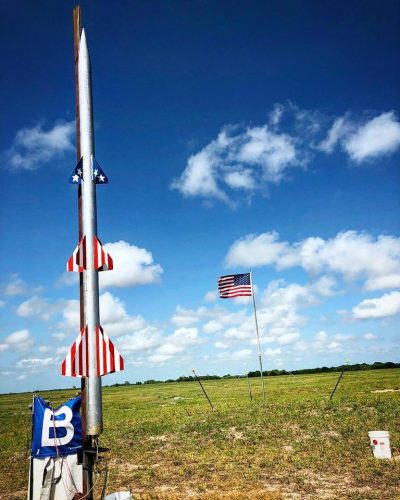
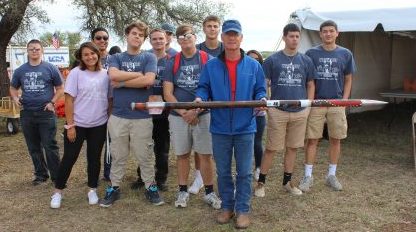
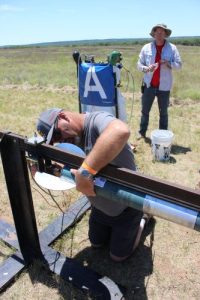
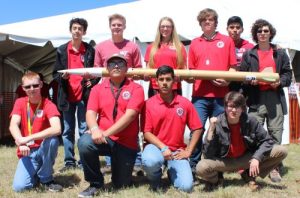
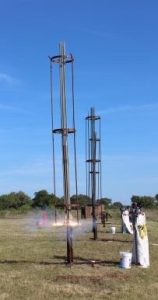
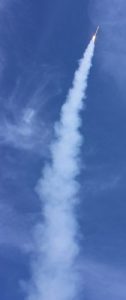
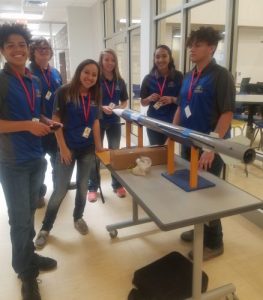
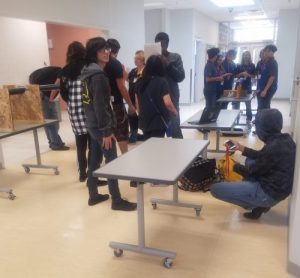
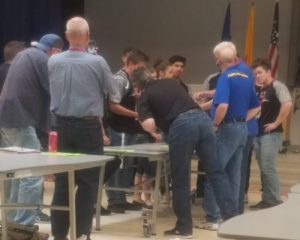
Here are some pictures from Mr. Matthes of the Junior teams on their launch day. I have also included a synopsis of their rocket’s accomplishments that day.

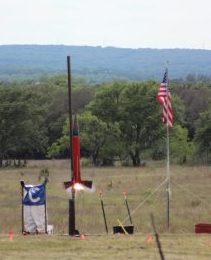
Team 1’s rocket, labeled as rocket #34 had a beautiful lift off from the rail, but before reaching its full height went into a cork screw spin, nosed over and began a ballistic decent. It landed hard on its side in a field to the left of the Pad and charges didn’t deploy until hitting the ground. It was fully recovered which enabled them to get data from the rocket. Their vehicle reached 588 mph, 0.78 Mach.
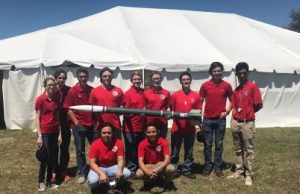

Team 2 had an awesome flight with full deployment and recovery. The rocket flew to a height of 11,232 feet at a speed of 763.6 miles per hour. The vehicle broke the first sound barrier at 1.027 Mach. Unfortunately their camera did not turn on properly so no flight video, and their payload which was a bag of Cheezits which was supposed to burst open due to pressure drop, was still intact, the bag did not open. Congratulations on breaking the sound barrier.

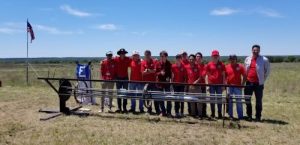
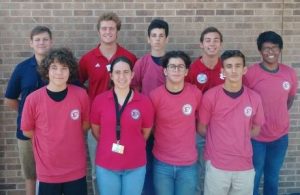
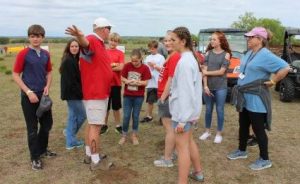
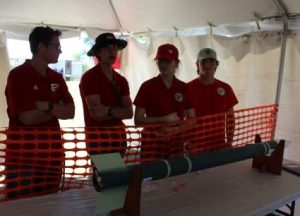
And here are some additional students that helped at the pad during the Fredericksburg launches.

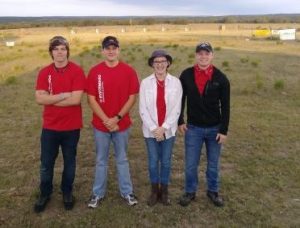

Currently the Juniors have been completing things in order to present their Post Mission Analysis this week. Team 1, was on Tuesday at 1:40 p.m. and Team 2 on Thursday at 12:30 p.m. at FISD’s Central Office board room. All are welcome to attend. Come learn about the program. Asking questions of the presenting students is encouraged.
This will conclude this year’s reports on the Juniors. We will pick up with them next year as seniors when they begin their Goddard level project and attempt to launch at White Sands Missile Range.
The Seniors have approximately 23 days until Redbird 19 is scheduled for testing at White Sands Missile Range, on June 22. This date is fairly permanent but still at the mercy of the Army until closer to that time. Mr. Matthes will announce if there are any changes to that date.
Progress on the Redbird #19 rocket is ongoing. Students are in a waiting and coordinating process with SRM, a local machine shop with which that they have the larger metal work contracted out. A helping advantage they have this year, is that FHS Alumni, Joseph Sanchez, hired on for the summer with Luke Morin at SRM. Joseph has been instrumental as a liaison between the team and the machine shop. Mr. Matthes states, that “this will surely help organizationally with the completion of the project.” He also says, “Kudos” to Joseph for his ability to acquire a summer job at SRM.
The Redbird #19 team is currently slated to depart for White Sands on June 20th with the test-minus-one(T-1) briefing on the morning of the 21st, and final rocket preparations occurring that afternoon. Students are expected to give an overview of their rocket, payload and flight expectations for WSMR officials at the T-1 briefing.
Fredericksburg will be first to fly on the 22nd, therefore their rocket will be loaded onto the rail and left over night the 21st. This allows things to move faster the next morning as loading the payload, attaching the nose cone, loading oxidizer, and testing the rocket are all that will need to be done.
According to Mr. Matthes, “As always, there is a chance the rocket won’t fly due to some technical failure occurring in the process of filling or ignition. This sort of failure occurs regularly at White Sands as a testing grounds. The difference between what the students do and industry does is cycling the process: conducting a post mission analysis, correcting sources of problems and then having another go. The lack of the opportunity to try again makes the individual testing of as many components as possible all the more important. As of yet, the only testing performed has been on the altimeter which has proved positive for expected operation. Time will tell what else the students have time to test.”
The team is running late on their completion schedule due to their own delays and some things beyond their control and this will likely mean no preliminary testing of components, but they are expected to complete the rocket in time for launch.
Mr. Matthes had this to say about the senior class, “The class of 10 students together has accumulated over a 1000 hours of overtime (out of class engineering time) and has a few hundred to go before the project is done. They have worked hard and will see the fruits of their labor continue over the summer. The students graduate Friday night and after 3 years, and 4 years for many of them, it is always bittersweet to send my students off. The projects always delay the farewells until post launch but it is a significant leap for these young men and Miss Secrhist. I am proud of all of them and look forward to all the great things ahead in their lives. It is a diverse group of students with extensive interests and pathways. I’m sure their paths will twist and turn as they move on but their trajectory looks promising and exciting.”
Congratulations to Harrison Spisak on s job well done! He was awarded the Engineering Academic Excellence Award, on May 7, at the FHS Academic Excellence Awards Banquet.
This article is the seventh for the 2017/2018 school year in a series of periodic updates that has followed the Fredericksburg Engineering/Rocket program. This school is a participant of the SystemsGo STEM program. This series of articles is intended to support and encourage students in the program as they share their working status and accomplishments throughout the year in the program. These publications will be available for tags and re-posting.
www.systemsgo.org as always is the place for more information on this program. You may also email them at info@systemsgo.org . Take the time to get your school involved, the future of your students will be greatly benefited.
















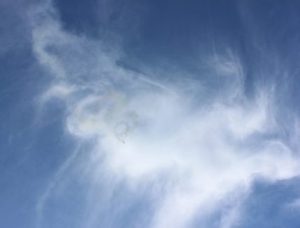
 Unfortunately I don’t seem to have gotten a picture of the body tube after recovery. It was a fascinating launch, that we were all waiting to see, so I thought I would share it here as well.


 At Stage 3 awaiting approval to go to Pad.
 Loaded on Foxtrot Rail awaiting launch.





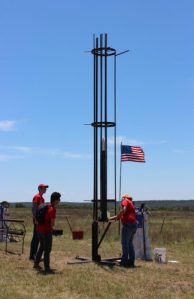


 Robert Sanchez and Esten Cooke with their vehicle.
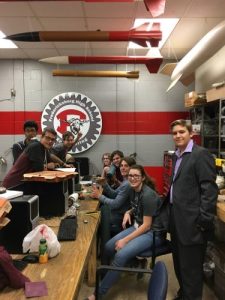 Pictured here are Ander Castaneda, Dawson Harkins, Cody Blohm, Deja Turkett, Cooper McDonald, Josh Handley, Gloria Burns, and Ethan Scott.
 Team members Robert Sanchez and Gloria Burns.

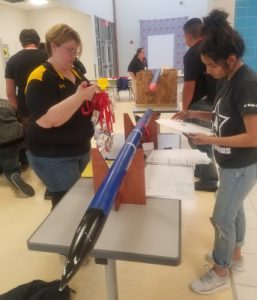
 Stage 1

 Stage 2


 If you saw the picture of this new sign in Friday’s post, you probably figured it was big. This may help put it in perspective, as

