Rockets 2025, Saturday, May 3, Central Texas/Stonewall Final Day Launch Report

Rockets 2025, Central Texas/Stonewall Edition, continued today. The original schedule listed 11 rockets for today tested by two schools. 13 rockets were hold overs from yesterday’s weather delay, so that upped our total for the day to 24.

The team and volunteers started at 7:30 this morning and the pad was loaded and began launching at 8:29. The flow of rockets to the rails continued steadily throughout the day with the final rocket of the rail by 6:35 this evening. We had clear blue skies and a nice breeze all day which meant no weather delays.

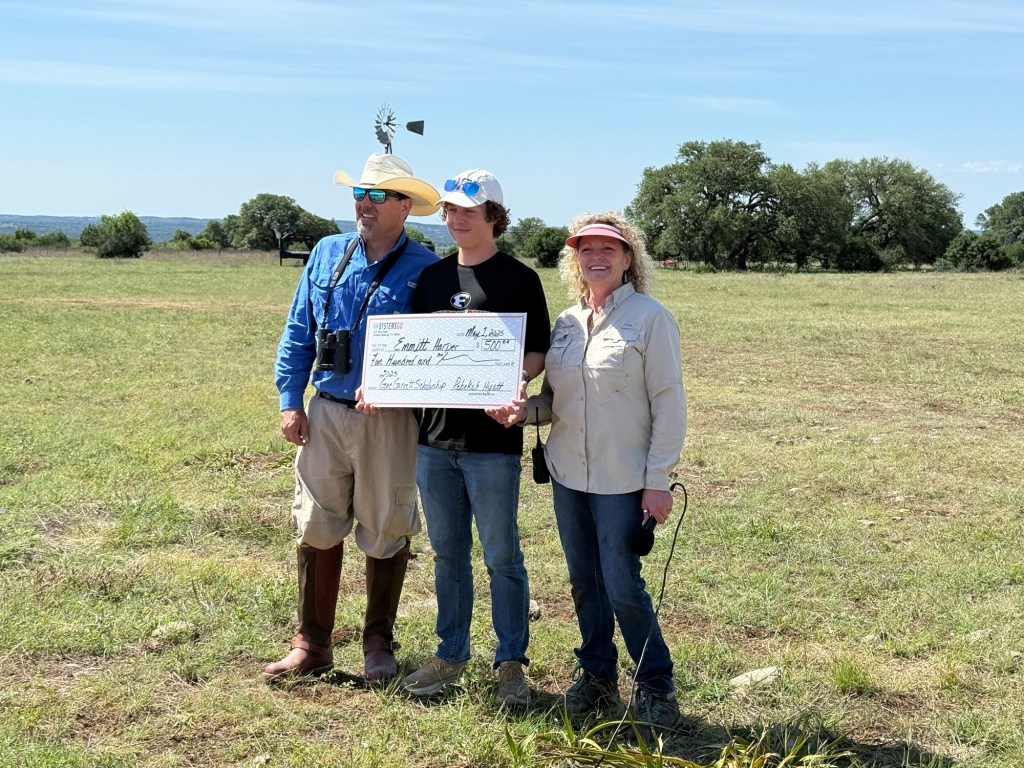
At the event today, Executive Program Director, Rebekah Hyatt and Program Director, George Burns, presented the 2025 Gene Garrett Scholarship to a student from Fredericksburg High School, Emmitt Harper.
img_3681

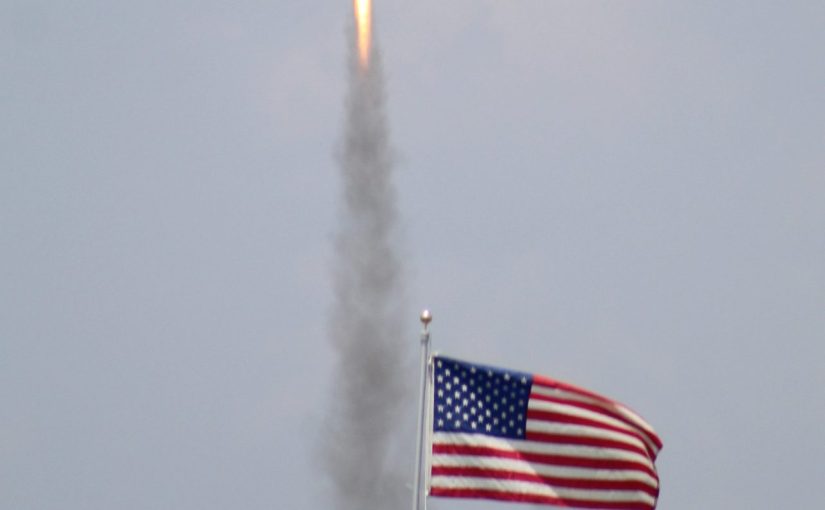
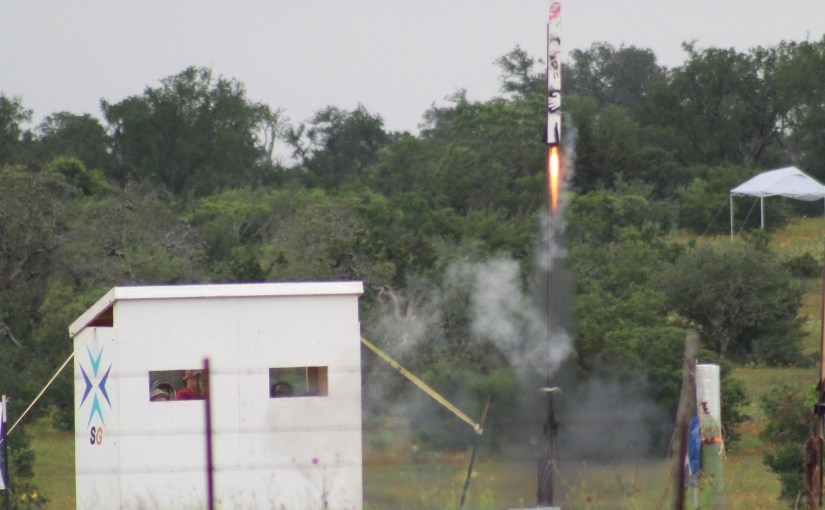
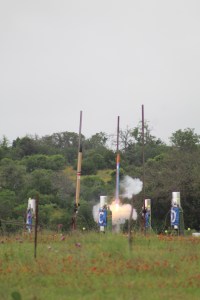
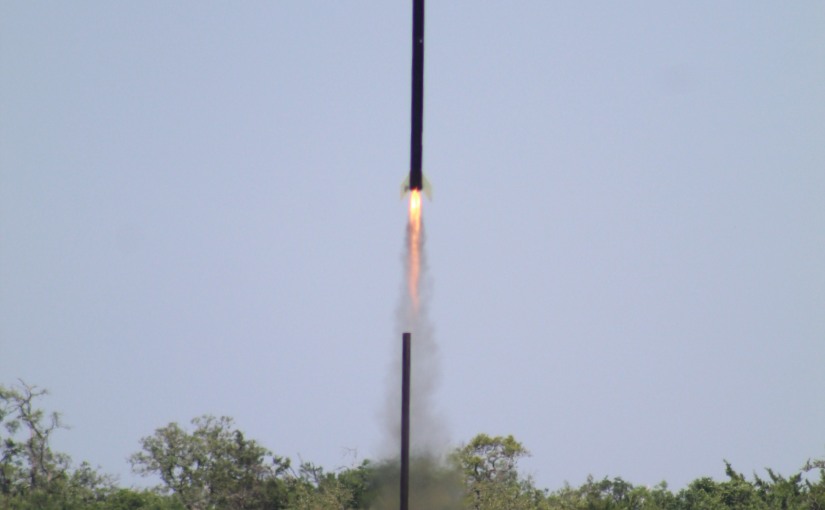
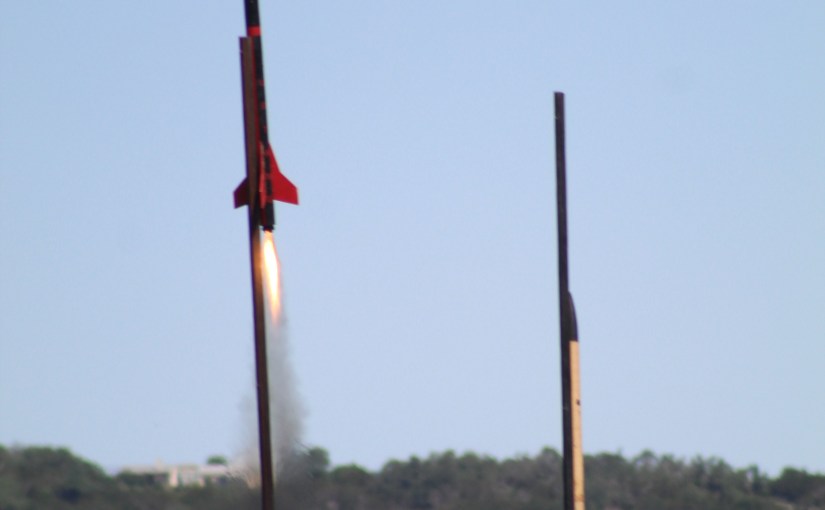
Yesterday in this blog I wrote about a new school at the event this year from Mustang High School in Oklahoma. They were able to successfully test their rocket. It left the rail sailing high and well. However their chute didn’t depoly completely so it had a semi ballistic landing and their altimeter bay was lost leaving them unable to analyze their flight data. Non the less they are super excited about the successs that they had and look forward to next year. They plan to display their rocket pieces and use it to encourage future classes as well as additional schools in Oklahoma to consider being a part of the SystemsGo program. They all agreed they learned more from the program than they could have imagined. Their rocket’s lift off is the cover photo for today’s blog.

After the completion of this weekend’s launches the Texas Rocket Trail will move to Smith Point in Anahuac, down in the Houston area for the final leg of the season before the spring launches end for another year. Those launches begin Friday, May 8.

Pictures from the day’s events are on SystemsGo Facebook page, as well as my Facebook page. They can be found here:

https://www.facebook.com/SystemsGoEducation/

https://www.facebook.com/ginger.burow

The look on your students’ faces when their vehicle goes up and then is recovered is priceless. If they know you are watching and supporting them, then it is even more memorable. If you are not on site, then shoot them a text, letting them know you are watching online.

More details will be available here each day. Reports featuring schedules, school names, pictures, and editorial content will be posted during the events if information is available.

Please watch the SystemsGo website, SystemsGo Facebook page,  SystemsGo Twitter feed: https://twitter.com/SystemsGoNews and this blog for upcoming information on these events.

www.systemsgo.org as always is the place for more information on this program. You may also email them at info@systemsgo.org . Take the time to get your school involved. Your students’ futures will benefit.

Hope to see you at the launches!

#RideTheSkies #TexasRocketTrail #Rockets2025 #EyesToTheSkies

Rockets 2025, Friday, May 2, Central Texas/Stonewall Weather Delayed Launch Report

Rockets 2025, Central Texas/Stonewall Edition, continued today. The original schedule listed 23 rockets for today. A combination of issues on the pad and rain later in the day slowed progress. Early on it was rockets returning to Mission Control to trouble shoot issues. But by 4:00 this afternoon rain was moving in causing first a few short delays, and then later a permanent shut down of launches. Some schools are returning to watch them launch, while others elected to leave and watch their launches on Livestream.

One school returning tomorrow, Mustang High School from Oklahoma.This is their first year, and the class is still a pilot program at the school but is fast gaining support and recognition. They hope their rocket flies well and they get it back so it can be used to encourage the program at their school. The team and teacher, Gary Knowles, were all energetic and excited about their project. They pruposely booked an extra night just to be sure they would get the opportunity to see their vehicle fly.

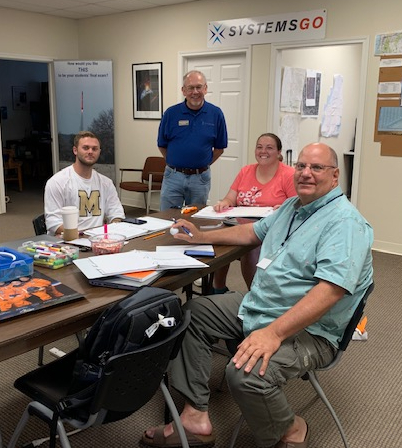
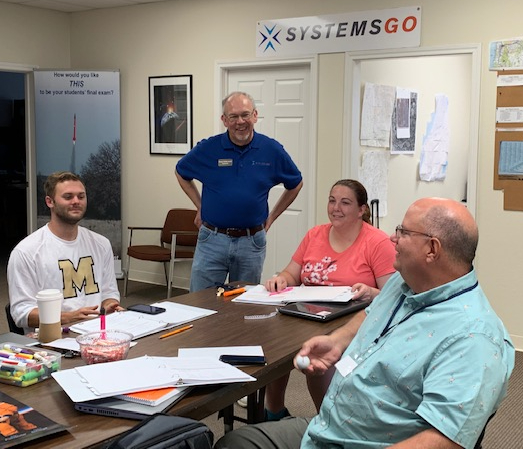
Below the group works through their FRR at Stage 1 hoping to clear by the end of the day. They were down 3 pertinent team member so they lead engineer was taking on the role of trouble shooting each point on the paperwork. Their teacher, Gary Knowles, said he was doing an amazing job of thinking things through, but that he definitely had a different style of reasoning than the leads on some areas of the project. He was very proud to see how well they were all pulling together to get things accomplished.

This year, this class was a pilot program for the school and even shared class space and time with the Aviation class. He believes it has proven itself and will get a dedicated hour for class and space all it’s own. He says he is really behind the program and what it teaches, and his students agree. Good luck tomorrow, Mustangs!

After the completion of this weekend’s launches tomorrow, the Texas Rocket Trail will move to Smith Point in Anahuac, down in the Houston area for the final leg of the season before the spring launches end for another year.

Pictures from the day’s events are on SystemsGo Facebook page, as well as my Facebook page. They can be found here:

https://www.facebook.com/SystemsGoEducation/

https://www.facebook.com/ginger.burow

Tomorrow’s launches will continue at the Sammy Segner Ranch on Double Horn Road with Stages 1 and 2 will be at the Stonewall Chamber of Commerce building.

Restrooms and wash stations will be provided at the launch site. Spectators are welcomed this year. Teachers are asked to bring pop-up tents for themselves and their students. Please remember sunscreen, chairs, umbrellas, extra snacks, drinks, and food. Downtime entertainment for the students to engage in between launches may also be helpful.

The look on your students’ faces when their vehicle goes up and then is recovered is priceless. If they know you are watching and supporting them, then it is even more memorable. If you are not on site, then shoot them a text, letting them know you are watching online.

The Central Texas/Stonewall launch dates, Livestream links and schools are also listed here for your convenience or can be found at http://www.systemsgo.org/events/ .

Central Texas/Stonewall:

  • Saturday, May 3, 2025
  • Launch Site: 2187 Double Horn Road, Stonewall, Texas 78671
  • Stage 1 & 2 at Stonewall Chamber of Commerce: 250 Peach Street, Stonewall, TX 78671
  • Schools participating this year in Stonewall: Fredericksburg HS, Johnson HS, Hamilton HS, Kingwood HS, Roosevelt HS, Atascocita HS, Victoria East HS, Victoria West, Harleton HS, London HS, Alamo Heights HS, Union Grove HS, Canon City HS, Brazoswood HS, Future Ready Complex, Mustang HS
  • 11 rockets are slated for testing on Saturday, with an additional 13 from Friday.
  • A Livestream for each launch will be provided here:
  • CTX Stream May 3
  • And will be available at www.systemsgo.org on the Events page each day.

The sites will be open to admittance for students and teachers only at 6:00 a.m. Projected start time for launches is 7:30 a.m. All is contingent on test vehicle readiness and ability to pass Stages 1 and 2. Mission Control will be ready for Stage 3 checks by 7:30 a.m.

More details will be available here each day. Reports featuring schedules, school names, pictures, and editorial content will be posted during the events if information is available.

Please watch the SystemsGo website, SystemsGo Facebook page,  SystemsGo Twitter feed: https://twitter.com/SystemsGoNews and this blog for upcoming information on these events.

www.systemsgo.org as always is the place for more information on this program. You may also email them at info@systemsgo.org . Take the time to get your school involved. Your students’ futures will benefit.

Hope to see you at the launches!

#RideTheSkies #TexasRocketTrail #Rockets2025 #EyesToTheSkies

Rockets 2025, Thursday, May 1, Central Texas/Stonewall Launch Report

Rockets 2025, Central Texas/Stonewall Edition, began today. The original schedule listed 20 rockets for today launched by 6 schools. Of those, 19 were successfully tested today. All were good flights, some lacked deployment of chutes. Quite a few were successfully recovered, though some will need to be searched for tomorrow while retrieving new launches.

The site took on a new look this year as they moved the pad 90 degrees to face east andthe MC to face west toward it. This was oriented to attempt to keep more of the rockets on the Segner and Weinheimer ranches for easier and faster recovery. It also helped with the evening sun in Mission Control and the Media tents.

All rockets were tested by 6:40 and the site secured for the evening as storms are predicted for over night in the area. Eleven team members congregated at Campo Azul for dinner after launches and then headed home for much needed rest before staring tomorrow’s session.

The concesstion trailer is for this year’s CTX Rocket event is run by Toothless BBQ from Stonewall, Texas.

Their main menu included turkey legs, pulled pork sandwiches, sausage sandwiches, sausage on a stick, and loaded mac-n-cheese.

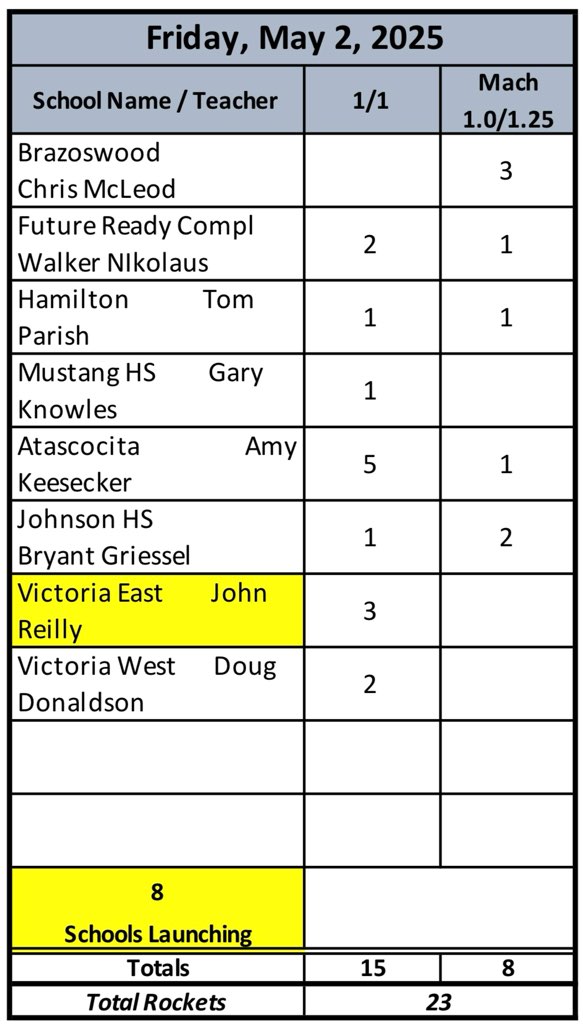
Tomorrow 23 rockets are on the schedule, built by 8 different schools.

Pictures from the day’s events are on SystemsGo Facebook page, as well as my Facebook page. They can be found here:

https://www.facebook.com/SystemsGoEducation/

https://www.facebook.com/ginger.burow

Tomorrow’s launches will continue at the Sammy Segner Ranch on Double Horn Road with Stages 1 and 2 will be at the Stonewall Chamber of Commerce building.

Restrooms and wash stations will be available at the launch site. They are provided again this year by Duane Neffendorf and Hill Country Pump Service.

Some of this year’s sponsors at CTX Rockets are Adam R. Scripps, Vogel Tractors and AMSAT Amateur Radio In Space.

Spectators are welcomed this year. Teachers are asked to bring pop-up tents for themselves and their students. Please remember sunscreen, chairs, umbrellas, extra snacks, drinks, and food. Downtime entertainment for the students to engage in between launches may also be helpful.

The look on your students’ faces when their vehicle goes up and then is recovered is priceless. If they know you are watching and supporting them, then it is even more memorable. If you are not on site, then shoot them a text, letting them know you are watching online.

The Central Texas/Stonewall launch dates, Livestream links and schools are also listed here for your convenience or can be found at http://www.systemsgo.org/events/ .

Central Texas/Stonewall:

  • Friday, May 2, 2025
  • Launch Site: 2187 Double Horn Road, Stonewall, Texas 78671
  • Stage 1 & 2 at Stonewall Chamber of Commerce: 250 Peach Street, Stonewall, TX 78671
  • Central Texas-Stonewall 2025 Flight Schedule
  • Schools participating this year in Stonewall: Fredericksburg HS, Johnson HS, Hamilton HS, Kingwood HS, Roosevelt HS, Atascocita HS, Victoria East HS, Victoria West HS, Harleton HS, London HS, Alamo Heights HS, Union Grove HS, Canon City HS, Brazoswood HS, Future Ready Complex, Mustang HS
  • 11 more rockets are slated for testing on Saturday.
  • A Livestream for each launch is provided here:
  • CTX Stream May 2
  • And will be available at www.systemsgo.org on the Events page each day.

The sites will be open to admittance for students and teachers only at 6:00 a.m. Projected start time for launches is 9:00 a.m. All is contingent on test vehicle readiness and ability to pass Stages 1 and 2. Mission Control will be ready for Stage 3 checks by 8:00 a.m.

After the completion of this weekend’s launches, Saturday, the Texas Rocket Trail will move to Smith Point in Anahuac, down in the Houston area for the final leg of the season before the spring launches end for another year.

More details will be available here each day. Reports featuring schedules, school names, pictures, and editorial content will be posted during the events if information is available.

Please watch the SystemsGo website, SystemsGo Facebook page,  SystemsGo Twitter feed: https://twitter.com/SystemsGoNews and this blog for upcoming information on these events.

www.systemsgo.org as always is the place for more information on this program. You may also email them at info@systemsgo.org . Take the time to get your school involved. Your students’ futures will benefit.

Hope to see you at the launches!

#RideTheSkies #TexasRocketTrail #Rockets2025 #EyesToTheSkies

Rockets 2024, Friday, May 3, Central Texas/Stonewall Weather Weary Launch Report

Rockets 2024, Central Texas/Stonewall Edition, continued today. The original schedule listed 27 rockets for today. 23 were left from yesterday that were unable to launch due to weather. The plan had been to try to get some of yesterday’s off the rails while waiting for today’s to move through from Stage 1 to Stage 3. The weather again did not cooperate so when a launch opportunity finally opened up at 2:20 this afternoon we started with those who were present and ready from today’s docket.

The first volley consisted of 3 successful launches and recoveries. The next volley of 4 involved three from today and one, #68 from yesterday. All had beautiful flights, but unfortunately went unrecovered as 2 are believed to be on the Iron Game Ranch and 2 more on the Klein property across the road. We did not have permission to enter those properties today, but will later in the weekend and they may be recovered at that time.

Tomorrow only 7 rockets are on the schedule, but we still have 22 left from Thursday, and 17 left from today. That sets the grand total still to be launched to 46. Once again if we get better weather and an opening in the clouds before those 7 for tomorrow are ready, we will fill in the time with some of our holdovers from yesterday and today. If our 7 are ready when the sky is ready, then they are up first. Either way we will try to launch as many as weather permits tomorrow.

Program Director, Rebekah Hyatt has already made plans with teachers, volunteers(as available) and land owners to launch on Monday and Tuesday to try to get all vehicles tested if weather permits. Hopefully it does not come to that, but unfortunately the current weather reports are not in our favor. After tuesday the team has to transition to Anahuac/Smith Point for the SETX launches.

Test vehicles like these often push the time schedules all on their own. Vent hoses, o rings, altimeter switches, and a host of other issues can send a rocket on numerous trips from pad back to Stage 3 and back again. Weather, as we have all seen again this year effects the schedule as well. We have been under Severe weather watches all weekend, and the possibility is still there. It has not been on our side so far this weekend, let us hope tomorrow shows us a brighter day, will hold off the rain and lift the cloud ceiling until we are done. The team would like to call it complete and not go into one or maybe more days of contingency.

After the completion of this weekend’s launches be it tomorrow or later, the Texas Rocket Trail will move to Smith Point in Anahuac, down in the Houston area for the final leg of the season before the spring launches end for another year.

Pictures from the day’s events are on SystemsGo Facebook page, as well as my Facebook page. They can be found here:

https://www.facebook.com/SystemsGoEducation/

https://www.facebook.com/ginger.burow

Tomorrow’s launches will continue at the Sammy Segner Ranch on Double Horn Road with Stages 1 and 2 will be at the Stonewall Chamber of Commerce building.

Restrooms and wash stations will be provided at the launch site. Spectators are welcomed this year. Teachers are asked to bring pop-up tents for themselves and their students. Please remember sunscreen, chairs, umbrellas, extra snacks, drinks, and food. Downtime entertainment for the students to engage in between launches may also be helpful.

The look on your students’ faces when their vehicle goes up and then is recovered is priceless. If they know you are watching and supporting them, then it is even more memorable. If you are not on site, then shoot them a text, letting them know you are watching online.

The Central Texas/Stonewall launch dates, Livestream links and schools are also listed here for your convenience or can be found at http://www.systemsgo.org/events/ .

Central Texas/Stonewall:

  • Saturday, May 4, 2024
  • Launch Site: 2187 Double Horn Road, Stonewall, Texas 78671
  • Stage 1 & 2 at Stonewall Chamber of Commerce: 250 Peach Street, Stonewall, TX 78671
  • Central Texas-Stonewall 2024 Flight Schedule
  • Saturday, May 4, 2024
  • School Name / Teacher 1/1 Trans
  • London                            
  • Toni Castle 1 2
  • Alamo Heights          
  • Colin Lang 2 2                        
  • 2   Schools Launching
  • Totals 3 4
  • Total Rockets 7
  • Schools participating this year in Stonewall: Fabens HS, Fredericksburg HS, Johnson HS, Hamilton HS, Kingwood HS, Marble Falls HS, Roosevelt HS, Georgetown HS, Atascocita HS, Victoria East HS, Harleton HS, London HS, New Tech Odessa HS, Alamo Heights HS, Union Grove HS, McGregor HS, Canon City HS
  • 15 rockets slated for testing on Saturday.
  • A Livestream for each launch will be provided and will be available at www.systemsgo.org on the Events page each day.

The sites will be open to admittance for students and teachers only at 6:00 a.m. Projected start time for launches is 10:00 a.m. All is contingent on test vehicle readiness and ability to pass Stages 1 and 2. Mission Control will be ready for Stage 3 checks by 8:00 a.m.

More details will be available here each day. Reports featuring schedules, school names, pictures, and editorial content will be posted during the events if information is available.

Please watch the SystemsGo website, SystemsGo Facebook page,  SystemsGo Twitter feed: https://twitter.com/SystemsGoNews and this blog for upcoming information on these events.

www.systemsgo.org as always is the place for more information on this program. You may also email them at info@systemsgo.org . Take the time to get your school involved. Your students’ futures will benefit.

Hope to see you at the launches!

#RideTheSkies #TexasRocketTrail #Rockets2024 #EyesToTheSkies
Rockets 2023, Friday, May 5, Central Texas/Stonewall Launch Report

Rockets 2023, Central Texas/Stonewall Edition, continued today. The original schedule listed 26 rockets for today. Three rockets aborted, bringing the total launched to 23.

Georgetown arrived at Stage 3 first with 7 vehicles, making the first full volley all theirs, with rockets in the air starting at 10:51 a.m. Mission Complete was at 7:07 p.m. It was a slightly longer day today.

Tomorrow only 15 rockets are on the schedule, as compared to Thursday’s 18 and today’s 23. Numbers do not mean a thing when it comes to rockets. Tomorrow could be a short day, as is the hope, or another long one. Test vehicles like these quite often push the time schedules. Weather effects the schedule as well. We have been under Severe weather watches all weekend, and the possibility is still there. It has been on our side so far, let us hope tomorrow will hold off until we are done as well. The team would like to call it complete early.

After tomorrow, the Texas Rocket Trail will move to Smith Point in Anahuac, down in the Houston area for the final leg of the season before the spring launches end for another year.

An author and a photographer from Texas Coop Magazine were onsite today, watching the program, taking photos and talking to people involved in the program. They plan a future article for the program in an upcoming edition of the magazine.

Past SystemsGo student and current NASA Flight Director for the Jet Propulsion Laboratory, Bekah Sosland Siegfriedt, brought her family out to watch today’s event. She is responsible for putting The Perseverance Rover on Mars.

Program originator, Brett Williams, also stopped in today.

Pictures from the day’s events are on SystemsGo Facebook page, as well as my Facebook page. They can be found here:

https://www.facebook.com/SystemsGoEducation/

https://www.facebook.com/ginger.burow

Tomorrow’s launches will continue at the Sammy Segner Ranch on Double Horn Road with Stages 1 and 2 will be at the Stonewall Chamber of Commerce building.

Restrooms and wash stations will be provided at the launch site. Spectators are welcomed this year. Teachers are asked to bring pop-up tents for themselves and their students. Please remember sunscreen, chairs, umbrellas, extra snacks, drinks, and food. Downtime entertainment for the students to engage in between launches may also be helpful.

The look on your students’ faces when their vehicle goes up and then is recovered is priceless. If they know you are watching and supporting them, then it is even more memorable. If you are not on site, then shoot them a text, letting them know you are watching online.

The Central Texas/Stonewall launch dates, Livestream links and schools are also listed here for your convenience or can be found at http://www.systemsgo.org/events/ .

Central Texas/Stonewall:

  • Saturday, May 6, 2023
  • Launch Site: 2187 Double Horn Road, Stonewall, Texas 78671
  • Stage 1 & 2 at Stonewall Chamber of Commerce: 250 Peach Street, Stonewall, TX 78671
  • Central Texas-Stonewall 2023 Flight Schedule for Saturday
Saturday, May 6, 2023
School Name / Teacher1/1Trans
London                             Toni Castle11
Alamo Heights           Colin Lang32
Canon City                    Chad Ford22
New Tech Odessa      Maria Lopez4 
   
   
 4
Schools Launching
Totals105
Total Rockets15
  • Schools participating this year in Stonewall: Fabens HS, Fredericksburg HS, Johnson HS, Hamilton HS, Kingwood HS, Marble Falls HS, Roosevelt HS, Georgetown HS, Atascocita HS, Victoria East HS, Harleton HS, London HS, New Tech Odessa HS, Alamo Heights HS, Union Grove HS, McGregor HS, Canon City HS
  • 15 rockets slated for testing on Saturday.
  • A Livestream for each launch will be provided and will be available at www.systemsgo.org on the Events page each day.

The sites will be open to admittance for students and teachers only at 6:00 a.m. Projected start time for launches is 9:00 a.m. All is contingent on test vehicle readiness and ability to pass Stages 1 and 2. Mission Control will be ready for Stage 3 checks by 8:00 a.m.

More details will be available here each day. Reports featuring schedules, school names, pictures, and editorial content will be posted during the events if information is available.

Please watch the SystemsGo website, SystemsGo Facebook page,  SystemsGo Twitter feed: https://twitter.com/SystemsGoNews and this blog for upcoming information on these events.

www.systemsgo.org as always is the place for more information on this program. You may also email them at info@systemsgo.org . Take the time to get your school involved. Your students’ futures will benefit.

Hope to see you at the launches!

#RideTheSkies #TexasRocketTrail #Rockets2023 #EyesToTheSkies
Oberth Teacher Training At SystemsGo This Past Weekend

Regional Coordinator, Doug Underwood conducted Oberth trainings, this past weekend, July 31- August 1 here in Fredericksburg.  Hollenstein, Georgetown and McGregor High Schools attended.  This level teaches students in their Senior year about Transonic rockets, which are designed to break the speed of sound.

I sat in on their class for about an hour and a half on Saturday morning. Since Oberth rockets aim to break the speed of sound, that was a criteria talking point. When I was there, they were discussing an experiment meant to simulate the flight of the rocket in order to determine needed calculations. The actual exercise is the flight and descent of a ball. Literally tossing it in the air and watching it land again in a prescribed bucket of water. Figuring out what is needed to accomplish this seemingly ordinary action, helps the students get a basis of what is needed to begin to understand what they need for their rocket.

They started with a list of Givens that needed to be determined. These are all things that the students can either measure or look up in order to find the value. A few examples are mass, diameter, density, altitude, velocity, thrust, etc. This is just the short version of the list they created. I watched and listened as they began figuring answers to the listed items.

It was interesting to watch and see how quickly they answered some of the items. Others were answered, but then only created more questions to be determined. What is fascinating is that the teacher is more of a coach or director. He never directly answers the questions for them, but only lightly directs them by asking other questions. This is exactly how these teachers will have to react with their future students.

Doug Underwood put it this way, when answering one of these teachers questions, “Don’t limit your students. They are capable, if given the opportunity, of much more than you might believe.”

An important issue that arose was what measuring system to use, metric or imperial? It was suggested to actually do work in both forms, because it may be necessary to calculate something back from one standard or another.

Note taking was also a highlighted subject. Notes in this curriculum are essential and begin the basis for which each student will work down the line. This is important from the very beginning of this program on. Each year builds on the next, therefore notes from the prior year will still be needed and added to the following year.

At this point, Phil Houseal, came in to get a photo and I took the opportunity to do the samae. Discussions about where everyone was from, got the group off track for a bit. A young lady in the class told us about where she was from in South Carolina and the deep south atmosphere the small town still projected. It was a very interesting and enlightening discussion, but one for her to share. It was time for the class to get back on track. Phil and I both excused ourselves.

Unfortunately I didn’t get back to the class again, but I did take a lot away from it. And that is true for every one of the classes I sat in on the past few weeks. This is a truly amazing learning opportunity that is available to students of any school that enrolls in the SystemsGo program. The wealth of knowledge that is afforded them through this program, as well as the numerous array of career paths available afterwards is more than worth the time invested.

If your students do not have this program at their school yet. It is time to look into it and encourage your school administrators to get involved. Your students will be greatly benefited. I have followed many students from this program into their future endeavors. No matter where they end up, STEM field, FDIC banking manager, or family business, each one cites this program as having giving them a basis for where they are today. What they learn in SystemsGo transfers greatly to the outside world and future careers.

IMG_7009

Thank you to Regional Director, Doug Underwood, student teachers, Jonathan Whatley, McGregor HS, Nicole Bolen, Georgetown HS, and Dan Strickland, Hollenstein HS for allowing me to observe again. It has been fun getting to know them and other teachers these past few weeks. I will look forward to seeing them in the spring at the launches.

If you are still not dreaming of rockets, you obviously do need to hang out with this crew more! Come check it out! 

www.systemsgo.org as always is the place for more information on this program. You may also email them at info@systemsgo.org .Take the time to get your school involved, the future of your students will be greatly benefited.

#RideTheSky! #Rockets2022 RocketSeason!

Tsiolkovsky Teacher Training in Fredericksburg, Day 5-end Game

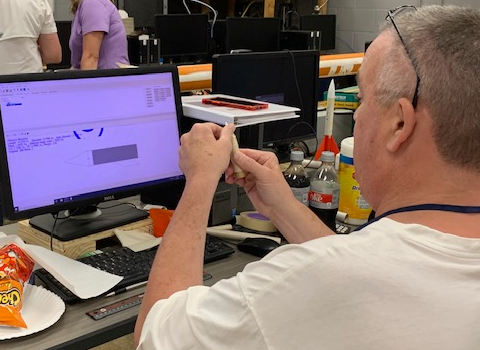
Tsiolkovsky training closed just after noon today. The group spent the morning addressing questions that arose on the PDR. After which they produced a rocket with a 1lb payload capable of 1 mile of altitude above ground level using RockSim. 

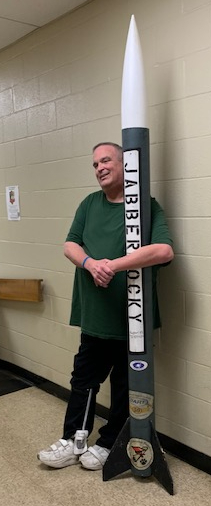
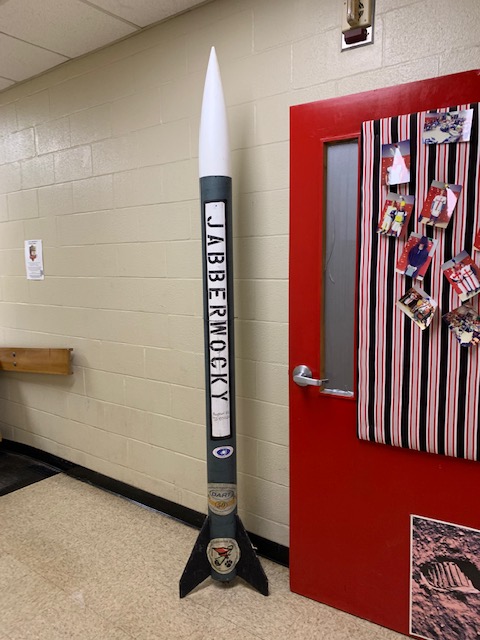
FRRs were done on their simulated vehicle as well as on the three rockets Rbekah had there as examples. Jabberwocky the door sentinel was one of these. 
img_6927

Time priorities were discussed and stressed. Teaching the students to have their vehicle completed a few weeks prior to launch so that they are ready when they arrive at the range to launch is essential. That was a wrap for the class.

students expressed great enjoyment and vast learning from this class.

Regional Coordinator, Doug Underwood, will conduct Oberth trainings. July 31- August 1 here in Fredericksburg..  Hollenstein, Georgetown and McGregor High Schools will be in attendance.  This level teaches students in their Senior year about Transonic rockets, which are designed to break the speed of sound.
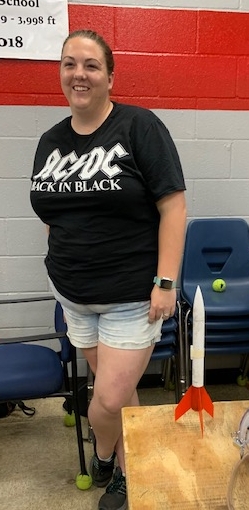
Until tomorrow, if you are not dreaming of rockets, you obviously have not hung out with this crew enough! Do you think maybe you should? Encourage the schools in your area to join the program.

www.systemsgo.org as always is the place for more information on this program. You may also email them at info@systemsgo.org .Take the time to get your school involved, the future of your students will be greatly benefited.

#RideTheSky! #Rockets2022 RocketSeason!

Tsiolkovsky Teacher Training in Fredericksburg, Day 4

Today the class began learning the Design and Development Loop, and its application this process to rocketry.  They first developed a Problem Statement, which identified the initial task, build a rocket.

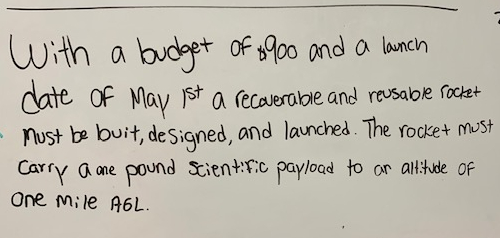
As seen here on the board, their problem statement is:

With a budget of $900 and launch date of May 1st a recoverable and reusable rocket must be built, designed, and launched. The rocket must carry a one pound scientific payload to an altitude of one mile AGL(above ground level).

IMG_6993

Next they used a brainstorming session to develop a list of components needed to create and launch this rocket: 

  • fire wadding
  • proof of altitude
  • timeline/budget
  • body tube
  • nosecone
  • launch lugs
  • engine
  • ignition
  • rail
  • fins
  • motor mount
  • recovery system
  • payload
  • launch area
  • components
  • rail

This was the beginning point they used to narrow down specific component groups they believed were related and should be grouped together. Next they identified individual team members to work that specific group :

  • ignition/engine/motor mount–Mel/Amy
  • recovery–Dan/Brian
  • fins/lugs/body/nosecone/(fire wadding)/compartments–Derek/Johnathan
  • payload/proof of altitude–Bryant/Nicole

Each team set out with their component and began research. They were given 2 hours to go on an in depth fact finding mission. Here are just a few of the many problems before them to address:

  • What are their options for each component?
  • What materials are available to them?
  • Is the chosen material within their budget?
  • Does a particular option make a difference in over all success over another option?
  • What kind of Impulse will it take to get the rocket to a mile high?

These were just starting points. They began with reasonable assumptions of what they believed they needed, and then began to hone in on actualities through research, further brainstorming, and generating alternative solutions.

The teams were allowed and encouraged to discuss options and ideas in order to determine how each team’s component  would work with the rest. The idea was to design a vehicle together so that it would not fail.

By 4:00 p.m. each team would have to present their idea and be able to prove why they chose this option. Their idea would have to pass a Preliminary Design Review(PDR), in order to establish the operational effectiveness of their chosen system.

During the short time I was there and able to listen in on their brainstorming, I heard questions about phenolic resin, fiber carbon bodies(quickly pitched due to expense), nose cone shape and sizing, chute deployment ideas, and payload weights and options. At the time that I left, the payload had been determined to be chocolate ice cream with the stipulation that Rebekah and I would get to share it if it survived. 

These teachers have not actually built these vehicles before, so they are in the same place their future students will be. They are expected to do everything the way they will be instructing their students to do, only the students will actually build the physical rocket and will have a semester in which to do it, instead of a day. 

It is a very in depth learning experience.  The program is designed to enable the students to think through the process themselves in order to figure out what has to be done and accomplish it. 

Until tomorrow, if you are not dreaming of rockets, you obviously have not hung out with this crew enough! And it is time you do!

www.systemsgo.org as always is the place for more information on this program. You may also email them at info@systemsgo.org .Take the time to get your school involved, the future of your students will be greatly benefited.

#RideTheSky! #Rockets2022 RocketSeason!

Tsiolkovsky Teacher Training Generation 3 on Day 3

Today was the culmination of the first semester training for the class. They were introduced to modeling using Rock Sim and given a challenge to design and build a rocket. They had a Stability Margin of 1-2 and an altitude goal of 1500′ to 2200′ depending on the motor size they chose.

Motor C was designed for the 2200′ goal, and motor B for the 1500′ goal. Each teacher was asked to design a rocket based on the location and demographics of their school. This includes actual open space for a launch and recovery radius and encompasses surrounding entities like airports, neighborhoods, and businesses that would need to be avoided in these projections. Determining these factors would help each teacher decide which motor and height requirement would be viable for their school’s location.

Once they have clarified these requirements, they design their rocket using RockSim. This program helps them determine the rocket’s height and speed possibilities. When their design and development is complete they print out their schematics and build their rocket.

At completion a Flight Readiness Review is done. The goal is to build and test the vehicle in one day. This meant launching by 5:00 pm.

Most of the class had started the building stage when I arrived. A few were still designing on the computer. Any manner of tools and adhesives were in continuous use around the room passing from one person to the next. Dremel tools with grinder wheels and filing tips created a constant buzz.

One observation about these new vehicles was their size. In the past days the rockets lengths had ranged from about 6 to 12 inches, give or take a little. These Generation 3 rockets were more of the 3 to 6 inch range.

In the two days prior the teachers seemed more laid back and quiet as they constructed their rockets. Today, the room buzzed and their was a sense of urgency and even slight elation as they worked.

They stayed busy, but still found time to make comments about their own or a friends current design.

One student asked if his nose cone had to be symmetrical? This received many looks and comments from his colleagues. This same student was questioned repeatedly about how he was planning on his nose cone deploying since it was heavily taped in at the time. He planned to remove most of the tape prior to launch, stating that it was only there until everything was set.

Another discussion about a unit of measurement called a slug caused great trepidation for a couple of the gentlemen in the class. One of them commented that a person would have to be an engineer to understand that unit of measurement. The gentleman with the nose cone question, “I am an engineer.”

However, our friend, Nicole, from yesterday, was smiling. She was energetically working on her new rocket. She had a renewed sense of confidence in her abilities today, after her successful launch yesterday.

The group was far from complete and launches were quite a ways out yet when my visit for the day came to an end. They did launch close to 5:00 that afternoon. When I drove by after work, they were just heading back to the shop.

Tomorrow and then until around 1:00pm on Friday, they will be delving into the second semester of the Tsiolkovsky class. Among the criteria will be designing a 1lb/1 mile rocket.

Until tomorrow, if you are not dreaming of rockets, you obviously have not hung out with this crew enough!

www.systemsgo.org as always is the place for more information on this program. You may also email them at info@systemsgo.org .Take the time to get your school involved, the future of your students will be greatly benefited.

#RideTheSky! #Rockets2022 RocketSeason!

Tsiolkovsky Training Continues Day 2 at FHS

Tuesday morning the class spent converting their Generation 1 Rockets into Generation 2 Rockets. Stability was a primary component of the redesign. Once the vehicle was cut and only the bottom half returned to work with, new development began. Students had to take into account weight, thrust, impulse momentum, drag and lift.

They also had to create flight profile predictions based on their design and calculations, and a flight readiness review of their vehicle.

Here are some of their Generation 2 rockets:

When I arrived at class, they were not all back from lunch. One student, Cole Bolen, was waiting outside the door. I asked her how things were going so far? She expressed great disappointment in her own Gen 1 and now Gen 2 rockets. She said that she was good at math, the calculations, and scribing her ideas down on paper, but her hands on application was in her words, “a disaster.”

“In every group I have ever been in, whether school or college, I am always the scribe. I can do the calculations and put it beautifully on paper. People I worked with learned quickly that what ever I touch falls apart. Even at home, my husband makes me the gopher while he does the heavy work,” she lamented.

“When building my Gen 1 I focused too much on making it “look” like a rocket, instead of the functionality of the rocket. When I was done it looked great, but the flight was terrible,” she said. “It barely left the rail, turned sideways, headed for the group and luckily crashed into the ground. I don’t want to be that person that gets someone injured because my project blew up!” Cole sighed.

As we talked, I told her it was alright, at least it got off the rail. Her students would see that as a success, and then they would learn more while analyzing and determining what went wrong, just as she was now doing. She agreed and said that was one of her concerns about one day conveying these principles to her students.

“I guess I know that if it had been an automatic success, then I wouldn’t have learned much. This way I am determined to fix it for the next one,” she said.

Today, when having to take what she described as the bottom half of a charred and dirty mess, and once again create a rocket that was supposed to be functional and fly, she found it a very daunting task. She said she had done great at drawing it all out, but just couldn’t get it to stay together. She was concerned that it would once again blow apart leaving the rail.

I expressed to her that I was sure it would be better today than she thought. I told her that in this program a failed launched is still a successful learning opportunity. To quote a friend, “In order for a rocket to fly, 1000 things must go right, but it only takes one for it to fail.” It is in determining what caused the failure that a new success is born as well as a new chance to do better.

The rest of the class returned about this time and each gathered their rockets and we headed out to the launch field. All the rockets flew, except one. That one still left the rail after an interesting spinning episode and it landed just a few feet from the rail.

Cole’s flew beautifully. The chute deployed and all was recovered. Her only mishap was that it came down in two sections that were not connected. She proved to herself that she could do this.

In the grand scheme of things, that is what this program is all about. Both the teachers, and their future students, learning all the STEM applications of the program, and then designing, developing, discerning, attaining, applying and presenting all they have learned in a workable completed project. Once the project is complete, it is the massive amount of take away that goes with each of them and helps develop their futures that matters the most.

Yes each one wants their rocket to be a success in terms of flight. That is the goal, but here success is really measured in the inspired hope and plans of each student as they head out to do something great in their future.

Congratulations, Cole! Now on to Generation 3 with new confidence in what you are learning, what you can do, and what you will be able to teach your students in the future. You already have a head start on problem solving. Thank you for sharing your experience with me and my readers.

Below is a Facebook link to the videos I attempted to take of the launches. Please excuse my videoing. With the bright sun I did not do too well at keeping the camera in the right place.

After the launches, the class headed back in to pour over their Flight Readiness Reviews for both their Gen 2 rockets and their upcoming Gen 3’s. They will be discussing impulse, drag and lift, and resistance along with a focus on problem solving.

Rebekah, referred to the upcoming section as the Gen 3 Challenge. Generation 3 will be a whole new build. I will leave it at that for now, so as to not give away any new things that will be part of this challenge, in case they have not been introduced yet. Tomorrow should be another interesting, challenging and fun day.

Until tomorrow, if you are not dreaming of rockets, you obviously have not hung out with this crew enough!

www.systemsgo.org as always is the place for more information on this program. You may also email them at info@systemsgo.org .Take the time to get your school involved, the future of your students will be greatly benefited.

#RideTheSky! #Rockets2022 RocketSeason!