Goddard Teacher Training Day 1

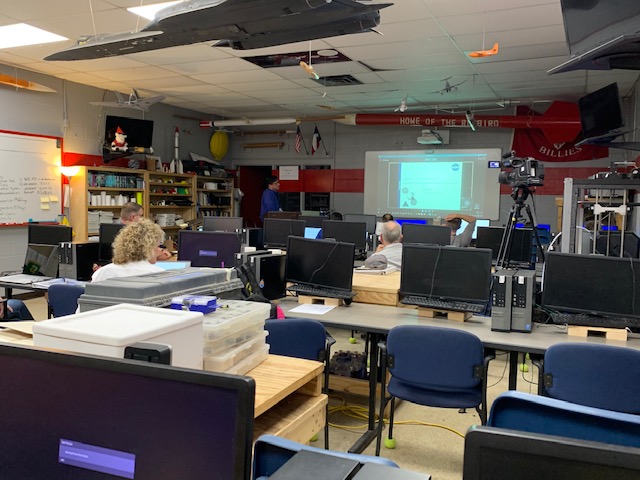
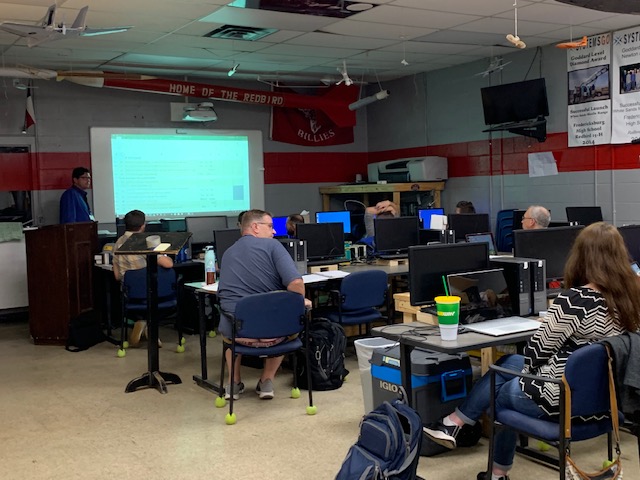
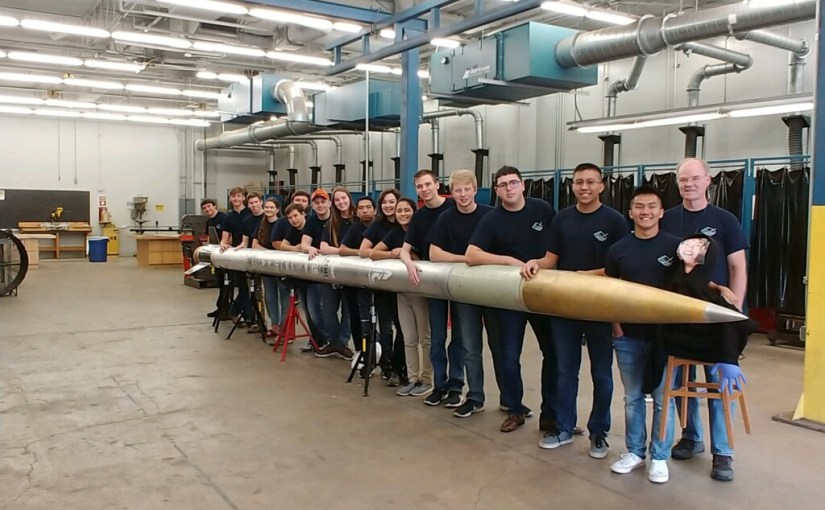
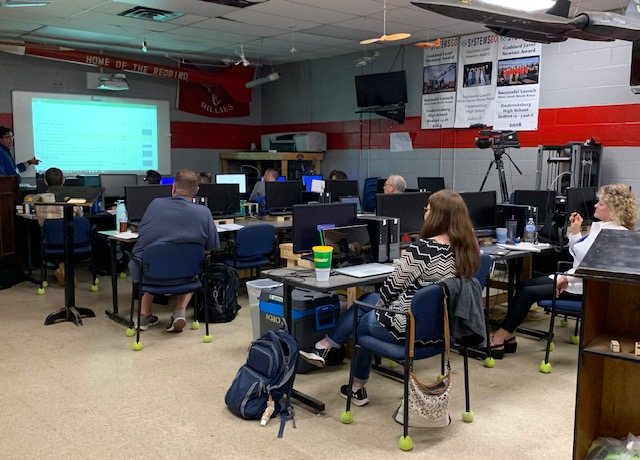
Goddard training began today with FHS Engineer teacher, Andrew Matthes directing the class.

SystemsGo Program Director, Rebekah Hyatt, sitting in the back where she was able to add in information or examples as needed. SystemsGo Regional Director, Doug Underwood was also in attendance.

Seven teachers were present for training. Most were from schools around Texas including Birdville Career and Tech Center, RL Turner, Union Grove, Brazoswood, and Booker T Washington High Schools, and one from Jal High School in New Mexico.

I watched and listen for about 40 minutes today, during which, Chris Madsen, NASA JSC, Orion Entry GN&C Systems Manager skyped in to present The SystemsGo Goddard 6-DOF Inputs session of the training.

As I listened to discussions including center of mass, Roll, Yall and Pitch, metric and standard measurement uses, weight balance across the vehicle, just to mention a small fraction of the information being presented, I was really wishing I had brought a folder for notes and not just a camera. I definitely wish I could have stayed for the full presentation as this program and all they do, never ceases to amaze and fascinate me.

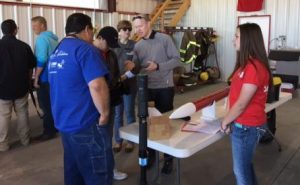
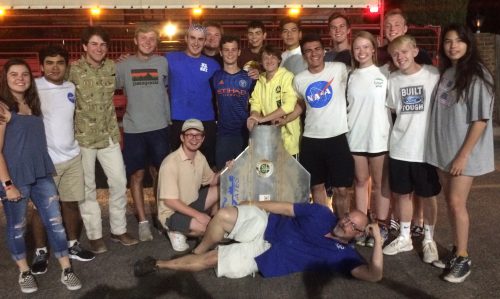
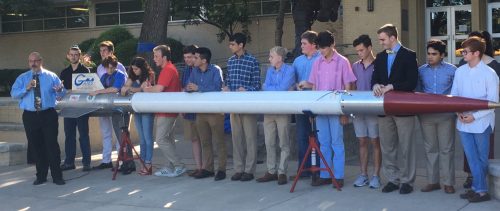
Here are a few more pics. Not too much different, but I will check in on them again tomorrow to see if there is more of interest to report.

IMG_6740 IMG_6733

www.systemsgo.org as always is the place for more information on this program. You may also email them at info@systemsgo.org .Take the time to get your school involved, the future of your students will be greatly benefited.

#RideTheSky! #Rockets2022 RocketSeason!

Rockets 2022-Begins With Teacher Training

Rockets 2021 has barely ended as the Team and students returned home from launches at White Sands Missile Range in New Mexico, on June 27th, and July already starts a new year.

Rockets 2022 begins with SystemsGo Teacher Training for the 2021/2022 school year.  22 Schools from Texas, New Mexico, and Colorado will be participating in training on all levels of the program at locations in both Texas and New Mexico.

July 12-16 kicks off these educational events at the Goddard level. FHS Program teacher, Andrew Matthes, will conduct this event in the Fredericksburg High School Engineering Department classroom.


Five teachers from Texas high schools, including Birdville Career and Tech Center, RL Turner, Union Grove, Brazoswood, and Booker T Washington High Schools, and one from Jal High School in New Mexico will attend and secure certification to teach the curriculum at their respective schools this fall. This first week of training encompasses the senior level rockets which launch at White Sands Missile Range. It is the final and highest level of the program. These vehicles are designed to reach 50,000 feet.

July 19-23, four schools will train on the Tsiolkovsky level at Artesia Administration Building in Artesia, New Mexico. Canon City High School from Colorado, and Logan, Elida, and Animas High Schools all from New Mexico will all train with Program Director, Rebekah Hyatt.  These classes are designed for Sophomore, Junior and Senior grade students whose projects are generally one pound/one mile rockets for launch at one of the spring launches.

The following weekend, July 24-25, two teachers will train on the Oberth level also at the Artesia Administration Building in Artesia, New Mexico. One is from the West Texas school of Fabens and the other from Canon City in Colorado.  Regional Coordinator, Doug Underwood, will conduct these trainings. July 31- August 1 he will be in Fredericksburg training Texas teachers on this same level.  Hollenstein, Georgetown and McGregor High Schools will be in attendance in Fredericksburg.  This level teaches students in the Junior and Senior years on the Transonic rockets, which are designed to break the speed of sound.

The next week will be back at Fredericksburg High School, where Program Director, Rebekah Hyatt continues training teachers on the Tsiolkovsky level of rockets. The Texas schools of Summer Creek, Hollenstein, Friendswood, Atascocita, Galena Park, Georgetown, and McGregor will attend this session in Fredericksburg.

The first week in August, PD Hyatt will also be conducting webinars for teachers needing the Intro to Engineering training. These teachers generally work with eighth and ninth graders just starting in the program, which teaches the Research Design and Development Loop as well as the history and basics of rocketry. These are two hour working web trainings that are scheduled as needed. Currently there is only one on Wednesday, August 4th, but a second may be added later.

Covid caused many schools and teachers to drop the program last year. Fortunately, many are returning this year and at least five new schools have been added. SystemsGo is glad to see this uptick in the program.

The more schools and teachers mean many more students involved, and with that many more potential career paths in the STEM fields.

www.systemsgo.org as always is the place for more information on this program. You may also email them at info@systemsgo.org .Take the time to get your school involved, the future of your students will be greatly benefited.

#RideTheSky! #Rockets2022 RocketSeason!

Sunday,Rockets 2019-Final Day at WSMR

Rockets 2019 at WSMR ended today much better than it began with two out of three rockets leaving the rail and achieving altitude. Fredericksburg High School, Anahuac High School, and Brazoswood High School all tested today. Brazoswood and Anahuac were each on their third attempt for the weekend.

Brazoswood was the top launch for the day and the final one ending the day on a high note. The 25’6″, 10″ diameter vehicle weighing in at 781 lbs fully fueled finally achieved lift off at 1:26 this afternoon after two prior unsuccessful attempts.

The rocket, named John Redden 1, after a senior member of the team that passed away of an aneurysm shortly before graduation, looked like fireworks at ignition as it blew Estes motors across the pad. Then it sailed skyward making a peak altitude of 12,859′ before nosing onto its side and sailing 5.1 miles down range to impact. The chute popped at impact.

73DA1B1A-B9A2-4DB1-A4BC-CD1B1E970E61

The first rocket to leave the rail today was “Panther 6”. Also on it’s third run for the weekend, the rocket built by Anahuac High School students, weighed in at 350 lbs, standing 23′ tall with an 8.6″ diameter. This vehicle had a “Rasberry Pi” GPS payload that a team of brothers designed and assembled. The older brother, 2018 graduate, Caleb Moore designed and 3D printed the plate to hold the payload, and the the younger, Joshua Moore, a 5th grader, assembled the GPS and did the soldering to connect it.

Panther 6 had a valve issue on the pad again today, but finally achieved lift off at 10:59 this morning. It made 1391′ traveling .3 miles down range before impact.

Both Anahuac and Brazoswood were very excited with their accomplishments. Brazoswood had hoped to break some of the standing records for height by other SystemsGo schools.  If that had happened, then student, Michael Bomar, who has a very full head of hair, and beard, had planned to allow his team mates to shave all hair from his head. Looks like he will be staying wild and woolly a while longer.

Fredericksburg’s Redbird #20 was the first test of the day, but did not leave the rail in flight. Shortly after ignition, as the vehicle began to ascend the rail, it exploded apart between the engine compartment and the main body of the rocket. The aft end stayed sitting on the load cell. The explosion blew the body to the right leaving it hanging from the rail by the top lug.  It was cocked off to the side at an angle just slightly above the end of the engine section.

This presented a challenge to the SystemsGo team and students to remove it from the rail. The students are still evaluating what casused the rocket’s accident.  When Mr. Matthes was asked what happened, he answered that it was no short answer but many factors that contributed and some were still being discussed.

Seven schools traveled to WSMR this year. One school returned home unable to launch leaving 6 to test. Literally half achieved flight and half did not.  Regardless, congratulations is in order for all students that came and attempted to launch. You made it to the rail, something that most schools in the program have yet to achieve. Whether your vehicle left the rail or not you and your teams are ahead of your peers. You came here high school grads with a rocket, you leave here, seasoned rocket scientists!

The mission was then called complete at 1:40. Cleaning and packing up of WC50 began,  as this was the official last day of testing for SystemsGo, students, and WSMR personnel.

Safe travels to all schools heading home, tomorrow. It is back to Texas for the SystemsGo team tomorrow as well. Tonight, the team enjoyed dinner, drinks, conversation and an early bed time.

www.systemsgo.org as always is the place for more information on this program. You may also email them at info@systemsgo.org .Take the time to get your school involved, the future of your students will be greatly benefited. minute

Saturday,Rockets 2018-Final Day at WSMR

SystemsGo scheduled three tests today at White Sands Missile Range, Booker T. Washington, Alamo Heights, and Anahuac. After these three launches, Union Grove would have the opportunity to have a second attempt at launch after fixing the malfunction from Friday’s launch.

Booker T. Washington’s rocket was the first test. Students had loaded the rocket onto the rail before leaving West Center 50 Range at mission completion last evening. The schedule had the school’s T time set for 8:00 a.m. It’s actual T time ended up being at 9:12 after two holds caused by issues with wiring on the rocket which caused the vehicle to have to be vented,  brought down, fixed and reloaded. Unfortunately, the rocket never left the rail. At ignition, the rocket only smoked,  ending in a misfire. Due to the misfire, a 30 minute wait time had to be observed for safety until it could be removed. Following the 30 minute wait, the vehicle was the vented and removed from the rail. It is believed that the injection system did not open.

Alamo Heights  was next on the rail. The schedule was now two hours behind. They loaded without incident and observed a T time of 11:57. It achieved ignition and lifted off the rail. It was a great launch, but turned on its side, continuing on up with an angle headed down range. The rocket reached a peak altitude of 23,083 feet, but due to the launch rail being at a MSL (mean sea level) of 4,521 feet, the final height reached was 18,562 feet. This number is calculated by subtracting the MSL from the peak altitude.

Vehicle velocity was 1503 feet per second. It traveled 26326.323 feet down range which equals 4.986 miles. WSMR reported that the chute did deploy before landing. Alamo Heights’ rocket had the second highest altitude, and also achieved the greatest distance traveled traveled for the weekend. After WSMR recovered the rocket it was determined that only the Drogue chute opened and then melted as the vehicle was still burning. Because of this the rocket had a ballistic re-entry, burying itself in the range. Only the engine casing with fins intact was returned to the team as seen in the picture above. In the picture below, the team is shown with the rocket before launch.

FD40E23B-2318-4A1E-87E2-7A43651DDEDF

Anahuac was next on the rail at 2:09 p.m. They had no lift at ignition, only a partial burn. It also vented the Nitrous through a hole in the injector bay. According to analysis from Anahuac, a hose between the injector and diffuser plate blew a fitting where it attached to the diffuser plate. They are not sure what caused this at this time, but they were able to confirm that the tank and injector were intact. The partial burn created another hang/misfire situation creating another safety delay of 30 minutes before the vehicle could be off loaded from the rail.

By the time this delay was up it was 2:45 and range end time for air space was 3:30. This effectively ended our mission time on the range, called officially by WSMR officials. Due to this, Union Grove was unable to go for a second attempt.

The mission was then called complete. Cleaning and packing up of WC50 began,  as this was the official last day of testing for SystemsGo, students, and WSMR personnel.

Safe travels to all schools heading home, tomorrow. It is back to Texas for the SystemsGo team tomorrow as well. Tonight, the team enjoyed dinner, drinks, conversation and an early bed time.

www.systemsgo.org as always is the place for more information on this program. You may also email them at info@systemsgo.org .Take the time to get your school involved, the future of your students will be greatly benefited. minute

Fredericksburg’s STEM Academy/Rocket Program-Spring Term Update #3 (April 1-April 30)

May is here and time is running out for the Fredericksburg STEM Academy as launch dates approach for the junior and senior groups. Juniors have a  May 18th test date at Rockets 2017 in Willow City. While the seniors are down to less than 3 weeks as Redbird 18 is scheduled for completion two weeks before school ends to allow for preliminary systems tests.Due to delays in manufacturing, testing will have to occur in the process of construction as components come in. Final testing will be the week of June 19th prior to their test at WSMR the following week. It is slated to launch at White Sands Missile Range on June 27th.

During April the seniors tested Low Density polyethylene (LDPE) three times on teststand. Data on all tests was consistent and exemplary. Currently the injector plate is being drilled again to increase the oxidizer flow rate to the correct  value to provide for complete combustion.  Due to this testing is on hold. Lately they have been experimenting with different ablative arrangements. The ablative has  burned through slightly but not enough to damage the test cell.

Below is an actual video of an engine burn test.  This one of the first video’s with HD video quality and audio.  The regularly captured video does not have audio embedded.  This is good for them too as they do these tests for NASA and this gives them something  more to show of their work.

https://goo.gl/photos/78HwtXxx8rytjxSV7

Mr. Matthes had this to say about this particular burn,  “It looks pretty good but we’re only getting about 1/3 of the oxidizer we should be getting so it is fuel rich.  It will not be as orange when we get the oxidizer flow rate correct.  The hope is that it is a really clean plume with mach diamonds in the plume.”

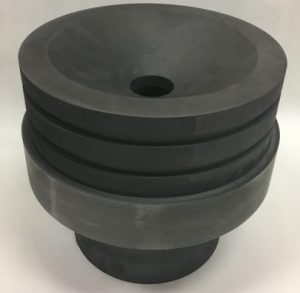
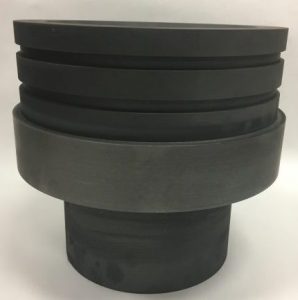
The senior’s “junior teststand” nick named “Baby Bird” is almost complete. They hope to conduct their first ever test on this new teststand possibly late this week. This teststand was created by the seniors starting last year during junior studies to test a fuel grain system designed and developed by them to interface with the hyportek injector and tank. They hope to have 3 successful tests on this teststand. If they achieve this, then they get to fly this new system at Willow City in last year’s rocket.  At this point,  they are getting fuel grains prepped.  Pictured below, are nozzles created for Baby Bird.

Redbird 18 still currently does not resemble a rocket, but they are making steady progress. The nozzle has been manufactured, seen here 

and  the nose cone mold is also back, seen here. 

Machining could only be created to within 8 inches of the tip, therefore they created the tip with 3D printing and epoxied it to the nose cone and are preparing it for fiberglass.

Other needed materials are in and have been sent out to Heartland Enterprises for machining.  Currently, Mr. Matthes says that the biggest test coming up will be next week when they pressure test the oxidizer tank.

Juniors are under pressure as the deadline for 100% completion of their rocket is May 11. Meeting this deadline will allow them time to complete their Flight Readiness Reviews (FRR) and be able to high light problems or errors that still exist. Components are coming in and weights on some are different than originally reflected in RockSim. Due to this they are updating their design to accommodate. Currently they are still on the wire between breaking the speed of sound and exceeding the 13,000 feet maximum allowable altitude. Breaking Mach means they also exceed altitude. Staying under 13,000 feet  means then they lose their shot at breaking Mach.

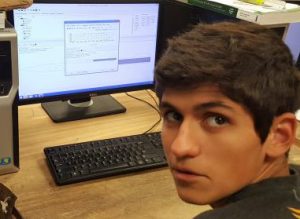
 Here Chris Calzada is working on RockSim trying to resolve the altitude velocity conundrum.

Meanwhile the Sophomores have been entrusted to work at their own pace to finish their last chapters and projects. Time remaining after completion of these is for 3D printing and modeling. Their learned skills in  isometric, creating section views, details and working drawing sets would now allow them to communicate effectively to a machine shop without the need for clarification.

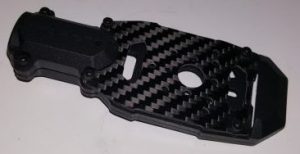
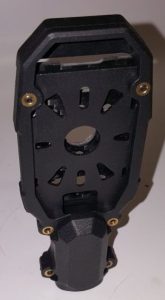
Paul Kucherka, a FISD maintenance man and school function videographer developed an issue with the quadcopter that he uses to video. A few of the sophomores are going to attempt to design and develop a new wiring harness that may provide the solution to Paul’s needs, hopefully by the end of the school year,  this would allow him to continue using this equipment for video. In order to do this, a few other sophomores have been creating the multiview of one of the quadcopter’s parts on the 3D printer. Pictured below is the original part they are attempting to recreate.

This article is the seventh in a series, new for this school year ’16/’17 of monthly updates that will follow the Fredericksburg STEM Academy/Rocket program. This school is a participant of the SystemsGo STEM program. This series of articles is intended to support, encourage, and challenge students in the program as they share their working status and accomplishments throughout the year in the program. These publications will be available for tags and re-posting.

www.systemsgo.org as always is the place for more information on this program. You may also email them at info@systemsgo.org . Take the time to get your school involved, the future of your students will be greatly benefited.

SystemsGo New Mexico Inaugural Launches Were a Great Success Thursday in Jal

Congratulations to SystemsGoNM on a great day in Jal, NM Thursday. Six schools attempted launching a total of 10 rockets today and 9 of those 10 were successful launches. That is quite an impressive start for the New Mexico program branch. Staff from SystemsGo in Texas were very pleased with today’s launch outcome.

Program Director, Rebekah Hyatt had this to say,  “SystemsGo NM has officially established their program! Jal high school was the first SG school to certify and launch a rocket! They are off to a fabulous start!”

All rockets tested this year were one pound/one mile vehicles, next year the program plans to add the next level transonic rockets to the docket. This will make next year another interesting year to keep an eye on this new program as transonic add their own set of challenges both for the students and the launch facilities.

To add to the great news, the program in New Mexico is growing and more schools may be added this next year.

Congratulations to the six schools that were part of this monumental inaugural launch this year. You were all part of history and did very well. Jal High School, Carlsbad High School, Hobbs High School, Lake Arthur High School, Loving High School, and Lovington High School, you are the first to build a launch a rocket in your schools and state as part of this program. You are now what new schools will watch and aspire to be and beat. This is a good thing. You have set your schools up for future successes. And as years pass you will find there will be a bit of friendly competition to achieve the best. This just keeps each new class reaching a little farther to learn that one thing that makes their project not only better than last year’s, but better than any other schools’.

In the beginning just getting off the rail is a huge success, but as years go by you want to improve those results. Some of you will be back next year, and some of you will not. For those that will not, you have something that no one after you will ever have again, you were the first to achieve success here today, and your success has set the bar for next year. For those that will be back, and for future groups after you, the bar is set, now it’s time to move forward and surpass it. Success now, is not matching what others have done, it is attempting to give those after you another measure to beat. This not only helps future students it helps your school’s program to continue and be successful.

The best part of this is that all you learned here in the program carries over into your success in the future. Science, Technology, Engineering, Mathematics, and whether you realize it or not, business, communication, and work place training will all help lead you to future success.

Here are a few high lights from today’s program:   

Above are two photos from the launch site.

 These are Stage 1 and Stage 2 at Jal Volunteer Fire Department.   All photos are courtesy of Rebekah Hyatt, SystemsGo Program Director.

More photos from today’s activities are available here: https://www.facebook.com/ginger.burow/media_set?set=a.1452809664740160.1073741877.100000334203350&type=3

This closes out the SystemsGoNM launch activities.

Tomorrow the team members from SystemsGo in Texas will head back to Fredericksburg and continue preparations for more launches.

Rockets 2017  will continue with two  more launches in May. The first will be held in Smith Point just south of Anahuac, Texas for schools in the Houston area, on the weekend of  May 12-14, 2017. If you have been to the Houston area launches in the past you may want to check out the SystemsGo website for information because this is a new location for that area this year. Information and a map link are available on the website.

Next the Stewart Ranch in Willow City, Texas will host the largest of the now three launch events on the weekend of May 18-21, 2017.  This testing site covers the Fredericksburg and Hill Country area schools and all Texas schools not participating in the Houston launches.

The senior groups are tentatively scheduled to launch their Goddard level rockets at White Sands Missile Range (WSMR) in New Mexico the week of June 26-30.  These are not available for public viewing or Livestream due to being tested on a military facility, but blog and SystemsGo updates will be posted online as available during that week.

If you plan to attend any of this year’s launches please register for your attendance ticket at http://www.systemsgo.org/save-the-date-for-rockets-2017/  or they may be gotten at the gate. These are free but required for admittance to each site.  Reserving them ahead at the website is preferred to obtaining them at the gate because the latter slows entrance to the site and may result in you missing the viewing of your intended launch.

You may also view any of the launches except WSMR on Livestream. That link will be available on the SystemsGo website closer to the launch.

The launch schedules for each venue are available at http://www.systemsgo.org/save-the-date-for-rockets-2017/ . I will post it here for each launch day as well. I want it to be as accurate as possible so I will refrain from posting schedules until the evening before each launch day in case there are any late changes.

Please watch the SystemsGo website, SystemsGo Facebook page,  SystemsGo Twitter feed: https://twitter.com/SystemsGoNews and this blog for upcoming information on theses events.

More event details will be available here in upcoming days/weeks as events get closer. Daily reports featuring schedules, school names, results, pictures and some editorial content will be posted during the events.

http://www.systemsgo.org as always is the place for more information on this program. You may also email them at info@systemsgo.org . Take the time to get your school involved, the future of your students will be greatly benefited.

Thank you for reading and following the SystemsGo Rockets.
Monday, T-1 Briefing and Set up Day at WSMR Results in Slight Schedule Change

SystemsGo and the participating schools had a productive first day at White Sands Missile Range (WSMR) today. They started the day with the T-1 Briefing. This is basically WSMR rules and regulations for the range. It covers all basic information such as weather conditions, wind speeds, airspace schedules and logistics.

WSMR personnel made introductions so all involved would know who they are and who to contact for help from the base. After the T-1 brief they teased that it was the “dumbed down” version for civilians. At the end Scott Netherland introduced the SystemsGo team and specified their roles with the organization.

By 10:30 they were headed down range to West Center 50 launch site. This is where the schools, SystemsGo, and WSMR personnel spent the afternoon getting ready for tomorrow’s launches. All equipment and rockets had to be set up and completed to meet the Tuesday testing schedule. Everything went well and it was a very productive day albeit a little long and quite hot.

Union Grove had a small problem with their vehicle that kept it from passing the pressure tests so in order to be sure that the schedule would stay on course tomorrow, they moved  Alamo Height’s smaller rocket into the first launch window for tomorrow morning, because they had to have one on the rail and ready tonight to keep the schedule. Union was able to fix their problem and pass the second round of pressure tests so they will resume as the second launch in the morning.

Because of this tomorrow launch schedule is as follows:

  • 8:30 a.m. Alamo Heights High School (1)
  • 11:00 a.m. Union Grove High School
  • 3:00 p.m. Alamo Heights High School (2)

Due to the 8:30 T time tomorrow will be an early day for SystemsGo team and schools. They will be leaving for the range by 5:30 a.m. Alamo Heights parents going to Range Control to view the launches will be leaving at 6:15 a.m. Subsequently parents with Union Grove will be heading to Range Control by 9:00 a.m.

If it is a perfect day and all goes well with no exceptions with each launch, then the tests should be complete by 3:00 p.m. Realistically this is a very tight launch sequence with little to no room for errors. As long as each rocket that loads the rail leaves without any issues at ignition this schedule will hold and therefore the next days will follow as currently scheduled. If one vehicle has to be taken down from the rail then the next launch window will be lost and the schedule will have to shift.

Therefore let us all hope and pray for the best for each school so that they may have a successful launch tomorrow and that all schedules hold true.

Here is the current preview of the launches scheduled for Wednesday. Tomorrow’s blog will have a final schedule for the day based on Tuesday’s test success.

  • Wednesday launch order: Anahuac, Booker T. Washington (1), Booker T. Washington (2)

Event details will continue to be available here. I will provide more information each morning as to how the schedule and other event details will progress for that day and how launches went for the schools testing that day. Pictures are not allowed on the range, but some pictures of teams getting ready to leave for the range with their vehicles might be available. If anything is available I will post it for your viewing pleasure.

www.systemsgo.org as always is the place for more information on this program. You may also email them at info@systemsgo.org .Take the time to get your school involved, the future of your students will be greatly benefited.