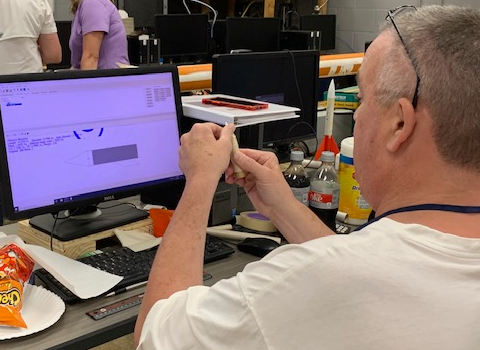
Today was the culmination of the first semester training for the class. They were introduced to modeling using Rock Sim and given a challenge to design and build a rocket. They had a Stability Margin of 1-2 and an altitude goal of 1500′ to 2200′ depending on the motor size they chose.
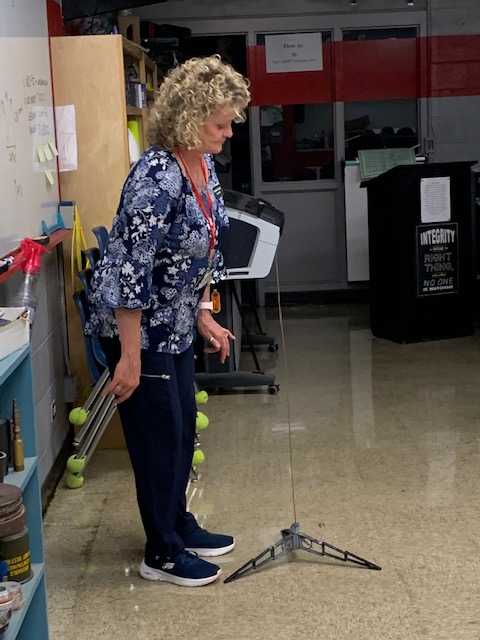
Motor C was designed for the 2200′ goal, and motor B for the 1500′ goal. Each teacher was asked to design a rocket based on the location and demographics of their school. This includes actual open space for a launch and recovery radius and encompasses surrounding entities like airports, neighborhoods, and businesses that would need to be avoided in these projections. Determining these factors would help each teacher decide which motor and height requirement would be viable for their school’s location.
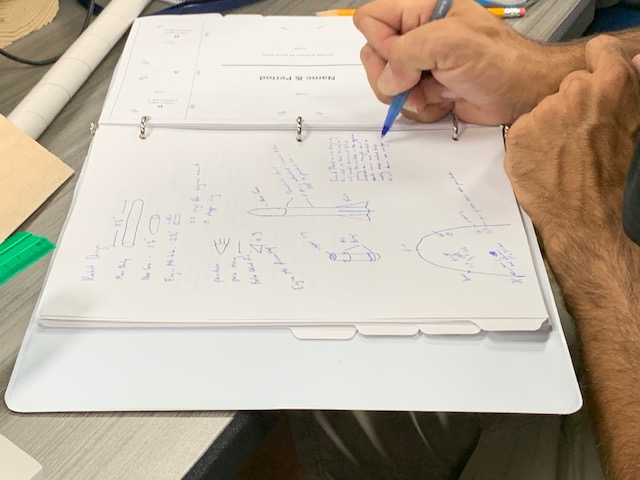
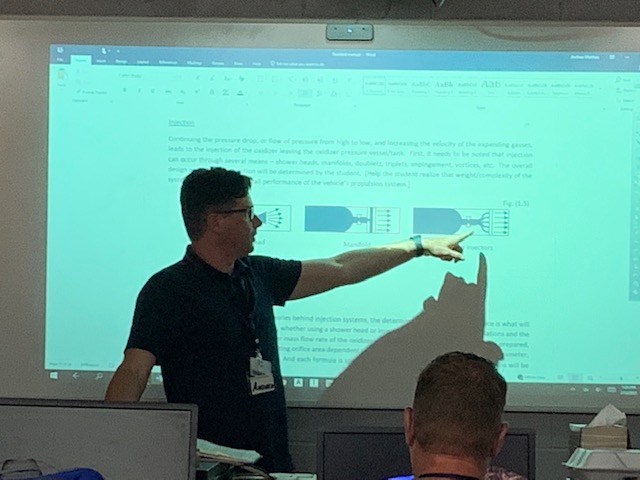
Once they have clarified these requirements, they design their rocket using RockSim. This program helps them determine the rocket’s height and speed possibilities. When their design and development is complete they print out their schematics and build their rocket.


At completion a Flight Readiness Review is done. The goal is to build and test the vehicle in one day. This meant launching by 5:00 pm.
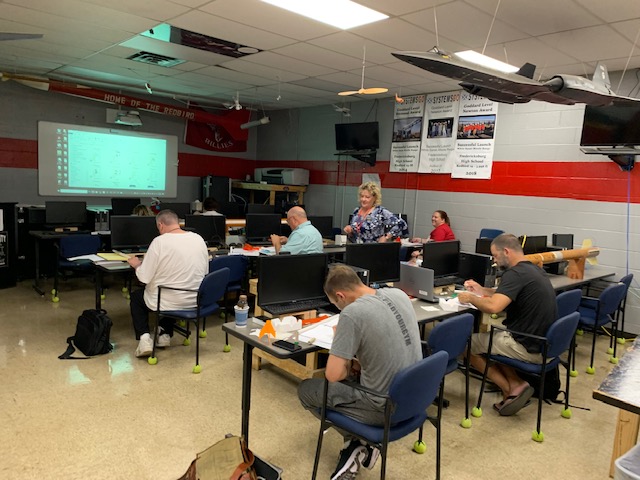
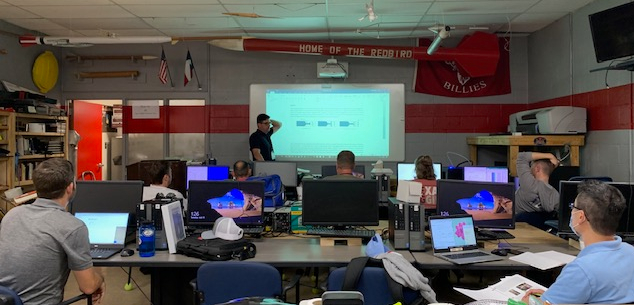
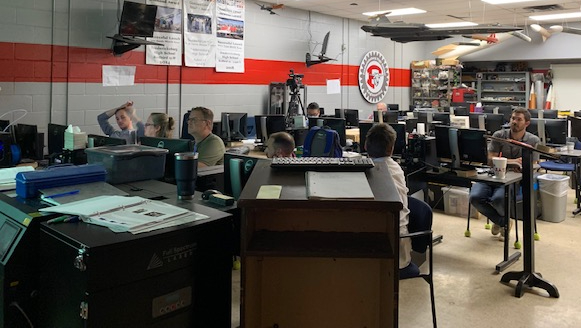
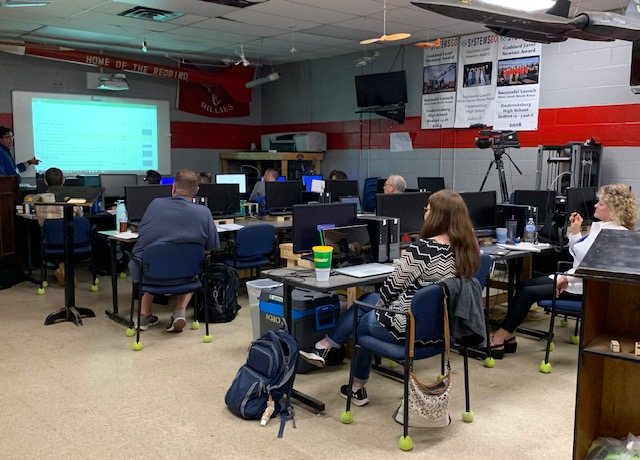
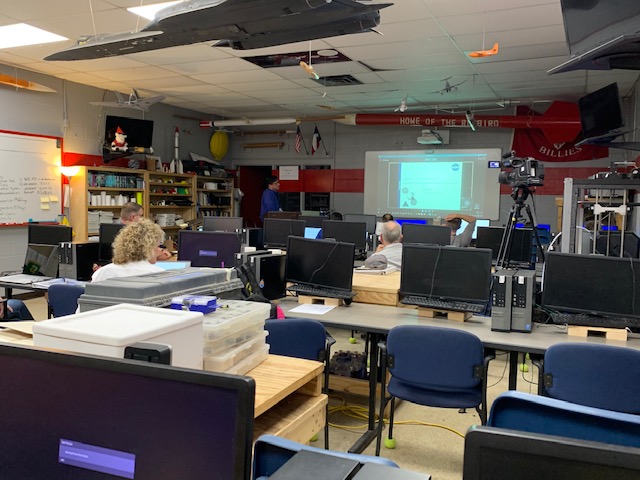
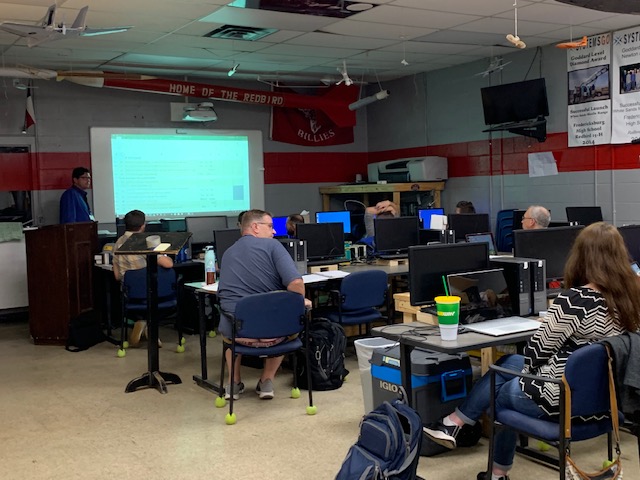
Most of the class had started the building stage when I arrived. A few were still designing on the computer. Any manner of tools and adhesives were in continuous use around the room passing from one person to the next. Dremel tools with grinder wheels and filing tips created a constant buzz.


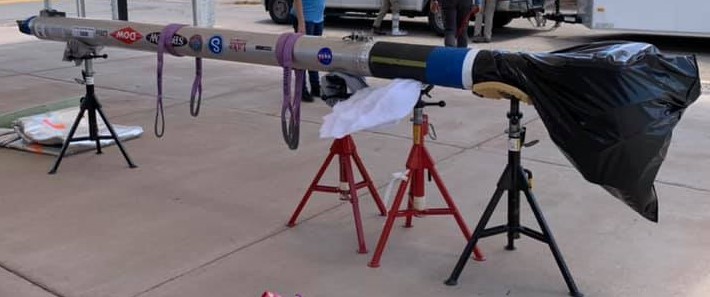
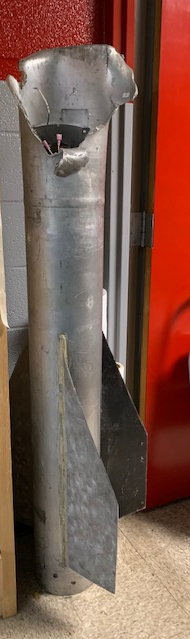
One observation about these new vehicles was their size. In the past days the rockets lengths had ranged from about 6 to 12 inches, give or take a little. These Generation 3 rockets were more of the 3 to 6 inch range.
In the two days prior the teachers seemed more laid back and quiet as they constructed their rockets. Today, the room buzzed and their was a sense of urgency and even slight elation as they worked.
They stayed busy, but still found time to make comments about their own or a friends current design.
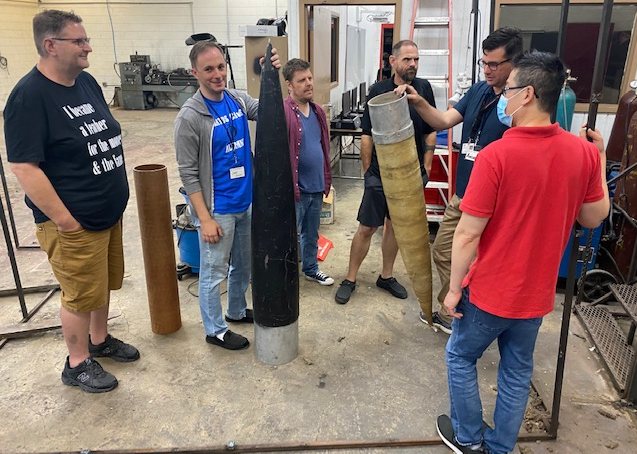
One student asked if his nose cone had to be symmetrical? This received many looks and comments from his colleagues. This same student was questioned repeatedly about how he was planning on his nose cone deploying since it was heavily taped in at the time. He planned to remove most of the tape prior to launch, stating that it was only there until everything was set.
Another discussion about a unit of measurement called a slug caused great trepidation for a couple of the gentlemen in the class. One of them commented that a person would have to be an engineer to understand that unit of measurement. The gentleman with the nose cone question, “I am an engineer.”
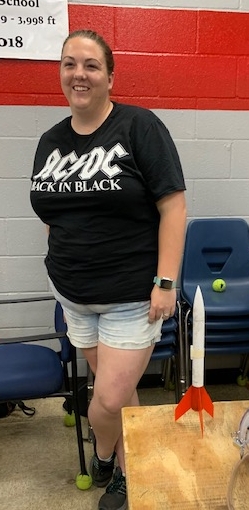
However, our friend, Nicole, from yesterday, was smiling. She was energetically working on her new rocket. She had a renewed sense of confidence in her abilities today, after her successful launch yesterday.
The group was far from complete and launches were quite a ways out yet when my visit for the day came to an end. They did launch close to 5:00 that afternoon. When I drove by after work, they were just heading back to the shop.
Tomorrow and then until around 1:00pm on Friday, they will be delving into the second semester of the Tsiolkovsky class. Among the criteria will be designing a 1lb/1 mile rocket.
Until tomorrow, if you are not dreaming of rockets, you obviously have not hung out with this crew enough!
www.systemsgo.org as always is the place for more information on this program. You may also email them at info@systemsgo.org .Take the time to get your school involved, the future of your students will be greatly benefited.

#RideTheSky! #Rockets2022 RocketSeason!
























 On the Wings of Angels