Fredericksburg/SystemsGo’s STEM Program Launches More than Rockets

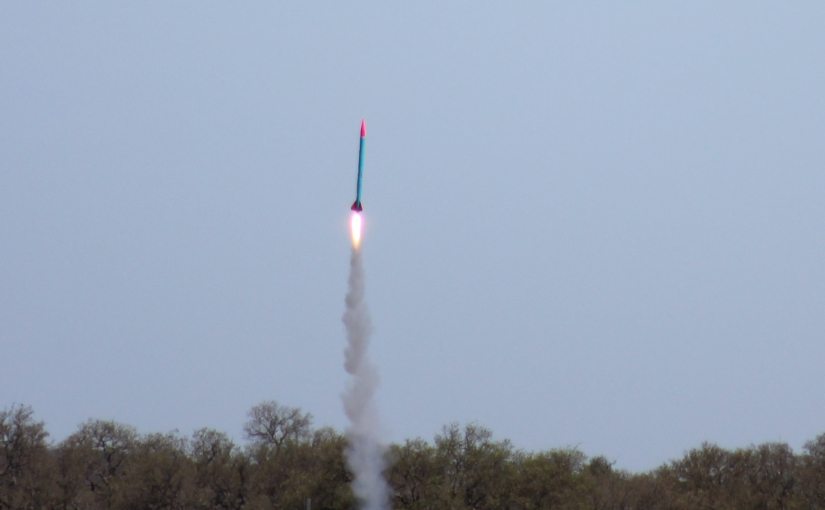
As Fredericksburg Rockets 2016 counts down 2 more days until launch, this now 20-year-old program boasts much more than just building and blasting rockets skyward. This Science, Technology, Engineering, and Math (STEM) program has bolstered the careers of many Texas young adults.

Hands on learning experience in STEM career basics like Engineering and Technology, Engineering Design and Presentation, Advanced Engineering Design and Presentation, Engineering Design and Problem Solving, and research and development, in a course setting that  promotes project application has inspired many of our Fredericksburg students, as well as students across the state of Texas to follow a career in the STEM or business fields. Rockets may have been the catalyst that helped to teach them these skills along with other fundamental work place uses including teamwork, critical thinking, analysis, testing, leadership, innovation, invention, individual accountability, and work place compatibility, but the program itself was the deciding factor that created a lasting interest for these individuals to pursue related career fields.

Many students have gone through the program in the last 20 years,  just here in Fredericksburg, let alone schools all across Texas that have been using this same model from SystemsGo.  Unfortunately there is no recorded number to tell us how many, but just at an average of 17 students per class per grade level, that is approximately 1100 students here in Fredericksburg alone. Multiply that by 43 active schools currently on the list of participants that have joined the program over the last 20 years, and that is a lot of Texas students whose lives have been impacted by the program. New Mexico schools may soon be joining this program as well so that number will increase even more as the program expands outside of Texas.

The following, is just a handful of individuals, some from the early years of the  program and some from more recent years. All of them credit the SystemsGo program for encouraging them and helping them to achieve where they are today.

Robert Deaver: FHS graduate 1998, BS  in Electrical Engineering at University of Texas at San Antonio, MS in Computer Engineering at University of Tennessee. He was in the SystemsGo program in the first two years of it beginning and worked on the  design, construction and flights of Redbird 1 and Redbird 2. He is currently an Electronics Engineer at Real Time Systems in Fredericksburg and a Team member of SystemsGo. Previously he worked at IBM and Dell.

Josh Jung: FHS graduate 1999, BS in Aerospace and Aeronautical Engineering at Purdue University. He spent sophomore through senior years in the SystemsGo program working five Redbird rockets including:

  • RB-2: 8″ diam, 15′ tall, M-engine, 3 experimental recovery systems
  • RB-3: 2.5″ diam, 6.5′ tall, K-engine, Mach -1 rocket
  • RB-6: 3.5″ diam, 6′ tall, Mach-2 rocket (summer project)
  • RB-7H: 8″ diam, 20′ tall, hybrid engine, WSMR first attempt
  • RB-8H: 8″ diam, 27′ tall, hybrid engine, WSMR flight (upgraded the RB-7H)

Josh is currently the Director of the Falcon 9 Stage Test at SpaceX. He has previously been the Director of Ground Support Equipment, and Director of the Texas Test Site also at SpaceX.

Melissa Jung: FHS graduate 2001, undergraduate studies in Engineering at University of Illinois, ACOG in San Antonio, Recruit Training Command in Great Lakes Illinois. She was in the SystemsGo program her sophomore through senior years.

Melissa is currently working as an Avionics Electronics specialist on airplanes in the US Navy stationed in  Norfolk, VA. Previously she worked as a patrol officer in the Fredericksburg Police Department.

Chelsea Burow: FHS graduate 2012, currently working on her BS at Texas Tech University in Physics with a Mechanical Engineering minor . Chelsea was in the SystemsGo program her junior and senior year. Their group built and launched RB-12.

She is unsure about her plans after graduation, but is looking into places like SpaceX, NASA, and SystemsGo. She continues to help with the SystemsGo launches to current date.

Derrick Loth: FHS graduate 2012, currently working on a dual major in Business Finance and Business Management at Texas Tech University. He was in the SystemsGo program his junior and senior years. He was part of the team that built and launched RB-12.

He graduates May 2016 and plans to work for the FDIC as a Federal Bank Examiner.

Kasey Burow: FHS graduate 2013, attended Basic Training at the Recruit Training Command in Great Lakes, IL.  She was in the SystemsGo program her sophomore through senior years.

She is currently in the US Navy stationed at the Norfolk Naval  Station in Norfolk,VA. She is an Aviation Structural Mechanic on Sea Dragon helicopters in Helmineron 12 & 14.

Austin Walters: FHS graduate 2014, attends the University of Texas at San Antonio, and is working on a dual Bachelors in  Aerospace and Mechanical Engineering. He was in the first full 4 year program offered by SystemsGo at FHS. He helped build and launch RB-15.

He plans to work for one of the Aerospace companies like SpaceX after graduation.

Anissa Kneese: FHS graduate 2014, currently attending Texas A&M. She is studying Mechanical Engineering. She was  also in the first full 4 year SystemsGo program at FHS. She also helped build and launch RB-15.

She would like to work for one of the Aerospace companies after graduation. She continues to help at each year’s SystemsGo rocket launches.

While trying to find information on individuals for this piece I found the following link by Shaun Pyka done somewhere around the 2012-2013 school year. It show cases a slide show of many more past students and where they were at the time.  Some of the work information may not be current anymore, but is still gives a good idea of how much this program has impacted the lives of its students.

http://slidegur.com/doc/1128314/shaun-pyka—systemsgo

More event details will be available here in upcoming days as launch dates get closer. Daily reports featuring schedules, school names, results, pictures and some editorial content will be posted during the events.

www.systemsgo.org as always is the place for more information on this program. You may also email them at info@systemsgo.org .Take the time to get your school involved, the future of your students will be greatly benefited.


Day 348-Rocket Season Launches in 21 Days

Only 21 days until the sounds of high-flying rockets fill the air over Willow City, TX with the launch of Fredericksburg Rockets 2016. SystemsGo’s innovative STEM (Science, Technology, Engineering, and Mathematics) program featuring a rocketry/aeroscience curriculum is set to begin launches on May 12-15, 2016 at the Stewart Ranch in Willow City, TX.

As of March 9, the Fredericksburg launch schedule has 78 vehicles on track for testing. Twenty-nine schools are slated to participate.

The following weekend, May 21-22, 2016 launches continue in Houston, TX. The current schedule there, includes 12 schools and 27 test vehicles.

Later this summer, at White Sands Missile Range the final days of launches will commence with the Goddard level rockets, the largest in the program. The final date determined by White Sands Missile Range (WSMR), is yet to be announced.

If you are in the Willow City area on the mentioned weekend you should come out and watch. It is a fantastic sight to behold, and the energy and enthusiasm from the students is fun and contagious. Fredericksburg launches are open for public viewing and both Fredericksburg and Houston have live streaming available to view online at the time of the event.

More event details will be available here in upcoming days as events get closer. Daily reports featuring schedules, school names, results, pictures and some editorial content will be posted during the events.

www.systemsgo.org as always is the place for more information on this program. You may also email them at info@systemsgo.org .Take the time to get your school involved, the future of your students will be greatly benefited.

Day 68-Strange Events, Some Funny, Some So Very Sad, We Will Miss You, Jess

Last evening was entertaining. I learned that it is possible for members of my family to work on their old Dodge trucks, experience problems in doing so, and hold their tongues. I found much humor in this.

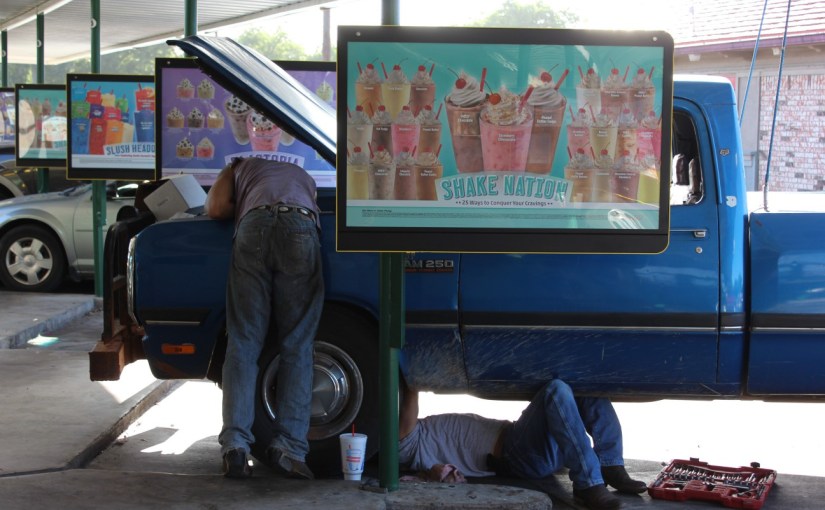
My son’s truck broke down while parked at Sonic Drive Inn. His starter failed. I discovered this around 5:00 yesterday evening and went there to see how things were, while my husband went to Napa to get parts. A friend of Brett’s, David, had some tools and loaned them to him so that he could begin the tedious job of removing the old one since it was obvious the vehicle wasn’t going to leave the spot it was in any time soon. Steve soon arrived with more tools and the new starter in hand and the two of them continued working to get the old one out. It apparently had a wish not to be removed because they were unable to budge the pieces holding it in. At one point my son was sure that someone must have tightened them down with an impact wrench. They even procured a pipe for leverage were not able to get it off without much grunting, growling and huffing.
These sounds were the ones in question, as I am quite sure, having heard them work on trucks before, that these were not the first sounds that came to mind. It was quite refreshing to hear these sounds in lieu of the usual expletives. I do believe being in public at Sonic helped this situation.

Perhaps we should do all our mechanic work there. I doubt they would appreciate that though. But I must say that they were most hospitable, offered help, and even brought us Route 44 glasses of ice water after they had been at this for almost 2 hours. In fact it was over two and a half by the time they finished and Brett headed for work. The ice water was most refreshing and appreciated by all. It was even more refreshing for Steve since his got kicked over as he was under the truck working and it dumped all down his back. A friend of mine referred to this event as Sonic Engineering.

The boys, my son, David, and now Tyler really boiled over in laughter over that, but I couldn’t see Steve’s reaction from where i was at the time. A little cooling down never hurts during a hard days work.

On another much sadder note, a dear, sweet friend, mother of two young children, only 37 years old, passed away this morning. Preliminary reports from her husband are that she had a seizure, and he has heard that she fell and hit her head, and died. It is still too soon to know for sure exactly what caused her death. She is the niece of several of my best friends. She was always a bubbly, fun-loving and talented young lady. She will be greatly missed. May God bless and keep all of you her family, Robert Goolsby, husband and two children John and Addison, the whole Moellering family, Roger Moellering her father, and Nancy Moellering her mother, and her aunts, Laurie Bristol, Linda Reeh, and Candice (I am sorry I can’t remember the last name), and their families as well. I’m so very sorry for you all. I can’t even imagine. I love you all, and truly hope the good Lord wraps you in his comfort, strength, love and grace during this tragic time.

I wish I had a picture of Jess to post, but I do not. Feel free to  post your own below this story if you so choose.

Jessica Goolsby, you will be missed.

Day 62- SystemsGo Team Ends Another Successful Year

The SystemsGo team traveled home from White Sands Missile Range in New Mexico today. They left Alamogordo around 0800 and arrived safely in Fredericksburg around 1845.

They have now completed another successful year with launches in Houston, Willow City, and WSMR. The group helped students attempt the launches of over 90 Tchaikovsky and Oberth rockets and 6 Goddard level rockets.

Now they take a short needed break before getting fired up for a new year with more schools, students and rockets. It won’t be long and the “launch season” will be back again.

SystemsGo transitions back to helping schools and teachers implement this STEM based program so that more students can participate in this system of learning.

That concludes Thursday’s WSMR Rocket update.

www.systemsgo.org as always is the place for more information on this program. Take the time to get your school involved, the future of your students will be greatly benefited. SystemsGo is a Texas-based STEM curriculum program.
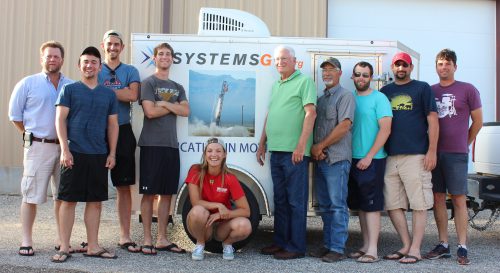
Team photo includes from left to right, Brett Williams (SystemsGo founder), Cade Ottmers, Brian Heffner, Josh Hampton, Chelsea Burow, Gene Garrett, Steve Burow, Randy Kuhlmann, Robert Dever, and Andrew Matthes (FHS STEM program instructor).

Day 61-Rockets at WSMR-Final Launch Day-Update

Today was the final launch day at WSMR for this year’s participating schools. Alamo Heights High School was scheduled for launches of two separate rockets today, one that they were unable to launch while at WSMR last year, and a new one from this year’s class. Union Grove was on standby for a second attempt if time permitted.

The SystemsGo team and the high schools had another early start to the day arriving at WSMR at 0400, with an eight hour window for launches. Transition times between launches were running at two hours each, which allowed all three launch attempts to be completed quickly, everything to be packed up, and the group off the range by 1800.

Alamo Heights started off with their new rocket at the pad. They had a successful fill, fire, and launch. The vehicle climaxed at 17,000 feet, and then nosed over and came down ballistic. What was recovered from it was in pieces.

Alamo Height second rocket, the return from last year took the pad next. It too had a successful fill, fire, and launch, leaving the pad behind and reaching an altitude of 34,000 feet. This rocket also came down ballistic, and they were only able to recover the motor section.

Union Grove was able to attempt a second launch. They had a successful fill, which ended in a vehicle malfunction that caused the injector system to open but no ignition. Speculation is that the Estes motor inside with the electric match did not light because of a possible wire short in the rocket.

That concluded the launch series at WSMR for this year. To recap out of six vehicles, there were two successful launches each with failed recovery systems. One more low altitude launch with in flight mechanical failure causing premature landing and continued burn out. One complete hang fire on the rail. And two scratched due to vehicle malfunctions at fill.

Congratulations to all five schools for getting this far. There are schools every year that aspire to be here, and do not make it. You have accomplished a great deal. You have all met the objective of the program which is to create a scratch built rocket, have it completed and ready for flight, and on the rail attempting launch at White Sands Missile Range. The goal of flight, may have been elusive, or perhaps achieved but still problematic, but you made it here, and each of you has something to learn from the event and some will have the chance to study, fix and try again. All of you are in an elite group of past and present students that attempted to launch a rocket at WSMR.

Tomorrow is another long day of travel as the SystemsGo team and participating schools all head back to Texas. Hopefully it will be a safe, smooth trip home without any issues.

That concludes Wednesday’s WSMR Rocket update.

www.systemsgo.org as always is the place for more information on this program. Take the time to get your school involved, the future of your students will be greatly benefited. SystemsGo is a Texas-based STEM curriculum program.

Tune in again tomorrow for an update from Thursday’s trip home from White Sands Missile Range this week.


Day 60- Rockets at WSMR- Launch Day 2-Update

This morning started around 0900 on WC 50 range at WSMR. Earlier start was not available due to actual military testing scheduled for today. Two schools, Union Grove and Booker T Washington were on the schedule with a 6 hour window for completion.

The SystemsGo team spent the first hour plus, conducting readiness checks on the Nitrous tanks making sure they were switched out for full ones, making sure the Pad was completely operational, and safety testing the Fill and Fire system to be sure it continued at 100%. During this time, students evaluated their rocket and checked to be sure their vehicle was completely prepared for launch.

Between 1030 and 1100 all systems were deemed ready as was Union Grove’s rocket so it was moved to the launch rail. It went vertical around 1145 and commenced fill. As the third Nitrous tank was filling into the rocket, a small piece at the top of the Estes motor in the injection system froze, and collapsed causing Nitrous to vent. At this point the launch had to abort. The problem was easily fixed and the rocket was readied for a second attempt after Union Grove if time allowed.

It took approximately two hours to remove Union Grove’s rocket and put Booker T Washington’s rocket  on the rail, switch out Nitrous tanks, and wait on the survey teams to provide a new azimuth and angel for the rail for the new launch. During this time another thunderstorm was fast approaching. At 1420 they began fill, as the third tank was loading the Army reported lightning ten miles out. Fill was completed and the rocket was ready to fire so the teams all went to the bunk house and began countdown. Twelve seconds from launch the Army called abort due too high winds that would have affected the rocket’s projections.  After another 45 minutes to one hour, they were given the go for launch again and restarted the countdown at one minute and 30 seconds (90 seconds). Rain continued throughout this time.

The initial launch went well. The rocket ignited and left the rail. It traveled 30 to 40 feet up where the bolts at the top of the nozzle cracked, the rocket lost control, and nose-dived into the range between 180 to 200 feet from the launch rail. It continued burning on the ground, and continued storming so it was allowed to stay where it was and burn out. The Army took over monitoring it until they deemed it safe to approach.

This rocket was caring a NASA payload in the form of a container that was filled with lava rocks meant to represent moon rocks. The purpose of the payload was to test the container and evaluate how it would hold up to space flight and impact at  landing. The container was crushed and the rocks strewn all over the crash site. It was determined that the container would not hold up as part of the nose cone.

The decision to abort for the day was made because of continued heavy rain, lightning, and wind in the storm. Two hours elapsed before the storm let up and they were able to get out on the range, retrieve the rocket and rocks, and pack up for the day. This also meant that Union Grove would not get another shot at launch for today, bumping them to after Alamo Heights tomorrow time permitting.

On another outstanding note, the new Fill and Fire system has been tested and found 100% operational in sunshine or rain. Congratulations to Robert Dever, the system designer.

Wednesday’s schedule includes two vehicles for Alamo Heights High School and now a second attempt for Union Grove if the window of opportunity is still available. Range time begins at 0400 with a final eight-hour window. Launch times begin at 0800.

After launches are complete, the team will pack up all equipment and clean up the site, and the schools will load all vehicles, clean up and take down all staging areas including tents and materials and return the bunk house and  pad to pre-SystemsGo arrival WSMR standards.

Thursday all SystemsGo teams and participating schools will return home.

That concludes Tuesday’s WSMR Rocket update.

www.systemsgo.org as always is the place for more information on this program. Take the time to get your school involved, the future of your students will be greatly benefited. SystemsGo is a Texas-based STEM curriculum program.
Tune in again tomorrow for an update from Wednesday’s final day of  launches at White Sands Missile Range this week.


Day 59-Rockets at WSMR -Launch Day 1-Update

Monday was another long day for the SystemsGo team, students from Marble Falls and Anahuac High Schools, and WSMR officials as they commenced the first day of tests.  Start time on the range at 0400 was with no electricity due to lightning strikes the evening before, but this was quickly corrected.

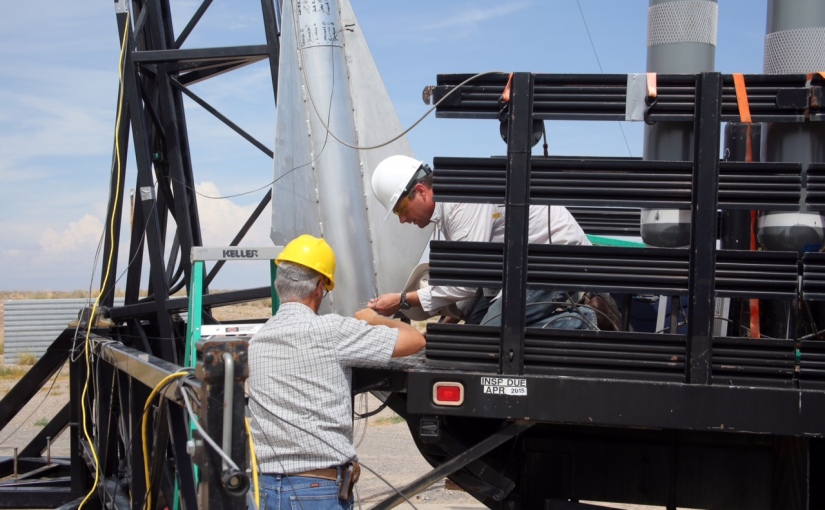
The Fill and Fire System completed set up with the addition of the Comm Readout Displays which allow the bunk house and the pad to see a digital readout of the temperature,  pressure, and weight for the vehicle on the pad during the launch preparation sequences. The full system was tested and minor glitches addressed which brought it to 100% working and readiness. Throughout the day the system was reported to work great and continued at 100%.

Marble Falls was originally scheduled to test a 0830, instead it made it to the pad at around 1200. The vehicle passed its final fill and fire tests and went vertical around 1230. The survey team set the angel at 85 degrees with an azimuth of 355. Six Nitrous bottles were loaded into the tank. At this point it almost over pressured and began to release venting liquid instead of gas. At 175 lbs and 900 PSI  the vehicle was determined ready for launch. Switches were good, and flame was good, but the injector failed to open and the rocket went into a still fire burn on the pad, continuing to burn for four minutes, until the bottom began leaking the nitrous.

Army rules forbid any contact during this time and for 30 minutes after the fire burned out. At that time the Oxidizer crew was allowed to approach and evaluate the vehicle. The rocket was too hot too touch delaying removal of it from the pad for another hour.

Minor damages were reported to the launch rail and trailer, but nothing that would affect or delay any future launches at this time. Instead it was just enough to give Captain Garrett something to do over the summer again.

At approximately 1400 Anahuac’s vehicle was brought to the pad and cleared for launch. At fill, one and a half bottles were loaded into the tank at which time it began leaking out from a vehicle malfunction, and Anahuac had to be scratched.

This concluded the tests for the day, setting today’s successful launch rate at zero. Any school that actually makes it this far is still a success for the simple fact that they attempted a launch of a vehicle of this size. They still have post analysis to do and challenges to over come to prevent these outcomes in the future.

Mother nature was reported to have attended the tests today as well and thrown her own challenges into the range for the crew to overcome, as well as find some humor in once they had passed. First a large dirt devil spawned right on top of the range and attempted to steal one of the large staging tents, causing a commotion as individuals scrambled after and reset it. Later, two birds were fighting on a transformer out by the pad, when a loud pop resounded, right after which one bird fell to the ground while the other made its escape and the power at the pad went down. Luckily they were using generators so this did not affect the pad and they continued as it was being fixed.

The crew spent fourteen hours at the range today, with an 8 hour launch window. Tomorrow they begin their day at 0900 with a shortened 6 hour launch window due to some other military tests scheduled for that morning early. Union Grove High School will be first followed by Booker T Washington High School. Both rockets are reported to be at 100% and waiting.

That concludes Monday’s WSMR Rocket update.

www.systemsgo.org as always is the place for more information on this program. Take the time to get your school involved, the future of your students will be greatly benefited. SystemsGo is a Texas-based STEM curriculum program.

Tune in again tomorrow for an update from Tuesday and a schedule of Wednesday’s launches at White Sands Missile Range this week.


Day 56 – Rockets at White Sands Missile Range

While the more public focus of SystemsGo Rockets 2015, the launches of the Tsiolkovsky (1 pound/1 mile), and Oberth (Transonic) rockets may have come to a close for this year, the program has not finished for the year. The SystemsGo Rocket program now transitions to Goddard level rockets. These rockets and their subsequent launches at WSMR (White Sands Missile Range) are the culmination of all the skills the students have learned  throughout their years in the STEM program. This is their final senior project for those schools that participate in this level of the SystemsGo program.

By now these students have spent a minimum of 2 years, some three, and as the program expands with new STEM requirements in education, as many as four years will have been spent following and learning in this system of education. They have spent countless hours both in and out of class.

The year is divided by semester into two project bases. The first semester deals with early design phases including payload, performance, and vehicle configuration. Once the payload and an initial vehicle design concept have been developed the student project team begins developing a flight profile. This is used to predict what will happen during testing, including vehicle stresses and flight dynamics. By semester’s end, a test vehicle configuration should be fairly realized.

Semester two is the culmination of everything the students have learned in the first semester, and the continuation of using life and work skills to manufacture their test vehicle, perform a test and analyze their test vehicle findings. Success for this project is determined by two things.

1. Was the rocket finished by the scheduled date and delivered to the pad for testing?

2. How was the rocket’s flight performance in relation to its design parameters?

This translates to the students manufacturing a rocket from scratch; usually weighing in at between 250 to 450 lbs; to reach high altitudes and Mach 3 to Mach 4 velocities. This project is what all the previous years’ effort have been building up.

At this point, in order to achieve their goal, one large working team, divides into several smaller teams with designated goals for each part of design and development for the vehicles’ creation, propulsion, and testing. These component teams include:

Nose cone

Avionics/payload

Oxidizer tank

Injection

Fuel Grain

Nozzle

Engine case/forward skirt/fins

Each team first creates a workable timeline and then begins researching all necessities and questions concerning their team’s component. Questions they encounter may include function, simplicity, mass, etc. Students present their findings in the form of mathematical calculations for their design and these are reviewed and critiqued by aerospace professionals. Students must find their own solutions to any problems presented to them by these professionals.  Once a mathematical argument and a design drawing have been created, the team starts another research phase into the materials to build their component. In this phase students must be able to show critical thinking skills while studying different materials and their costs, safety, ease with which to work and whether they can be ordered in within time constraints. After the design is developed and reviewed and the correct materials determined, a Critical Design Review (CDR) is presented to the other teams for acceptance. If approved the team then begins development of the component, acquiring materials and enlisting any help they may need from local industry. If it is declined then the team redesigns it until the component is accepted by the entire group. If the original time line is kept each team’s component will be finished by the deadline. To ensure this each team must undergo a Flight Readiness Review (FRR) showing that their project is 100% ready. Once all components have demonstrated a 100% readiness, then the complete vehicle can be constructed  into a full standing rocket. SystemsGo calls this their “‘all-up’ configuration.” At this point, Standard Operating Procedures (SOP) must be developed and adhered to in order to test their rocket. To do this, students must be in communication with the launch facility, create support teams, and prepare necessary paperwork. Final preparations for the launch also include students working together to make sure the components are all prepped and ready, or working in mission control, meteorology, safety and other areas needed at the launch.

Next the rocket is tested and hopefully undergoes a successful launch. After this a Post Mission Analysis is done to evaluate the complete performance of the vehicle. This marks the end of the of the  program.

The knowledge base the students acquire through this program include: as quoted from the SystemsGo website: design and development, critical thinking, fabrication/machining, problem solving, teamwork, communication, analysis/application, documentation,  presentation, research, time/project management, budgets/purchasing, public relations, and computer skills in RockSim, Excel, Microsoft Word and PowerPoint.

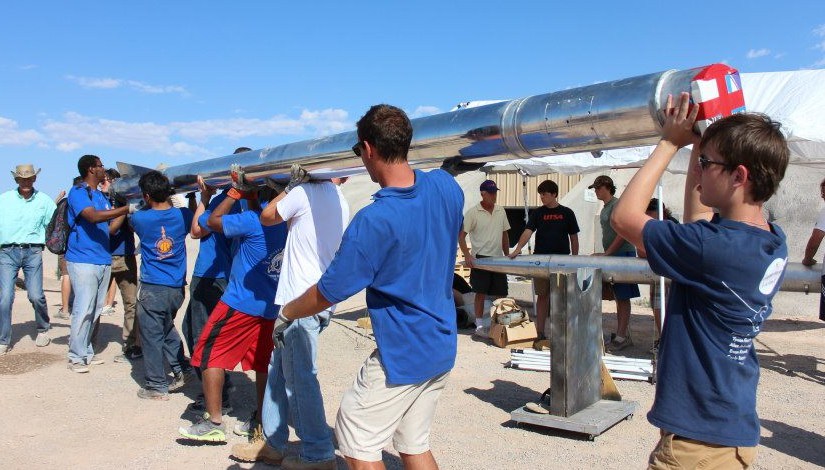
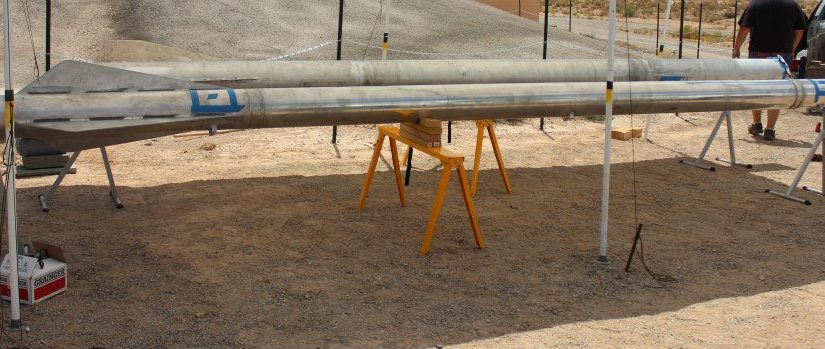
These rockets which usually stand between 20 to 25 feet and range from 8 to 10 inches in diameter are an amazing sight to behold if for no other reason than that they are built by high school students, not professional aerospace engineers. They are built by the future of these industries. Many of these students go on to become engineers, machinists, scientists, physicists, mathematicians, and countless other business professionals. This STEM based program teaches them skills they can apply to life and use to continue into their future learning and job markets.  If you have a student in the STEM program at your school who is excited about what they are doing, take interest, get involved and don’t miss the chance to see what they is happening first hand whenever possible. You are watching the future in something we can all be proud. These students are doing truly amazing things.

This article was intended to be a synopsis of the program in hopes that others may take interest and pay attention to what these students are achieving, so that more schools might implement the program for their students. It is well worth the time an effort involved. What better way to learn than to have the students apply what they are learning first hand and achieve a workable goal. The teacher is the instructor, guide, mentor, and timeline manager, but  the  project’s success or failure is in the students’ hands. They are the project managers that do all that is needed to see that this vehicle makes it to the pad and then into the sky. If your student makes it to this level, don’t miss out, you want to see this monster fly. It is a proud moment you won’t forget, and even more importantly, neither will your student. Their future begins here, don’t miss out on the chance to support their dreams.

I hope I have done the program justice, as I tried to describe it in a way that might be understood by all and draw some interest. My husband Steve, said I should just say, “Kids make really bad a$$ rockets and launch them at White Sands Missile Range.”

Well he has a point and that is the just of it, but it is really a whole lot more than that!

www.systemsgo.org as always is the place for more information on this program. Take the time to get your school involved, the future of your students will be greatly benefited.
Tune again tomorrow for a schedule of the upcoming launches at White Sands Missile Range this week, and hopefully some daily high lights from the group.

Day 15-The Launch Pad Crew

Today’s blog is about the crew that runs the actual launch pad for the rocket tests. Most of this group is made up of past students that have gone through the SystemsGo program. They are all pursuing engineering careers at their respective universities. All three completed the program at Fredericksburg High School and ended that time there with a successful Goddard level rocket launch at White Sands Missile Range (WSMR).

Being at the pad, is both exciting and dangerous. Personnel here have the responsibility of loading each vehicle onto the rail, going for fill and relaying the go ahead for ignition.

These future engineers come back each year for several reasons. First and foremost they all enjoy what they are doing out there. Second as engineering students in college, this is a hands on opportunity to work in the field and have this addition for their resume`s. Lastly, they are big proponents of the program, and know firsthand what it has done for them and what it can do for students in the future so they want to help out and keep the program running, so that others will continue to have this opportunity. Most if not all of this crew will be traveling to WSMR later this summer to help run the launch of the Goddard level rockets being tested there as well.

These students include: Cade Ottmers, Annisa Kneese, and Chelsea Burow.

This year, Annisa brought a group of engineering students from Texas A&M to observe the program here first hand, and  though I do not have all their names,  I wanted to mention them because they also helped at the pad on Sunday. This gave them firsthand experience in what is being done.

Andrew Matthes, the program instructor at FHS, and retired teacher, Ned Butler, also provided assistance, instruction, and monitored safety at the pad throughout the weekend. They help insure that all procedures and checklists are followed to provide the most successful test of each vehicle.

The program wouldn’t be as successful as it is without the willingness and effort of the individuals at the pad. Each vehicle is literally in their hands in the last few moments before the test.  They check for any final issues that might prevent launch, and stand by with each vehicle as it begins fill and watching for signs that the rocket is a go for launch. For this I applaud their hard work and resilience. This year alone they had a 100% launch rate, meaning that every vehicle that made it through the Stages 1, 2, and  3 and down to the pad, left the rail at launch. Congratulations Launch Pad Crew!

Thank each one of you for all you do and are willing to do to help each vehicle complete its launch. You are an outstanding bunch, and so detrimental to the program’s success on launch days.

www.systemsgo.org as always is the place for more information on this program. Take the time to get your school involved, the future of your students will be greatly benefited.


In The Beginning

This is basically a writer’s blog, with the main writer being of course, me. It will be a way to share writing and keep myself busy doing some form of writing, hopefully every day. At some times it will be things I have written and want to share. At other times, it will be interesting things I am involved in that I want to share with you, whomever you may be that decide you want to read my words of wisdom, or perhaps not. You see, there I go, sometimes things may be really serious, other times they may be completely goofy and off the wall.

I will give you a little preview of next week’s blogs. I do intend to share some highlights from the SystemsGo Fredericksburg Rocket Launches in Willow City. If I can figure this out and add pictures I will try to do that too. I am helping with recovery again this year, and am super excited to help. It is always a blast. There will also be a live video link so you can come out and watch in person or from the safety of your computer at home.

If you have never heard of this, it is part of the STEM program now available in area high schools. STEM stands for Science, Technology, Engineering, and Math and is designed to start our children in future careers in all these now heavily technical fields. If you listen to the radio you may have heard ads by the US Navy backing this program (STEM), they are highly interested in receiving candidates that have had prior training and education in this program because our military has become very hi tech as well. This program benefits our youth whether going the college and job route or the military route. If you have a junior high or high school age student encourage them to get into the STEM program at their school. If your school has not yet developed a program, encourage them to do so, because these are the big jobs of the future.

Skills learned in the different areas required by STEM and programs like the rocket program and other programs in STEM encompass more than just the four core classes you hear in the name STEM. Students in these programs, learn skills in mechanics, welding, PlasmaCAM, wood working, and other hands on building skills. They learn grant writing and proposals in order to fund their projects. They learn business skills, presentation and marketing, research and analysis, design and development, materials, inventory, and product ordering and so much more. Most of all they learn critical thinking and how to work both on their own and as a part of a larger group that each contributes a vital piece to their project in order to have it completed and successful.

I personally have had a nephew, niece and 2 daughters that have gone through our local program and they have all benefited from it greatly. My nephew, is top management at SpaceX in McGregor, TX, my niece is in Avionics Electronics  in the US Navy, one daughter is an Aviation Structural Mechanic for helicopters in the US Navy, and my older daughter is studying Electrical Engineering at Texas Tech University.

This week several of our program graduates, the SYSTEMSGO coordinators, and several volunteers are headed to Clute down by Lake Jackson, TX to help several Houston area schools launch their rockets. Next week the team and many more volunteers will be here at Hillview Ranch in Willow City, TX to help over 30 Texas high schools attempt to launch over 80 more rockets. It is well worth the time to watch, not only to see the rockets fly, but to see the joy in the students’ faces as their project of 1-2 years in the making, comes to a successful end. To clarify, even if the rocket doesn’t fly, it is still a success in all that the students learned to get it here, and in what they will continue to learn from analyzing what went wrong that prevented it’s flight. The hard work that is done to get them to this point is the true success and is a catalyst that will help launch them into their future careers.

Ok maybe I did know what  to write about today.

Houston launches are this weekend, May 9 & 10.

Fredericksburg launches are next week, May 14-17. Come watch them or watch online at the SystemsGo web page. Directions and details are also on this website.

http://www.systemsgo.org/announcements/rockets-2015-fredericksburg-launch-details

Watch this crazy blog for more updates.