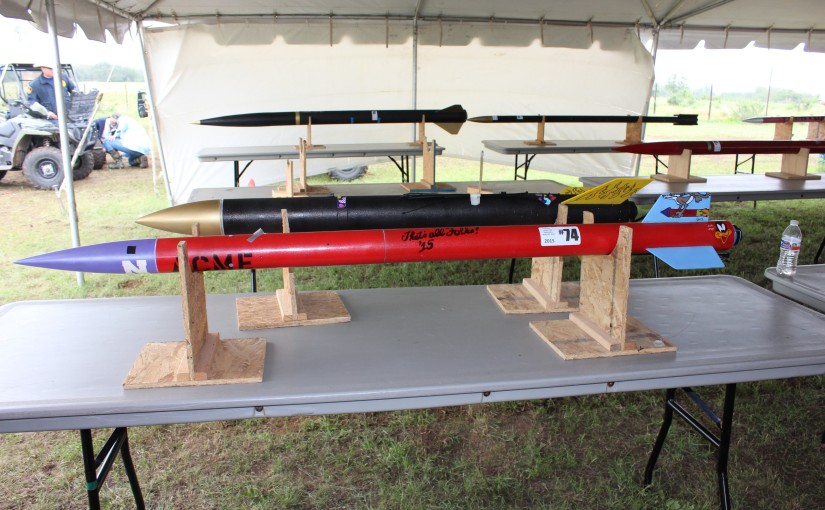
You may have noticed that this blog has a yearly burst of articles that follow a non-profit business, known as SystemsGo, and the related high school rocket program, where students build and launch rockets at various locations around Texas, and well as White Sands Missile Range in New Mexico. While this looks really fun and interesting, what is it all about and how has it benefited education and our students’ futures?
This is the beginning of a series of articles about just how it has shaped the lives of individuals that have participated in the program. First off it is part of an educational push to get more students into what is known as the STEM program of learning, and then out into the work force in related fields. You may have seen or heard TV and radio commercials backing the STEM initiative. One such example is the US NAVY. They carry radio and TV commercials stating the benefits of the Science, Technology, Engineering and Mathematics curriculums and the necessities of these skills to jobs in the military and the civilian work force.
The SystemsGo program teaches all of these core classes as well as teaching business applications with it. It helps students learn their strengths and weaknesses in these areas and how to work individually and as a team in order to accomplish a large project. They learn how to manage time and project teams, do project and work analysis, order supplies and inventory items for the project, write documentation and proposals for the project, as well as doing the actual STEM based project elements.
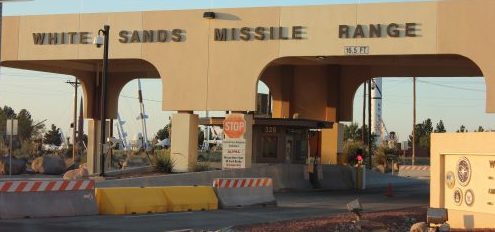
This program began in Fredericksburg High School in 1996, making this its 20th year since its implementation. The following spring the first Red Bird Rocket was sent skyward. In 1999, the first Goddard level Red Bird Rocket was launched at White Sands Missile Range in New Mexico. Since its humble beginnings it has grown from one small town school to currently 48 Texas schools, large and small. Starting next year, 7 New Mexico schools will also begin in the program with their own launch site in New Mexico, participating at the smaller launch levels beginning with Tsiolkovsky(1 pound/1 mile high) next year and then adding Oberth(achieving transonic velocity under 1300′) hopefully the following year. Of all these schools, 9 are trained and 5 are actively participating at the Goddard(35 pound payload attempting to reach 80,000 to 100,000′-WSMR) level.
This equivolates to more than 10,000 students that have gone through the program, and by my personal estimates, that may be closer to 15,000. Because records from before 2007 are not available, and records after that time are not complete that estimate is known to be on the low-end. At a rate of 17 students per class per grade level in a 4 year program across 48 schools that equals 3264 students a year learning this valuable academic skill set to better their futures. That is a lot of our college age and current work force that have been impacted by the SystemsGo Rocket program.
If even half of these students followed a STEM career path, that is a bigger success story than any other school sponsored program, and this program is academic based. This is not to throw punches at other extra curricular programs, they all have benefits to the individuals involved in them, but on average, the number of success stories from this program versus the number from two of the bigger programs, ei. athletics and band are quite impressive.
The following are purely observational statistics not exact documented statistics but they do give you an idea. Out of my three children, 2 have been in the rocket program, 2 have been in athletics, and all three were in band in high school and this is what I observed from their years as well as this year.
For example, the high school band here has approximately 135 students in it. That averages out to about 33 per grade group. Of those 33 students 1-5 may pursue music into college and a career. Out of the whole four-year group, 20 might be music majors. While that is still good it still not a quarter of the group.
Athletics has an even larger student base. I don’t know exact numbers but a close estimate across the board girls and boys, there are close to 300 students involved plus or minus a few that may be in more than one sport. That translates to about 75 students per grade class. Out of that 75 students spread across 19 sports if at least one from each sport goes on to a career in the athletic field. That is still less than 1/3 of the student base involved.
An average class in the STEM program is usually around 17. This year’s class had 14. That is about 68 students in any given school year that are in the program. These are much smaller numbers than athletics or band, but by comparison, this academic based program has a much higher rate of students, that not only pursue higher learning in one of these fields, but also achieve a career in their chosen field. Out of the 14 from this year’s class, I was able to get information on 8 of them, and 6 of those are pursuing a STEM related field. On average, 1/2 to 3/4 of the students from any one graduating rocket class go on to pursue a STEM related career. Those that do not, still state that what they learned from this program helped them to choose their career path and taught them many skills that will carry on into their future work place needs.
There is record of SystemsGo alumni working at NASA Stennis and Johnson Space Centers, SpaceX, Ball Engineering, Elon Musk’s Solar City, FMC Technologies, United Space Alliance, Real Time Systems, Ameristar, Lockheed Martin Missile and Fire Systems, Orbital Sciences Corporation, Bradley Arant Boult Cummings LLP, Halliburton, Rutgers Demmings, Petro Engineering, Department of Defense, US Airforce, and the US Navy. These are just the handful that they have been able to follow, and a few of these employers have several SystemsGo alumni working for them. Not only that several alumni come back each year to help SystemsGo with their launches and some are regular team members.
These students are successful members of the workforce and it all started with this rocket program. Each student starts out the program curious and hoping to do something really challenging and fun, and they definitely get all that and more. By the time they reach their junior and senior years in the program and begin building rockets, they are also building their futures, discovering who they are, what their strengths are, and what they are truly interested in doing in those futures. This program is a proven method of helping them achieve the knowledge base, skills, and the interest in careers that will help them accomplish success. Students from this program go into college ahead of the curve with experience that is learned and achieved, not just taught. Science, Technology, Mathematics and Engineering are the big jobs of not only today, but the future. These students are ready to go out and meet the challenges of these careers.
So the next time you see these rockets in the news and someone asks, “What’s all this about rockets?” Tell them that it is about the future of our world. Tell them that with each rocket built, these students make their small mark in history and it drives them to move forward to make their bigger mark in the future. These are the technological innovators to watch, because they go on to good jobs and strive to accomplish great things. These are student success stories. And if they are asked,
“How did the SystemsGo/Rocket program influence your career path?”
See for yourself, here are just three past students’ answers:
“I did not go directly from high school into an engineering program in college, but being exposed to the ideas and concepts of engineering in the Principles of Technology (precursor to the SystemsGo program) led me there eventually. I learned about my current employer through volunteering with SystemsGo and after I graduated applied for a job with Real Time Systems; I was hired.”–Robert Deaver, FHS graduate 1998.
“Through the two years I was in the Rocket Program, I was able to work with several groups of people on projects. And not only one piece of the rocket, but coordinating, scheduling, and planning with other members to make sure everything was working together. During my second year, I realized that I did not love to do all of the calculations and theory to construct the rocket, but instead more enjoyed dealing with the people and management side of the project. This led me to choose business management and business finance as my dual major so I could help support these people who did work on projects but not actually do the engineering to create the product.”–Derrick Loth, FHS graduate 2012
“Before taking the rocket program classes in high school, I had no idea I was interested in engineering. I learned about the many different engineering paths, and I fell in love with problem solving. I am now working toward my degree in Mechanical Engineering thanks to SystemsGo.”–Anissa Kneese, FHS graduate 2014.
SystemsGo is currently working toward having a better data base of its Alumni which will help keep more accurate numbers of students and alumni and follow them into their careers so that even more parents, students, and teachers can see the benefits of this program and the results it can achieve. STEM is our future so get involved and encourage your school and students to get involved in this hands on, “education in motion” system of learning.
In future articles, I will be sharing interviews with past SystemsGo students on how the program affected them and influenced their career choices. If you are or if you know a student that would like to participate in sharing their information and stories here please message me either on this blog or in a PM on Facebook with contact information and I will get back to you.
www.systemsgo.org as always is the place for more information on this program. You may also email them at info@systemsgo.org .Take the time to get your school involved, the future of your students will be greatly benefited.





 On the Wings of Angels