Mission Complete At WSMR Today, Saturday, For Rockets 2025 Season

Alamo Heights, Brazoswood and Union Grove tested rockets at White Sands Missile Range today.  WSMR had SystemsGo on a tight schedule again this year. It meant that two rockets had to be loaded on the rails before we left the range yesterday on set up day. The third had to be ready to swap out as soon as the first two were tested.

We had an 8:00 a.m. slot for the first T-time. Range time began at 6:30 a.m. The team was wheels rolling at 5:00 a.m. The school were dropped off at Tula G along the way, where they watched the launches on live feed. The SystemsGo team arrived at ABC-1 at 6:30 a.m.

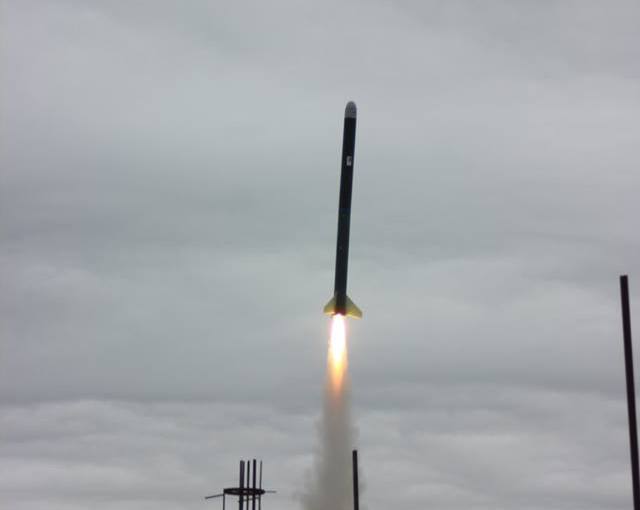
Union Grove was fueled and ready for launch at 8:20 a.m.The rail and fuel teams evac’d 5 miles out on the range to watch the launch from the road. Rebekah, Randy and George readied the rocket for fire and  evac’d to the “bell” (tiny metal launch bunker) and coordinated with WSMR for count down and launch.

Union Grove’s rocket tested at 8:30 a.m. right on schedule to start the day. Unfortunately they had an internal ignition wire that pulled lose and resulted in a misfire.

Alamo Heights was on the second rail. It was fueled and ready by 10:28 a.m. The same evac process for the Team was followed. The rocket left the rail and traveled a couple thousand feet before beginning to spiral, banking back toward the bell and nose diving into the ground about 150 yards from the bell. The boom of impact was loud even 5 miles out. Rebekah and George said it make the ground shake. Wsmr used a backhoe to dig out what the coil and return it to the students. The engine casing was still mostly intact, but there was only a tiny piece of the nose one, and the rest was just chunks of twisted metal. It was pretty amazing to see.

Brazoswood students were brought in from Tula G to load thier rocket on the first rail and take team pictures. Then they were escorted back to Tula G to await their launch and watch. SystemsGo team worked quickly to get everything connected and the rocket fueled to meet an 12:30 p.m. T-time to test.

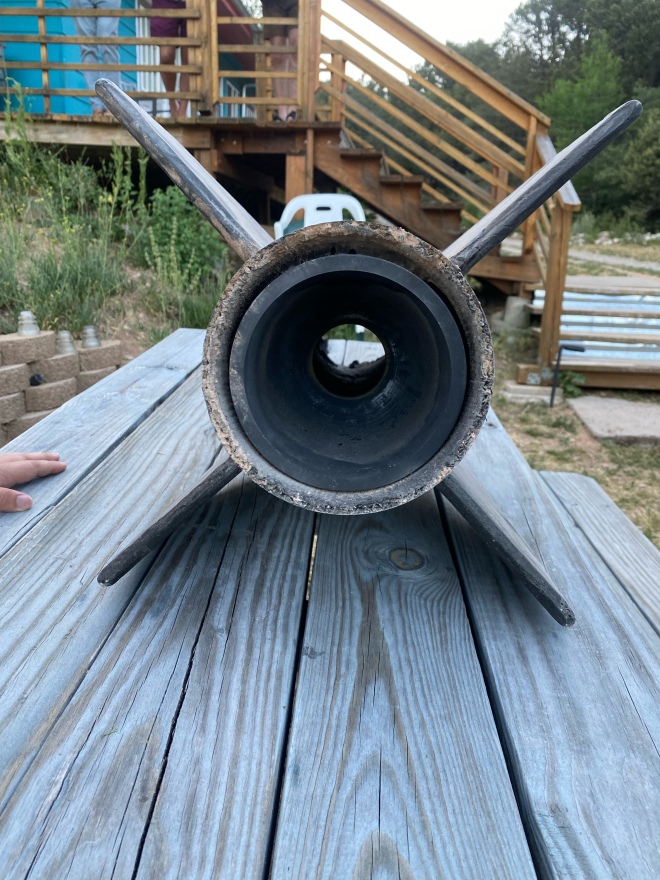
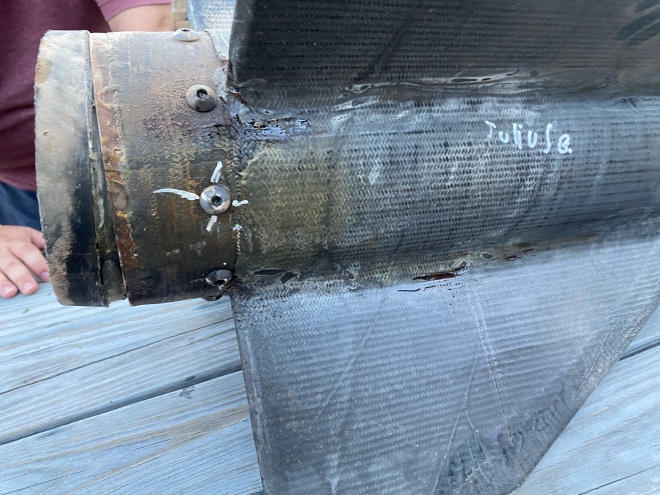
At 12:30 Brazoswood was fueled and ready  for their launch. Unfortunately before countdown ever commenced the vehicle had an internal failure that resulted in the nitrous blowing out the aft end of the rocket. This ended any further chance of the vehicle testing.

As soon as WSMR determined the pad was again safe, they called for the SG team and schools to return to the site for tear down. We had the entire site packed up by 2:48 p.m.

Rebekah and George spoke to the students about perseverance and that this was a great accomplishment even if their rocket failed. Last but never least she thanked all the WSMR personnel for all their hard work and support again this year and promised them cool new swag that was still coming in the mail.

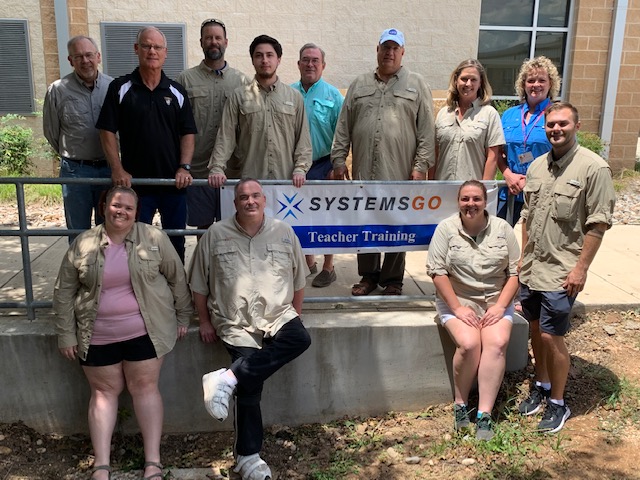
When presentations were complete, all of the SystemsGo team took photos in front of the old resident tank, fascilitated by Chris, our WSMR Doc Photo. Then Mission was called complete and it was wheels rolling off the range at 3:30 p.m.

The SystemsGo team capped off the evening with dinner at Johnny Carino’s Italian Restaurant and then called it a day.

 One quick side note, we did see two Oryx this year on our way in to the range this morning. Both stood there curiously watching us and posing as they knew we couldn’t even take his picture.

Tomorrow will be a good breakfast at 6:00 a.m. at Denny’s for some or the hotel for the sleep ins and then on the road back to Texas by 7:00 a.m.

WSMR concludes another successful year of launches that begain with Jal, NM, Jacksoboro, Anahuac/Smith Point , and Willow City. The group helped test 159 Tchaikovsky,  Oberth and Von Braun rockets and 3 Goddard level rockets for the Rockets 2025 season.

Now the volunteer staff returns to their daily lives and the SystemsGo team transitions into program updates, new teacher training begins with more schools, teachers, students and rockets. It won’t be long and “launch season” will be back again with Rockets 2026. Next year’s season will begin again with spring launches in Jal, New Mexico,  NTX-Jacksboro, SETX-Anahua/Smith Point, CTX-Stonewall, and White Sands Missile Range. It should prove to be another exciting year.

Watch for Spring dates to be announced in late fall, so you can begin planning to watch. Until then, keep your Eyes To The Sky! See you next year!

www.systemsgo.org as always is the place for more information on this program. You may also email them at info@systemsgo.org .Take the time to get your school involved, the future of your students will be greatly benefited.

#Rockets2025 #TexasRocketTrail #EyesonTheSkies #Ridetheskies #ItisRocketScience #EyesToTheSky!

Three Schools Tested At WSMR Saturday After Which The SystemsGo Rockets 2024 Season Called Mission Complete

Alamo Heights, Brazoswood and Union Grove tested rockets at White Sands Missile Range today.  WSMR had SystemsGo on a tight schedule this year. Concerns that in upcoming years when more schools join the program, time may become even more of a factor for the range, so they tested SystemsGo out on a very vigorous schedule. It meant that two rockets had to be loaded on the rails before we left the range yesterday on set up day. The third had to be ready to swap out as soon as the first two were tested.

We had an 8:00 a.m. slot for the first T-time. Range time began at 7:00 a.m. The team was wheels rolling at 5:00  a.m. The school were dropped off at Tula G along the way, where they watched the launches on live feed. The SystemsGo team arrived at ABC-1 at 6:05.

Alamo Heights was fueled and ready for launch at 7:30. The rail and fuel teams evac’d 5 miles out on the range to watch the launch from the road. Rebekah and George readied the rocket for fire and  evac’d to the “bell” (tiny metal launch bunker) and coordinated with WSMR for count down and launch.

Alamo Height’s rocket left the rail at 8:00a.m. right on schedule to start the day. It traveled an estimated few thousand feet up, then rolled over and returned to the range. WSMR had eyes on it immediately and went to recover. It was fully recovered. It had separated into nosecone, body and engine case, but it was mostly intact with only real damage where the engine casing had separated from the body.

The only picture after recovery I could get is the one shown below of Alamo’s burnt weld cap.

resized_resized_20240615_145650-1

Union Grove was on the second rail. It was fueled and ready by 8:50 a.m. The same evac process for the Team was followed and ignition was at exactly 9:00 a.m. which was aslo on schedule. Unfortunately, it ended in a hang fire. When we could return to the pad, it appeared that the ignition had burned through the injection wire and hoses, inspite of the kevlar braided sleave on the injection wire. Ice was still melting off the tank from residual nitrous. The rail was lowered and the rocket left in place to cool.

Brazoswood students were brought in from Tula G to load thier rocket on the first rail and take team pictures. Then they were escorted back to Tula G to await their launch and watch. SystemsGo team worked quickly to get everything connected and the rocket fueled to meet an 11:00 a.m. T-time for this vehicle to test. We were alotted a 2 hour window for this one since the rocket had to be brought up and loaded on the rail and all systems reconnected.

At 10:45 Brazoswood fueling was halted. Their vent was not working properly and therefore it resisted not further fueling. It was decided to launch with what we could had loaded. At 11:00 a.m. Brazoswood lifted off  the rail, banked a hard left and nosed dived into the range about 200 yards behind the pad. WSMR was also able to recover most of the vehicle. Later is was determined that the cameras were no longer on baord. Team members were allowed to follow WSMR personnel to the site to look for them but they were not found.

Brazoswood sent these after photos of the students trying to diagnose their rocket’s launch issues post recovery:

img_2592img_2588

As soon as WSMR determined the pad was again safe, they called for the SG team and schools to return to the site for tear down. We stopped for lunch at this time, and were back on the pad tearing down by 11:48 a.m. We had the entire site packed up by 1:30 p.m.

Rebekah did a presentation to the Union Grove team for their Oberth rocket during the spring season. They had made 1.05 Mach and fully recovered the vehicle intact under chute. Next she thanked Collin Lange, of Alamo Heights and Greg Park, of Union Grove for all their dedicated years of teaching the program. Both are retiring and this is their final launch as their program’s teachers. Last but never least she thanked all the WSMR personnel for all their hard work and support again this year and gave them caps, shirts and space pens.

When presentations were complete, all the teams took photos in front of the old resident tank, fascilitated by Chris, our WSMR Doc Photo. Then Mission was called complete and it was wheels rolling off the range at 2:03 p.m. We met the perameters WSMR set this year and all parties were satisfied.

On our journey back to the hotel we took a few small excursions. First we stoopped at Pistachio Land, home of the world’s largest pistachio, and shopped for a bit. Next we went to Caliche’s Frozen Custard and got ice creams for the whole team. When we finished there we took a driving toor back behind the park and by the old saw mill because Rebekah had spied a rocket from the highway. After an interesting tour around the sawmill on an old dirt road, we found the stortage yard for The Museum of Space History where we did indeed find several old rocket relics. If you follow me for the small rockets you know I have a Facebook page where I generally post pictures. I will post the link here and you can see what we found if you would like to see them:

https://www.facebook.com/ginger.burow

The SystemsGo team capped off the evening with dinner at Johnny Crinos’s Italian Restaurant and then called it a day.

 One quick side note, we did see one Oryx this year on our way in to the range this morning. He stood there watching us posing as he knew we couldn’t even take his picture.

Tomorrow will be a good breakfast at 6:00 a.m. and then on the road back to Texas!

WSMR concludes another successful year of launches that begain with Jal, NM, Jacksoboro, Anahuac/Smith Point , and Willow City. The group helped test 169 Tchaikovsky and Oberth rockets and 3 Goddard level rockets for the Rockets 2024 season.

Now the volunteer staff returns to their daily lives and the SystemsGo team transitions into program updates, new teacher training begins with more schools, teachers, students and rockets. It won’t be long and “launch season” will be back again with Rockets 2025. Next year’s season will begin again  with spring launches in Jal, New Mexico,  NTX-Jacksboro, SETX-Anahua/Smith Point, CTX-Stonewall, and White Sands Missile Range. It should prove to be another exciting year.

Watch for Spring dates to be announced in late fall, so you can begin planning to watch. Until then, keep your Eyes On The Sky! See you next year!

www.systemsgo.org as always is the place for more information on this program. You may also email them at info@systemsgo.org .Take the time to get your school involved, the future of your students will be greatly benefited.

#Rockets2024 #TexasRocketTrail #EyesonTheSkies #Ridetheskies #ItisRocketScience

Rockets 2023-WSMR, Saturday Launch Day Report and Mission Complete with Accolades

Three schools tested rockets at White Sands Missile Range today. Brazoswood,  Alamo Heights and Union Grove comprised.

Our first T time was at 8:15 a.m. with Union Grove was the rail ready for launch. Ignition was a go, but unfortunately the nitrous valve did not function properly causing the rocket to burn up on the rail. The vehicle sat burning on the rail for around 30 minutes causing unrepairable damage to the rocket, as it melted through the aluminum body at the aft section. The motor bay broke away from the body, tilting forward, allowing the long body section to fall into it but still all remained on the rail. It had to be extinguished a couple of times and then left to cool until after the next rocket had launched.

Alamo Heights loaded onto the rail next. At 11:15 a.m. they achieved a successful launch in spite of their vent nozzle staying open allowing full vent during fill and launch. Their vehicle was supposed to be fitted with an internal vent flow that would have allowed it to regulate its own vent throughout the whole fill and launch correctly instead of SG having to manually vent, but he believed the students had forgotten to install it. Either way, they had a wonderful flight reaching an altitude of 23,000 AGL. This is one of their best flights in a long while.

Brazoswood was the final launch of the day at around 1:15 p.m.. This year’s launch was nothing short of amazing as well. They made 28,000 AGL, leaving a trail that could be followed in the sky for quite a while. High level winds made it to angel into the wind which caused a loss in some altitude. One of their students set tracking computers using satelites to find and follow the vehicle and mark it’s speed. His preliminary findings suggested the rocket came down under chute, and it actually did. This is a new first. There was one nose cone in 2019 that came down under chute but this accomplished all chutes deploying and all pieces recovered by WSMR today. Great job on that recovery system students.

At 3:30 p.m. WSMR called called everyone in for lunch as they cooked hamburgers and hotdogs for the teams and work crews. The SG teams stopped dismantling the launch pad and joined in for lunch, after which we continued our work, completing tear down and pack up by 4:00 p.m.

Test Center Commander, Colonel Smart, was originally scheduled to be onsite today, but a scheduling conflict made that impossible. However Lori Leyva and her crews were there supporting the launched and so before we left, Rebekah made presentations of certificates to Lori and also Chris Madsen, along with t-shirts and caps to them and all there crew members.

It was most definitely a beautiful launch set this year at WSMR. Great job schools!

Mission was called complete by WSMR at 4:50 p.m. today and all teams and schools pulled away from the site.

Our first stop this evening was for a shower to remove all the dirt devil dust it covered us in multiple times, followed by dinner at Si Senor’s Mexican Food, and a sunset trip to the White Sands Monument Dunes for a quick slide in the light of a red orange sky and the sun dropped quickly behind the horizon.

Tomorrow’s schedule will be a call to load and head home, starting on the road by 8:00 a.m.

www.systemsgo.org as always is the place for more information on this program. You may also email them at info@systemsgo.org .Take the time to get your school involved, the future of your students will be greatly benefited.

#Rockets2023 #TexasRocketTrail #EyesonTheSkies #Ridetheskies #ItisRocketScience #TexasToNewMexicoRocketTrail

Rockets 2022-SystemsGo at WSMR Sets a New Altitude Record with Brazoswood High School!!!

Two  rockets were up for testing at White  Sands Missile Range today. Fredericksburg and Brazoswood compromised the schedule. It was another early morning with meet time at the WSMR Rt 21 gate at 5:00 am.

A mishap while driving through the range created the first delay for our day. The Fredericksburg truck and trailer had an unfortunate meeting with an Oryx antelope while traveling  along with the convoy headed over to ABC -1. Luckily the damage to the truck was very minimal, mostly a couple of cracks in the left front bumper, but the Oryx did not fair as well. WSMR personnel stayed with the vehicle and the animal until authorities arrived to retrieve the animal and document the incident.

The rest of the group traveled on to the site and readied Brazoswood for launch. The accident and another unforeseen range event created an hour delay on our first T time for the day. Once all personnel were on site and the launch sequence started the day changed for the better.

Brazoswood was first up and had been loaded onto the rail the evening before, so it was just a matter of connecting the systems and doing prechecks. At 9:05 they launched and became the brand new WSMR SystemsGo altitude record holders. At first the rocket seemed a little slow in ascent, but then it literally screamed into the sky, sailing higher and higher. It eventually it left a contrail behind it which made it much easier to track. It was confirmed at an altitude of 49,523 MSL before nosing over and beginning it’s decent.  The range has a sea level of 4,000 feet which is deducted from the total altitude to figure the actual altitude, setting it at 45,523 feet, which is still the record for the program.

The chute did not deploy so it became a lawn dart about 4 kilometers down range. Chris Gardner took a couple of our support crew and they  went to dig it out. It was found and returned to the team.

The previous record held by Fredericksburg was 36,500 feet. This puts Brazoswood in the lead for  best launch and highest altitude. The program just dropped it’s height ceiling to 50,000 feet last year to accommodate changes in the range site we use at WSMR. The old ceiling was 100,000 feet which no one had even gotten close to reaching. Ironically Brazoswood almost broke the new ceiling with this launch.

Fredericksburg was the second launch of the day, and it was the second attempt for them to launch on this trip. At their first attempt yesterday, both the ignition and injection failed. After trouble shooting the problem and correcting it over night, they loaded up for a second chance. This time the rocket did leave the rail, but did not get much altitude before nosing over and returning to the ground about 25 yards behind the pad, where the impact popped off the nose cone and the engine compartment. The body of the vehicle continued north across the range for about 230 yards where it came to rest intact. All pieces were easily recovered and returned to the students. The students were excited that it left the rail and they were taking it home.

Fredericksburg and Brazoswood students helped pack up the pad site. After completion, Scott and Rebekah congratulated the two remaining teams on their successes and then introduced and spoke about the WSMR support team, explaining to the students all this group does so that all the students can get access to the range to test their rockets. Scott presented each team member with a SytemsGo cap as an appreciation for all their help and support.

At this point WSMR had released our airspace after Fredericksburg’s launch and now they called “mission complete” for the final time for Rockets 2022 at White Sands Missile Range.

Thanks to White Sands Missile Range for once again allowing this program to be tested on the range.

The schools and SystemsGo team members all headed back to the hotel for the evening. Fredericksburg’s group headed to eat and then slide at the White Sands Monument National Park. The eight SystemsGo team members grilled supper in the hotel court yard, played corn hole, 42 dominoes, debriefed, and just relaxed for the evening.

Tomorrow the SystemsGo team will be traveling home again. A much needed break for most is in the schedule. Afterwards, Scott Netherland, will be retiring from his post as Executive Director, and Rebekah Hyatt, will move into that role, and George Burns, will officially take on her current role as Program Director.

Rockets 2022 is officially at an end. We will see you again next year for the Texas Rocket Trail 2023. In the upcoming year watch for interesting high lights from the program. New things are happening all the time including the adding of new schools, states and countries in the program.

www.systemsgo.org as always is the place for more information on this program. You may also email them at info@systemsgo.org .Take the time to get your school involved, the future of your students will be greatly benefited.

#Rockets2021 #TexasRocketTrail #EyesonTheSkies #Ridetheskies #ItisRocketScience

Rockets 2022-WSMR, Saturday Launch Day Report

Three of four schools tested rockets at White Sands Missile Range today. Fredericksburg, Alamo Heights and Union Grove comprised that list.  The fourth school, Brazoswood will be first up tomorrow morning.

An one hour delay, five minutes before our first T time began a series of events today, that left our clock too short to complete our mission today. Union Grove was on the rail ready for launch when the range called the delay. After it’s completion, the crew evacuated and launched the UG rocket.

Union Grove High School proved to be the big winner of the day, because they were the only school to leave the rail. They climbed to 15,400’ before rolling over and returning to the range ballistic. It was a beautiful flight. WSMR personnel did recover it. After digging it out they brought it back to the site in one large piece and several smaller. It was a good day for Union Grove! It was a good start to the day with the first launch as a successful lift off. Congratulations on another good launch.

Fredericksburg was the second launch. They were on the old rail and ready for launch when the hydraulic ram on the rail failed. Fredericksburg had to be off loaded to the newer rail while team members trouble shot the issues with the old rail. unfortunately the old rail was not available for further launches today, and may not be this round.

Fredericksburg went for fill after relocating, but developed a permanent venting. The team decided to go for launch as it was. Launch sequence was initiated and the vehicle failed to lift off. Pad reported that it had only minor ignition and no injection. The rocket was removed from the rail and given back to the students for trouble shooting to see if they think they could repair it and go for a second T time.

Alamo Heights loaded onto the rail next. At 3:36 they attempted their launch. Their vehicle also failed to leave the rail. Initially pad reported ignition, injection or any burn or smoke. Several minutes later, as the bunker crew was evaluating the possibility resetting and attempting a second launch, the nitrous lines failed and blew apart leaving the vehicle inoperable.

At this point WSMR called complete and released our airspace for the day. Alamo Heights was removed from the rail for evaluation. They determined later that they could not repair and relaunch the rocket.

Brazoswood was supposed to be the final launch of the day. This year’s launch is also only the second time this school has been to WSMR. Instead of closing out the day, they will open launches on Sunday, as we continue into our contingency window.

Test Center Commander, Colonel Smart, from White Sands Missile Range, visited the launch site today.

Mission was called complete by WSMR at 5:16 p.m. today as the team and schools pulled away from the site.

The convoy slowed briefly along the route home to see several groups of Oryxes grazing on the range, as well as a double rainbow spreading across the sky in front of the line of cars retreating back to civilization.

Tomorrow’s schedule will be much like today’s. A Very early start in order to meet our 8:00 am. T times. Breakfast bags provided by the hotel will be ready for pickup by 4:30. The convoy will meet at WSMR Rt 21 by 5:00 am.

  • Sunday, June 26th
    1. Contingency Launch Day (Two Rockets, if possible, at 2-hour intervals.)
    2. Depart from WSMR Rt 21 gate by 5:00 a.m. for 6:30 a.m. arrival on site.
    3. Projected launch schedule:
      • T1 8:00 am. -Brazoswood
      • T2 10:00 am. -Fredericksburg
      • T3 12:00 pm. – Open
      • 3:30 pm. – Range Time Ends

www.systemsgo.org as always is the place for more information on this program. You may also email them at info@systemsgo.org .Take the time to get your school involved, the future of your students will be greatly benefited.

#Rockets2022 #TexasRocketTrail #EyesonTheSkies #Ridetheskies #ItisRocketScience

The Countdown Has Begun for ROCKETS 2022!

SystemsGo staff  met last week Wednesday evening, to line out details for the upcoming Rockets 2022 launches.  Rebekah Hyatt, Program Director; Scott Netherland, Executive Director; George Burns, Jr., Assistant Program Director; Doug Kimbrell, Board President; and Phil Houseal, Communications Director; with Kirk Moore, Regional Director for Southeast Texas;  and Doug Underwood, Regional Director for North Texas joining on video. Also in attendance were volunteers, Steve Burow and Ginger Burow.

Necessities and logistics for all  Texas launch locations were discussed. Venues for lodging, and all needed equipment for each launch site were decided and individuals lined out to secure them . Travel plans were also lined out.

Dates for all events except White Sands Missile Range are as follows:

  • April 26-28, 2022-Jal, New Mexico
  • April 28-29, 2022-North Texas/Jack County
  • May 2, 2022 Pinon-Canyon, Colorado
  • May 5-7, 2022-Southeast Texas/Smith Point
  • May 12-14, 2022-Central Texas/Stonewall

Current schedules are still populating, so final vehicle totals are not yet available, but  the lineup is building for the spring launches. A call for volunteers has gone out. If you are interested in helping at one of the launches email SystemsGo at info@systemsgo.org .

Excitement is building and plans are under way. More updates will be posted as events get closer. Watch for changes that may be announced as plans and arrangements are completely finalized. Rockets will #RideTheSkies in about two months. Rockets are back on the radar and nearly ready to fly.

Event details will continue to be available here.

www.systemsgo.org as always is the place for more information on this program. You may also email them at info@systemsgo.org .Take the time to get your school involved; the future of your students will be greatly benefited.

Hope to see you at the launches! #RideTheSkies #texasrockettrail #Rockets2022

Oberth Teacher Training At SystemsGo This Past Weekend

Regional Coordinator, Doug Underwood conducted Oberth trainings, this past weekend, July 31- August 1 here in Fredericksburg.  Hollenstein, Georgetown and McGregor High Schools attended.  This level teaches students in their Senior year about Transonic rockets, which are designed to break the speed of sound.

I sat in on their class for about an hour and a half on Saturday morning. Since Oberth rockets aim to break the speed of sound, that was a criteria talking point. When I was there, they were discussing an experiment meant to simulate the flight of the rocket in order to determine needed calculations. The actual exercise is the flight and descent of a ball. Literally tossing it in the air and watching it land again in a prescribed bucket of water. Figuring out what is needed to accomplish this seemingly ordinary action, helps the students get a basis of what is needed to begin to understand what they need for their rocket.

They started with a list of Givens that needed to be determined. These are all things that the students can either measure or look up in order to find the value. A few examples are mass, diameter, density, altitude, velocity, thrust, etc. This is just the short version of the list they created. I watched and listened as they began figuring answers to the listed items.

It was interesting to watch and see how quickly they answered some of the items. Others were answered, but then only created more questions to be determined. What is fascinating is that the teacher is more of a coach or director. He never directly answers the questions for them, but only lightly directs them by asking other questions. This is exactly how these teachers will have to react with their future students.

Doug Underwood put it this way, when answering one of these teachers questions, “Don’t limit your students. They are capable, if given the opportunity, of much more than you might believe.”

An important issue that arose was what measuring system to use, metric or imperial? It was suggested to actually do work in both forms, because it may be necessary to calculate something back from one standard or another.

Note taking was also a highlighted subject. Notes in this curriculum are essential and begin the basis for which each student will work down the line. This is important from the very beginning of this program on. Each year builds on the next, therefore notes from the prior year will still be needed and added to the following year.

At this point, Phil Houseal, came in to get a photo and I took the opportunity to do the samae. Discussions about where everyone was from, got the group off track for a bit. A young lady in the class told us about where she was from in South Carolina and the deep south atmosphere the small town still projected. It was a very interesting and enlightening discussion, but one for her to share. It was time for the class to get back on track. Phil and I both excused ourselves.

Unfortunately I didn’t get back to the class again, but I did take a lot away from it. And that is true for every one of the classes I sat in on the past few weeks. This is a truly amazing learning opportunity that is available to students of any school that enrolls in the SystemsGo program. The wealth of knowledge that is afforded them through this program, as well as the numerous array of career paths available afterwards is more than worth the time invested.

If your students do not have this program at their school yet. It is time to look into it and encourage your school administrators to get involved. Your students will be greatly benefited. I have followed many students from this program into their future endeavors. No matter where they end up, STEM field, FDIC banking manager, or family business, each one cites this program as having giving them a basis for where they are today. What they learn in SystemsGo transfers greatly to the outside world and future careers.

IMG_7009

Thank you to Regional Director, Doug Underwood, student teachers, Jonathan Whatley, McGregor HS, Nicole Bolen, Georgetown HS, and Dan Strickland, Hollenstein HS for allowing me to observe again. It has been fun getting to know them and other teachers these past few weeks. I will look forward to seeing them in the spring at the launches.

If you are still not dreaming of rockets, you obviously do need to hang out with this crew more! Come check it out! 

www.systemsgo.org as always is the place for more information on this program. You may also email them at info@systemsgo.org .Take the time to get your school involved, the future of your students will be greatly benefited.

#RideTheSky! #Rockets2022 RocketSeason!

Tsiolkovsky Teacher Training in Fredericksburg, Day 5-end Game

Tsiolkovsky training closed just after noon today. The group spent the morning addressing questions that arose on the PDR. After which they produced a rocket with a 1lb payload capable of 1 mile of altitude above ground level using RockSim. 

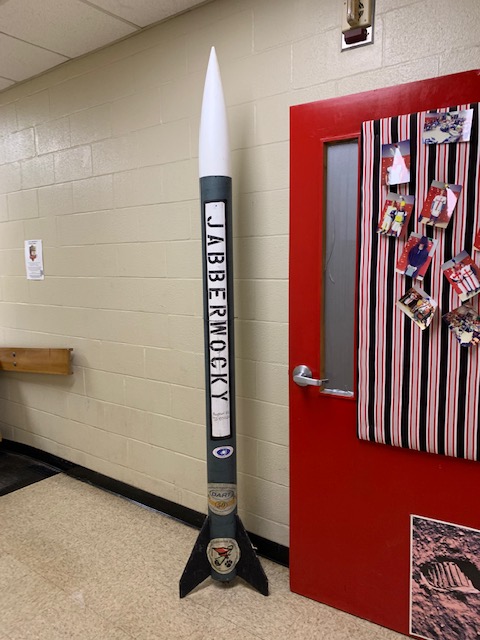
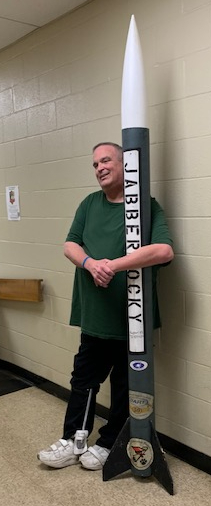
FRRs were done on their simulated vehicle as well as on the three rockets Rbekah had there as examples. Jabberwocky the door sentinel was one of these. 
img_6927

Time priorities were discussed and stressed. Teaching the students to have their vehicle completed a few weeks prior to launch so that they are ready when they arrive at the range to launch is essential. That was a wrap for the class.

students expressed great enjoyment and vast learning from this class.

Regional Coordinator, Doug Underwood, will conduct Oberth trainings. July 31- August 1 here in Fredericksburg..  Hollenstein, Georgetown and McGregor High Schools will be in attendance.  This level teaches students in their Senior year about Transonic rockets, which are designed to break the speed of sound.

Until tomorrow, if you are not dreaming of rockets, you obviously have not hung out with this crew enough! Do you think maybe you should? Encourage the schools in your area to join the program.

www.systemsgo.org as always is the place for more information on this program. You may also email them at info@systemsgo.org .Take the time to get your school involved, the future of your students will be greatly benefited.

#RideTheSky! #Rockets2022 RocketSeason!

Tsiolkovsky Teacher Training in Fredericksburg, Day 4

Today the class began learning the Design and Development Loop, and its application this process to rocketry.  They first developed a Problem Statement, which identified the initial task, build a rocket.

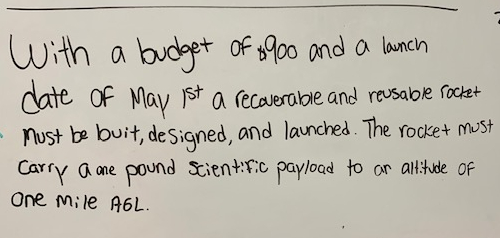
As seen here on the board, their problem statement is:

With a budget of $900 and launch date of May 1st a recoverable and reusable rocket must be built, designed, and launched. The rocket must carry a one pound scientific payload to an altitude of one mile AGL(above ground level).

IMG_6993

Next they used a brainstorming session to develop a list of components needed to create and launch this rocket: 

  • fire wadding
  • proof of altitude
  • timeline/budget
  • body tube
  • nosecone
  • launch lugs
  • engine
  • ignition
  • rail
  • fins
  • motor mount
  • recovery system
  • payload
  • launch area
  • components
  • rail

This was the beginning point they used to narrow down specific component groups they believed were related and should be grouped together. Next they identified individual team members to work that specific group :

  • ignition/engine/motor mount–Mel/Amy
  • recovery–Dan/Brian
  • fins/lugs/body/nosecone/(fire wadding)/compartments–Derek/Johnathan
  • payload/proof of altitude–Bryant/Nicole

Each team set out with their component and began research. They were given 2 hours to go on an in depth fact finding mission. Here are just a few of the many problems before them to address:

  • What are their options for each component?
  • What materials are available to them?
  • Is the chosen material within their budget?
  • Does a particular option make a difference in over all success over another option?
  • What kind of Impulse will it take to get the rocket to a mile high?

These were just starting points. They began with reasonable assumptions of what they believed they needed, and then began to hone in on actualities through research, further brainstorming, and generating alternative solutions.

The teams were allowed and encouraged to discuss options and ideas in order to determine how each team’s component  would work with the rest. The idea was to design a vehicle together so that it would not fail.

By 4:00 p.m. each team would have to present their idea and be able to prove why they chose this option. Their idea would have to pass a Preliminary Design Review(PDR), in order to establish the operational effectiveness of their chosen system.

During the short time I was there and able to listen in on their brainstorming, I heard questions about phenolic resin, fiber carbon bodies(quickly pitched due to expense), nose cone shape and sizing, chute deployment ideas, and payload weights and options. At the time that I left, the payload had been determined to be chocolate ice cream with the stipulation that Rebekah and I would get to share it if it survived. 

These teachers have not actually built these vehicles before, so they are in the same place their future students will be. They are expected to do everything the way they will be instructing their students to do, only the students will actually build the physical rocket and will have a semester in which to do it, instead of a day. 

It is a very in depth learning experience.  The program is designed to enable the students to think through the process themselves in order to figure out what has to be done and accomplish it. 

Until tomorrow, if you are not dreaming of rockets, you obviously have not hung out with this crew enough! And it is time you do!

www.systemsgo.org as always is the place for more information on this program. You may also email them at info@systemsgo.org .Take the time to get your school involved, the future of your students will be greatly benefited.

#RideTheSky! #Rockets2022 RocketSeason!

Tsiolkovsky Teacher Training Generation 3 on Day 3

Today was the culmination of the first semester training for the class. They were introduced to modeling using Rock Sim and given a challenge to design and build a rocket. They had a Stability Margin of 1-2 and an altitude goal of 1500′ to 2200′ depending on the motor size they chose.

Motor C was designed for the 2200′ goal, and motor B for the 1500′ goal. Each teacher was asked to design a rocket based on the location and demographics of their school. This includes actual open space for a launch and recovery radius and encompasses surrounding entities like airports, neighborhoods, and businesses that would need to be avoided in these projections. Determining these factors would help each teacher decide which motor and height requirement would be viable for their school’s location.

Once they have clarified these requirements, they design their rocket using RockSim. This program helps them determine the rocket’s height and speed possibilities. When their design and development is complete they print out their schematics and build their rocket.

At completion a Flight Readiness Review is done. The goal is to build and test the vehicle in one day. This meant launching by 5:00 pm.

Most of the class had started the building stage when I arrived. A few were still designing on the computer. Any manner of tools and adhesives were in continuous use around the room passing from one person to the next. Dremel tools with grinder wheels and filing tips created a constant buzz.

One observation about these new vehicles was their size. In the past days the rockets lengths had ranged from about 6 to 12 inches, give or take a little. These Generation 3 rockets were more of the 3 to 6 inch range.

In the two days prior the teachers seemed more laid back and quiet as they constructed their rockets. Today, the room buzzed and their was a sense of urgency and even slight elation as they worked.

They stayed busy, but still found time to make comments about their own or a friends current design.

One student asked if his nose cone had to be symmetrical? This received many looks and comments from his colleagues. This same student was questioned repeatedly about how he was planning on his nose cone deploying since it was heavily taped in at the time. He planned to remove most of the tape prior to launch, stating that it was only there until everything was set.

Another discussion about a unit of measurement called a slug caused great trepidation for a couple of the gentlemen in the class. One of them commented that a person would have to be an engineer to understand that unit of measurement. The gentleman with the nose cone question, “I am an engineer.”

However, our friend, Nicole, from yesterday, was smiling. She was energetically working on her new rocket. She had a renewed sense of confidence in her abilities today, after her successful launch yesterday.

The group was far from complete and launches were quite a ways out yet when my visit for the day came to an end. They did launch close to 5:00 that afternoon. When I drove by after work, they were just heading back to the shop.

Tomorrow and then until around 1:00pm on Friday, they will be delving into the second semester of the Tsiolkovsky class. Among the criteria will be designing a 1lb/1 mile rocket.

Until tomorrow, if you are not dreaming of rockets, you obviously have not hung out with this crew enough!

www.systemsgo.org as always is the place for more information on this program. You may also email them at info@systemsgo.org .Take the time to get your school involved, the future of your students will be greatly benefited.

#RideTheSky! #Rockets2022 RocketSeason!